Is Print on Demand Profitable in 2026?
Yes — print on demand is profitable in 2026, with per-order margins that commonly land in the 20%–40% range after base cost and fees. But profit is not the default outcome. It shows up for sellers who pick a specific niche, produce designs in volume, price correctly, and market consistently, and it stays out of reach for those treating POD as passive income.
This article puts real numbers to the question: what margins look like per product, how income scales with order volume, why higher-ticket items carry more profit, and the factors that decide whether a print on demand business actually makes money.
Print on demand profit margins by product
Margin is the retail price minus the base cost and fees. Because base cost and fees are fairly fixed, the products that carry the most absolute profit per sale are the ones whose retail price rises faster than their base cost — hoodies, framed prints, and premium journals rather than t-shirts and mugs.
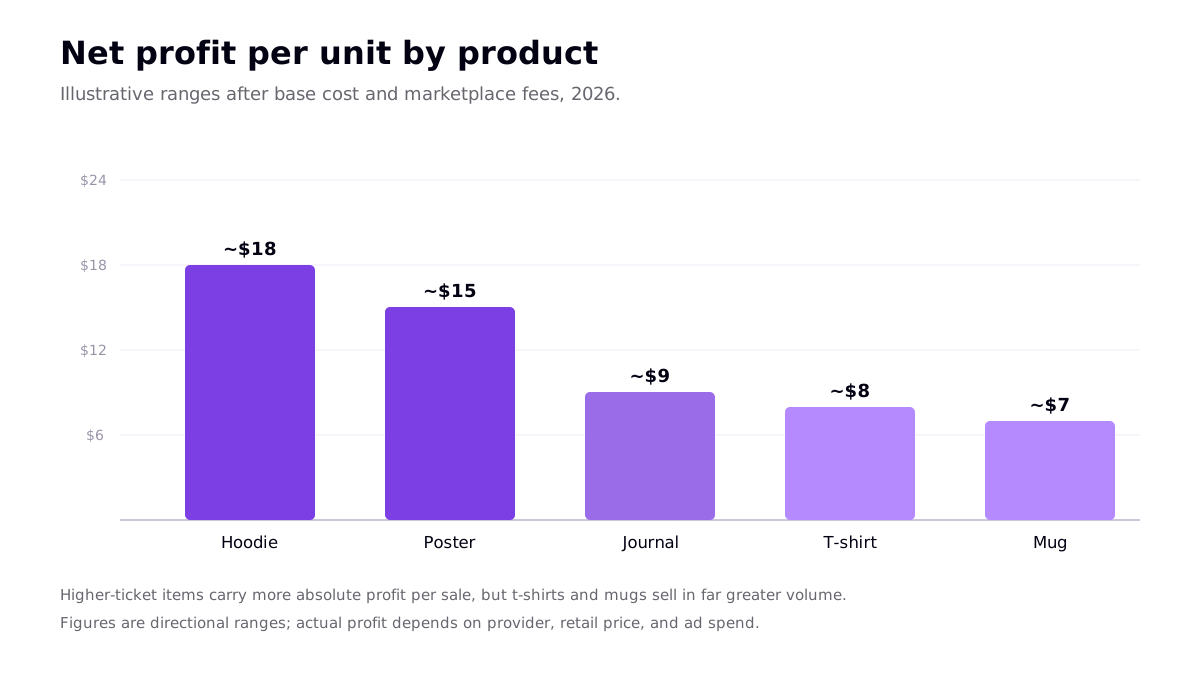
The catch: t-shirts and mugs sell in far greater volume than hoodies or canvas. So "most profitable" is not one product — it is the product that best fits demand in your niche. A smart catalog mixes high-volume, lower-margin staples with a few high-ticket items that lift your average order value. Our guide to the best print on demand products to sell goes deeper on selection.
How the per-unit math works
Consider a t-shirt sold on Etsy at $26. As of 2026, Etsy charges a $0.20 listing fee, a 6.5% transaction fee, and 3% + $0.25 payment processing. With a base cost around $11, the fees eat roughly $2.70 and the base cost $11, leaving about $8 net — before any advertising or returns. That is a ~30% margin, squarely in the realistic band.
Two levers move it most: price (dropping from $26 to $22 can cut net profit by a third) and ad spend (paid traffic can quietly consume the entire margin if you don't track it). For the full breakdown of these mechanics, see our print on demand business playbook and the detailed t-shirt printing cost guide.
Realistic income scenarios
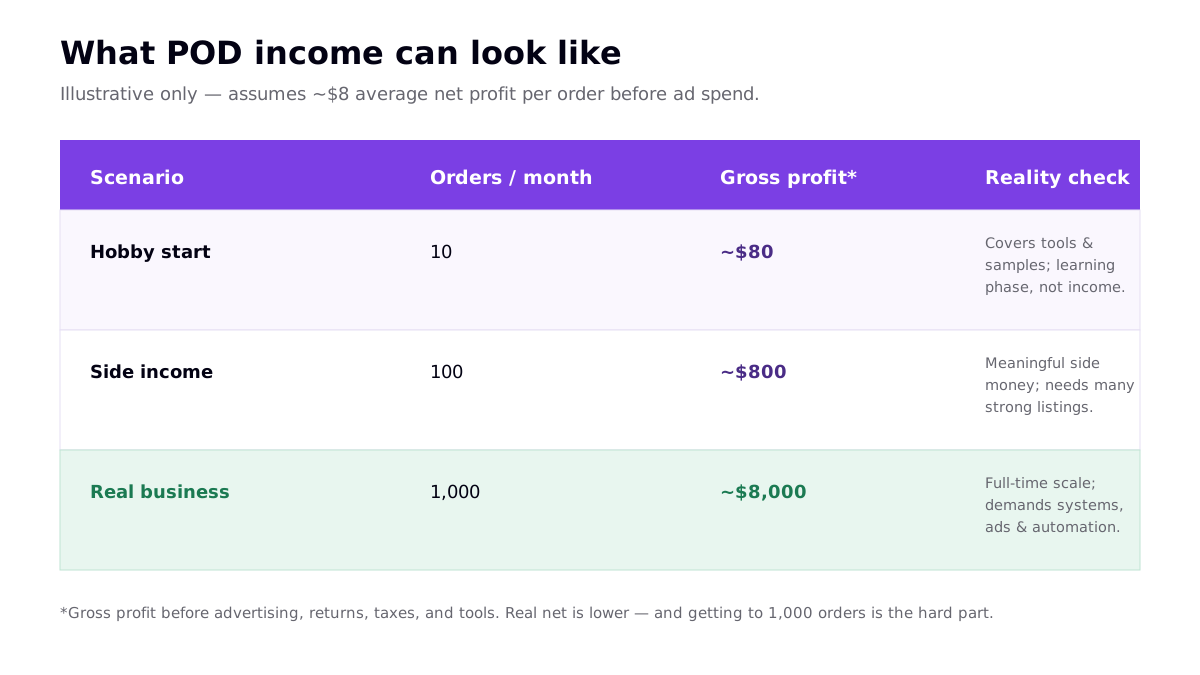
The single biggest driver of total profit is order volume — and reaching high volume is the hard part. Here is what monthly profit looks like at three volumes, assuming roughly $8 average net per order before ads:
| Orders / month | Gross profit (approx.) | What it really is |
|---|---|---|
| 10 | ~$80 | Learning phase; covers tools and samples |
| 100 | ~$800 | Meaningful side income; needs many good listings |
| 1,000 | ~$8,000 | Full-time scale; demands systems, ads, and automation |
These are gross figures before advertising, returns, taxes, and tools — real net is lower. The lesson is not "POD makes $8,000/month" but "POD income is a volume game," and volume comes from testing many designs, not waiting on one.
Is the market still growing?
Demand is expanding, which helps but does not guarantee anything. Published forecasts estimate the global print on demand market at roughly $13 billion in 2026, with compound annual growth rates clustered around 22%–25% and projections reaching $50 billion or more by the early 2030s (figures vary by research firm).
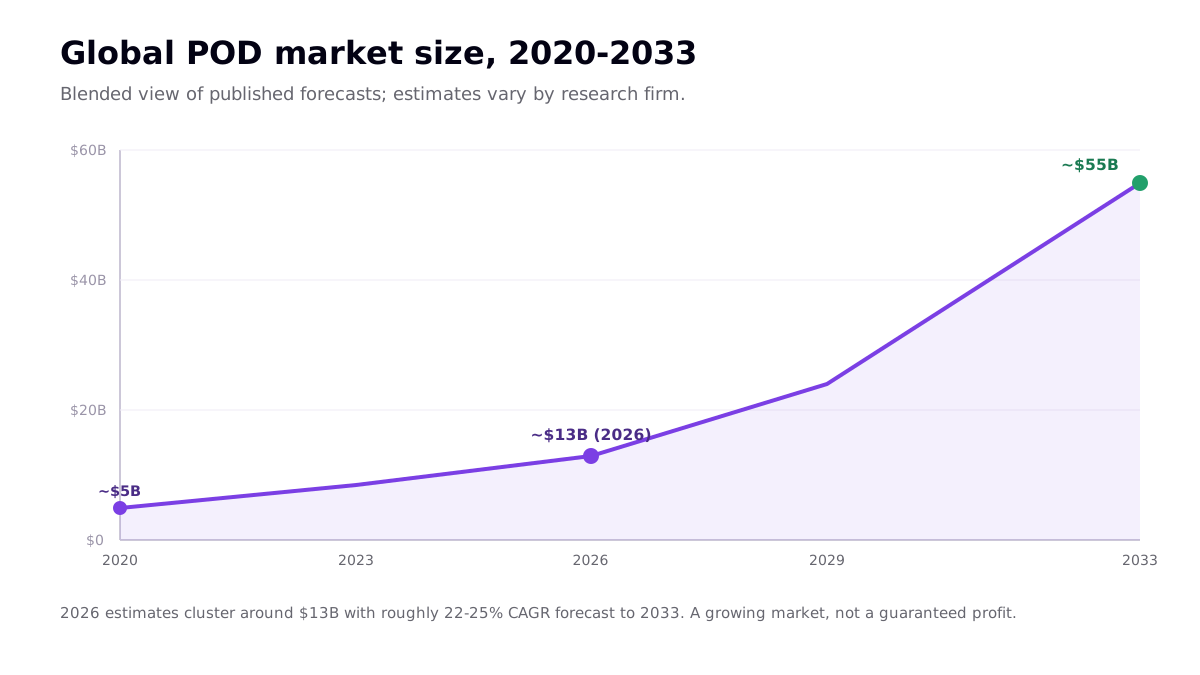
A growing market cuts both ways: more buyers enter, but so do more sellers. Growth rewards operators who differentiate, not those who copy bestsellers.
What actually makes a POD shop profitable
- Niche specificity. "Retirement gifts for nurses" beats "funny shirts" for design direction, keywords, and beatable competition.
- Volume of tests. More listings means more data means more winners. The fastest testers win.
- Correct pricing. Price at 2–3x total cost; resist racing to the bottom.
- Higher-ticket products. Mix in hoodies, canvas, or premium journals to lift average order value.
- Cost discipline. Track base cost, fees, and ad spend per product — not just revenue.
Seven ways to improve your POD margin
Because per-unit margins are modest, small improvements compound quickly across hundreds of orders. The levers that move profit most, roughly in order of impact:
- Raise average order value. Add higher-ticket products (hoodies, canvas, sweatshirts) and bundle related designs so each checkout is worth more.
- Price with intent. Test a dollar or two higher before assuming buyers won't pay. Unique and personalized designs justify a premium.
- Cut base cost. Compare providers for the same garment, and evaluate whether a paid membership tier pays for itself at your volume.
- Master free traffic. Marketplace SEO and organic social cost time, not cash — they protect margin that ads would eat.
- Treat ads as an experiment. Measure return per product and only scale campaigns that clear their own cost plus your target margin.
- Reduce returns. Order samples, set accurate size charts, and use realistic mockups so buyers know exactly what arrives.
- Automate the busywork. The faster you list and iterate, the more winning designs you find per week — and winners are where the profit lives.
None of these is a silver bullet. Stacked together, they can turn a break-even shop into a comfortably profitable one, and they are entirely within your control.
Why most POD shops don't profit
The failures are predictable: generic designs with no niche, five listings and a wait, under-pricing that vanishes after fees, unmanaged ad spend, and quitting before the growth flywheel gains speed. Print on demand is profitable in 2026 — but only when treated as a real business with a plan behind it. Our print on demand business plan guide lays out that plan step by step.
Frequently asked questions
Is print on demand profitable?
Yes, print on demand can be profitable, with per-order margins commonly in the 20%–40% range after base cost and marketplace fees. But profit is not automatic — it comes from a specific niche, designs produced in volume, correct pricing, and controlled advertising. Generic designs sold at generic prices rarely clear a profit once fees and ads are subtracted.
How much can you realistically make with print on demand?
It scales with order volume. At roughly $8 average net profit per order before ad spend, 10 orders a month is around $80 (a learning phase), 100 orders is meaningful side income near $800, and 1,000 orders approaches a full-time $8,000 gross. The hard part is reaching high volume — that requires many strong listings and consistent marketing, not a single viral design.
What is the most profitable print on demand product?
Higher-ticket items carry more absolute profit per sale. Hoodies, framed prints and canvas wall art, and premium journals often net more per order than t-shirts or mugs because their retail price rises faster than their base cost. That said, t-shirts and mugs sell in far greater volume, so the most profitable product for you depends on your niche and where demand is.
Why do most print on demand businesses fail?
Most fail because they treat POD as passive income rather than a real business. Common causes are generic designs with no niche, too few listings to gather data, under-pricing that erases margin after fees, ignoring the numbers, and giving up before the growth flywheel gains speed. Sellers who test constantly and read their data are the ones who become profitable.
Resources
- Grand View Research: Print on Demand Market Report — market size and CAGR.
- Etsy Fees & Payments Policy — official 2026 fees used in the margin math.
- Printful pricing — base product costs.
- Printful: Is Print-on-Demand Profitable?
- Printify: Is Print on Demand profitable?
- Mimeo: Is Print on Demand Profitable?