Print on Demand Business Plan (Step by Step)
A print on demand business plan does not need to be a 30-page document — it needs to be a clear, one-page decision map covering your niche, products, suppliers, pricing, marketing, costs, and goals. Because print on demand carries almost no upfront cost, the plan's real job is to confirm the unit economics work and keep your day-to-day choices consistent.
This step-by-step guide walks through each section of a lean POD business plan, gives you a fillable one-page template, and covers the two decisions people get wrong most often: pricing strategy and where marketing traffic will come from.
Why a lean plan beats a long one
Traditional business plans are written for lenders and investors. A print on demand business rarely needs outside funding, so a long plan mostly delays the work that actually matters — launching listings and gathering data. A lean, one-page plan is something you can write in an afternoon and revisit every month as you learn what sells.
Section 1: Mission and niche
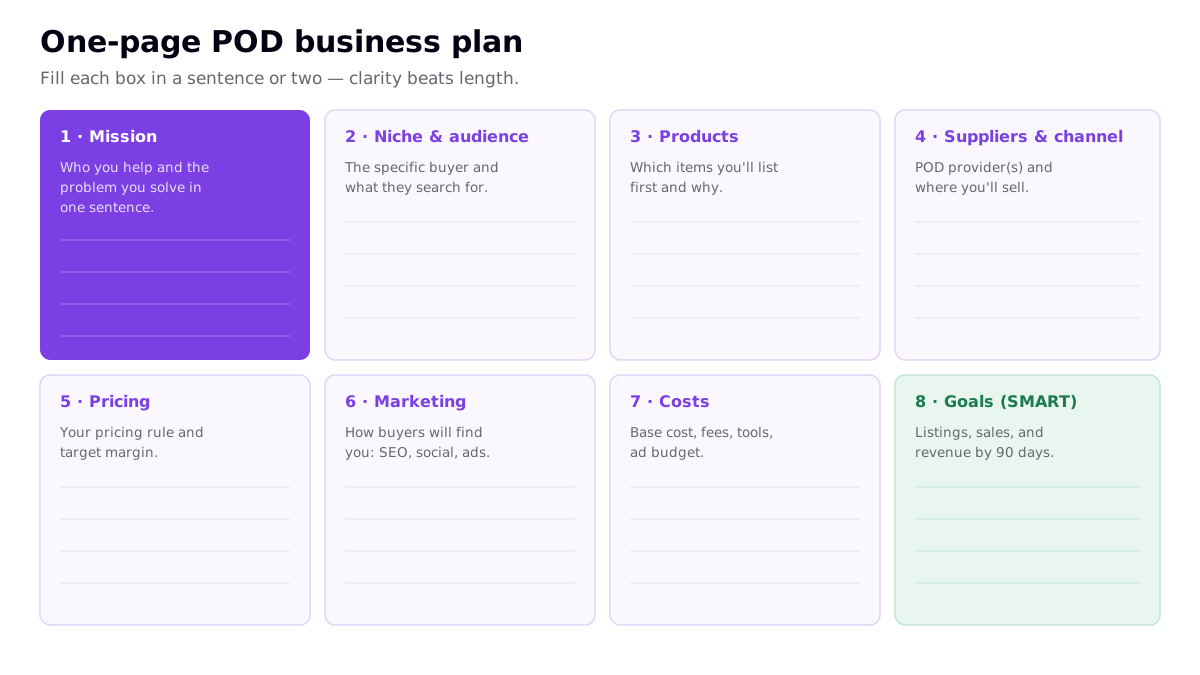
Start with a one-sentence mission: who you help and the problem you solve. Then get specific about the niche and audience. "Funny t-shirts" is not a niche; "sarcastic gifts for new teachers" is. A specific niche gives you a design direction, the exact keywords buyers type, and a smaller search pool where a new shop can actually rank. Validate it by searching the phrase on Etsy and Amazon, reading the autocomplete for real buyer queries, and checking that competing listings have recent reviews.
Section 2: Products and suppliers
List the two or three products you will launch first and why they fit the niche. Then choose your POD supplier and sales channel. The big three providers each run a distinct model — Printify (marketplace of print shops, lowest base costs), Printful (in-house, consistent quality), and Gelato (global local printing) — and you can mix them. For the fulfillment side, see our comparison of the best print on demand companies and the mechanics in print on demand dropshipping. For product selection, our guide to the best print on demand products helps you choose.
Section 3: Pricing strategy
Pricing decides whether you profit at all. There are three approaches, and most sellers blend them:
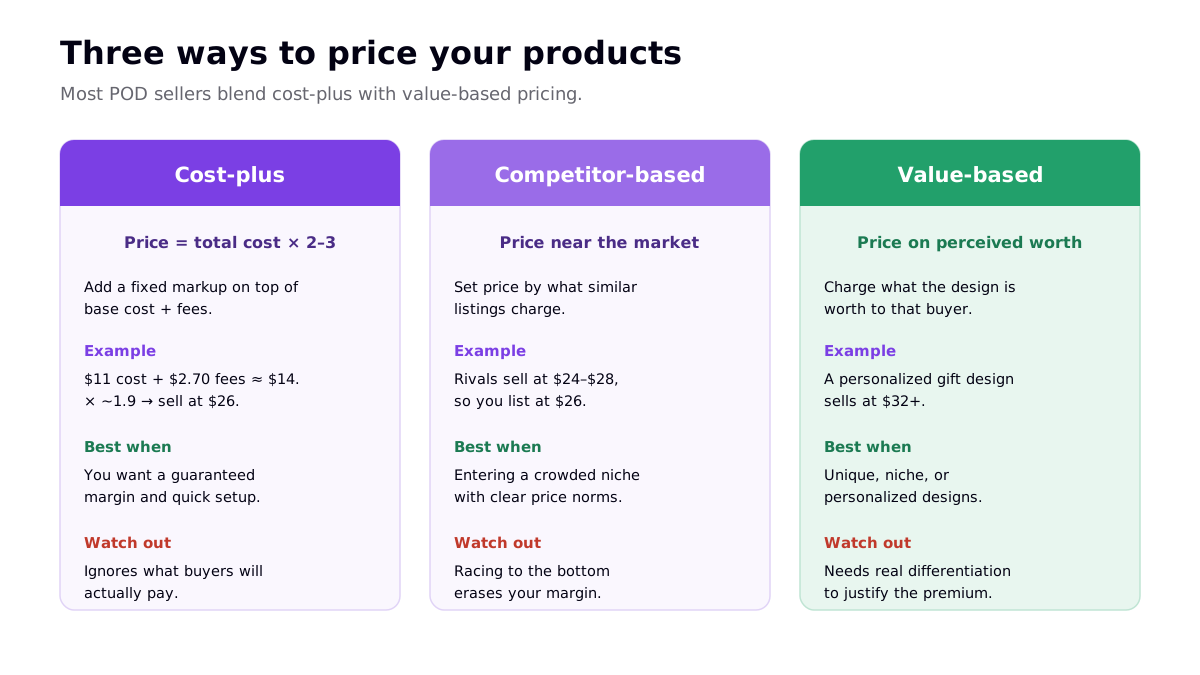
Cost-plus multiplies your total cost by roughly 2–3. Total cost includes the base product cost plus fees — on Etsy in 2026 that means a $0.20 listing fee, a 6.5% transaction fee, and 3% + $0.25 payment processing. For an $11 base-cost shirt, total cost is about $14, so a ~1.9x markup lands you at $26. Competitor-based pricing anchors to what similar listings charge — useful in crowded niches but dangerous if it drags you into a race to the bottom. Value-based pricing charges what a unique or personalized design is worth to the buyer, and it is where premium margins live. The deeper unit-economics math is in our print on demand business playbook.
Section 4: Marketing channels
A plan that skips "how will buyers find me?" is a wish, not a plan. Decide your channel mix up front, weighted toward low-cost, compounding sources:
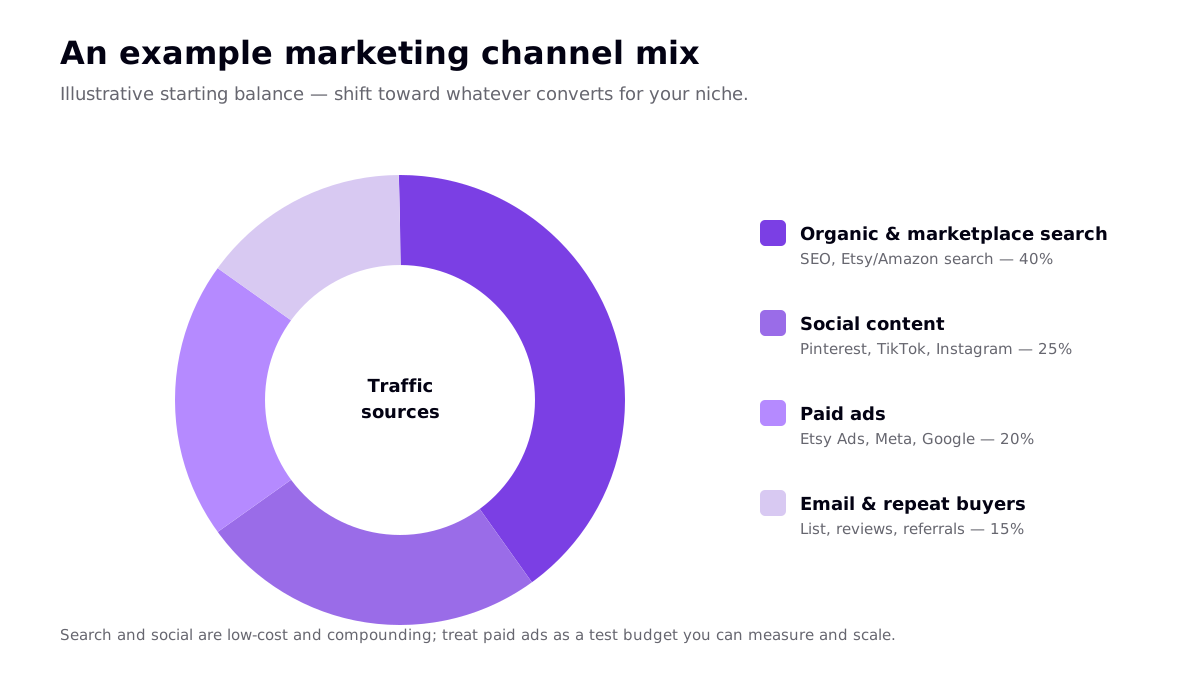
- Organic & marketplace search — SEO on your listings and store. The compounding, lowest-cost channel; make it your foundation.
- Social content — Pinterest, TikTok, and Instagram drive discovery for visual products.
- Paid ads — Etsy Ads and Meta/Google as a measurable test budget, not a firehose.
- Email & repeat buyers — the cheapest sales you will ever make; capture buyers and earn reviews.
Section 5: Costs and goals
Write down every recurring cost so nothing surprises you later.
| Cost item | Typical amount (2026) | Notes |
|---|---|---|
| Provider account | Free | Printify, Printful, Gelato free to join; paid tiers add discounts |
| Listing fee | $0.20 per listing (Etsy) | Renews on sale; transaction and payment fees apply per sale |
| Base product cost | ~$9–$14 per shirt | Varies by provider and garment |
| Design tooling | $0–$30/month | AI generation and print-prep tools |
| Sample orders | ~$10–$20 each | At least one per product type before scaling |
| Ad test budget | Small & measurable | Track return per product; scale only what profits |
Finish with SMART goals — Specific, Measurable, Achievable, Relevant, Time-bound. For a first 90 days, a strong goal set might be: publish 40 optimized listings, order samples for every product type, and reach your first 10 sales. Numbers you can check keep the plan honest. To pressure-test whether your goals imply a real profit, run them against our guide to whether print on demand is profitable.
Common business-plan mistakes to avoid
Most POD plans fail in predictable ways long before the first sale. Watch for these:
- Skipping the numbers. A plan with no cost breakdown or target margin is a mood board. Confirm the unit economics work on paper first.
- A niche that is really a category. "Fitness apparel" is a market, not a niche. Narrow it until you can name the exact buyer and the phrase they search.
- No differentiation. If your plan's answer to "why buy from you?" is "lower price," you have no plan — you have a race to the bottom.
- Treating ads as free growth. Budget advertising as a measurable test, and assume organic search and social carry most of your early traffic.
- Writing it once. A plan you never revisit is worthless. The one-pager exists to be edited as real sales teach you what works.
A quick competitive scan strengthens every section: search your niche, note how the top shops price, package, and describe their products, then decide where you can be genuinely different rather than marginally cheaper.
Put the plan to work
A business plan is a starting hypothesis, not a contract. Once you launch, the data corrects it: adjust pricing where margins are thin, double down on the marketing channel that converts, and expand the products and niches that sell. Review your one-pager monthly and let real sales rewrite it. For the full launch sequence, see how to start print on demand.
Frequently asked questions
Do you need a business plan for print on demand?
You do not need a long formal document, but you do need a plan. A one-page lean plan covering your niche, products, suppliers, pricing, marketing, costs, and goals keeps decisions consistent and forces you to confirm the unit economics work before you spend time. Most successful POD sellers use a lean plan rather than a traditional multi-page one.
What should a print on demand business plan include?
At minimum: a mission (who you help), a specific niche and target audience, the products you will launch first, your POD supplier and sales channel, a pricing strategy with a target margin, your marketing channels, a cost breakdown (base cost, fees, tools, ad budget), and SMART goals for the first 90 days. Keeping it to one page makes it easier to revisit and adjust.
How do you price print on demand products?
Most sellers start with cost-plus pricing — total cost (base cost plus fees) multiplied by roughly 2 to 3 — then sanity-check against competitor prices and adjust upward for unique or personalized designs using value-based pricing. On Etsy, include 2026 fees of $0.20 per listing, a 6.5% transaction fee, and 3% + $0.25 payment processing in your total cost before applying the markup.
How much money do you need to start a print on demand business?
With print on demand there is no inventory, so startup costs are low — realistically well under $100. Budget for marketplace listing fees, an optional design tool, and a few sample orders at roughly $10–$20 each to verify quality. Your plan should still allocate a small, measurable advertising test budget rather than treating ads as free traffic.
Resources
- U.S. Small Business Administration: Write your business plan — lean vs. traditional plan formats.
- Etsy Fees & Payments Policy — official 2026 fees for your cost section.
- Printful pricing — base product costs.
- Printify: How to start a print-on-demand business
- Printful: How to start a print-on-demand business in 8 steps
- Mimeo: How to Start a Print on Demand Business