Print on Demand Dropshipping: 2026 Guide
Print on demand dropshipping is a way to sell custom-designed products — t-shirts, mugs, wall art — without holding any inventory. When a customer orders, a print partner produces the item with your design and ships it directly to them. It is a form of dropshipping, with one crucial upgrade: instead of reselling a generic product anyone can list, you sell something that carries your own artwork and brand.
This guide explains exactly how print on demand dropshipping works, how it differs from classic dropshipping, what it does to your margins and shipping times, which suppliers to use by region, and how to start.
How print on demand dropshipping works
The order flow is almost identical to classic dropshipping — no inventory, supplier ships to the buyer — except a production step is added because the product is made to order rather than pulled from stock.
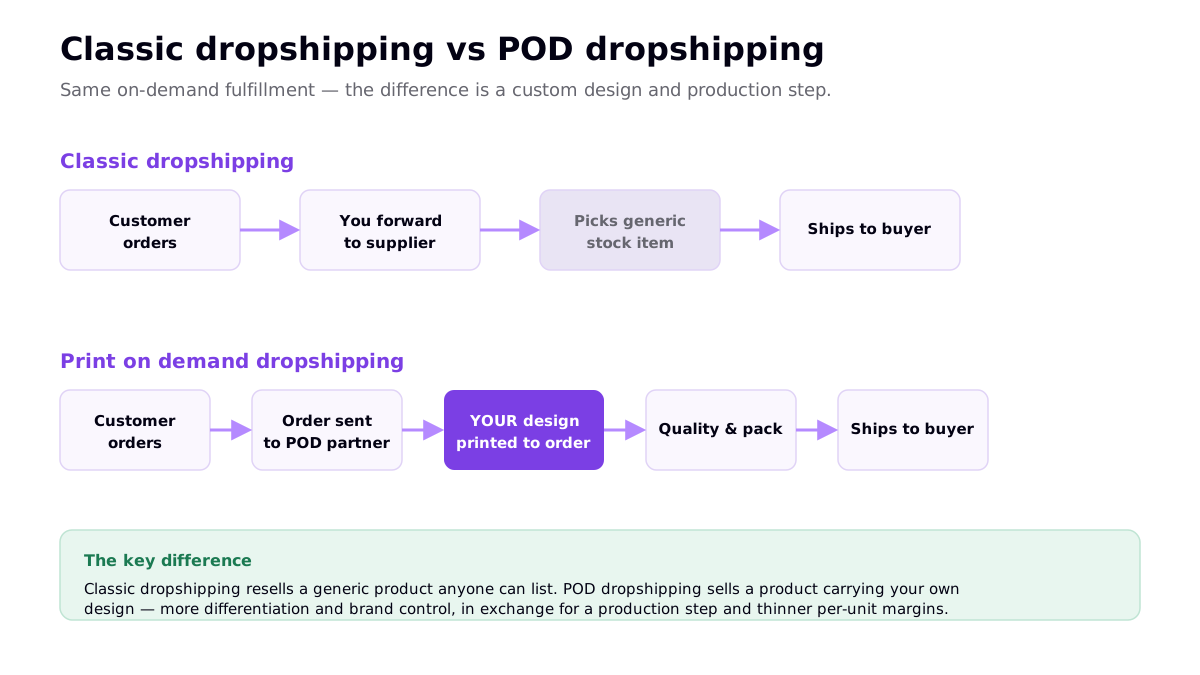
Concretely: you upload a design to a POD provider, publish the product on a store or marketplace, and set your retail price. A customer buys; the order routes to the print partner; they print, quality-check, pack, and ship; and you keep the difference between retail price and base cost, minus fees. For a foundational overview, see what is print on demand.
Print on demand vs classic dropshipping
People often ask whether POD and dropshipping are the same thing. The honest answer: POD is a specialized branch of dropshipping. They share the no-inventory model but diverge on what you actually sell.
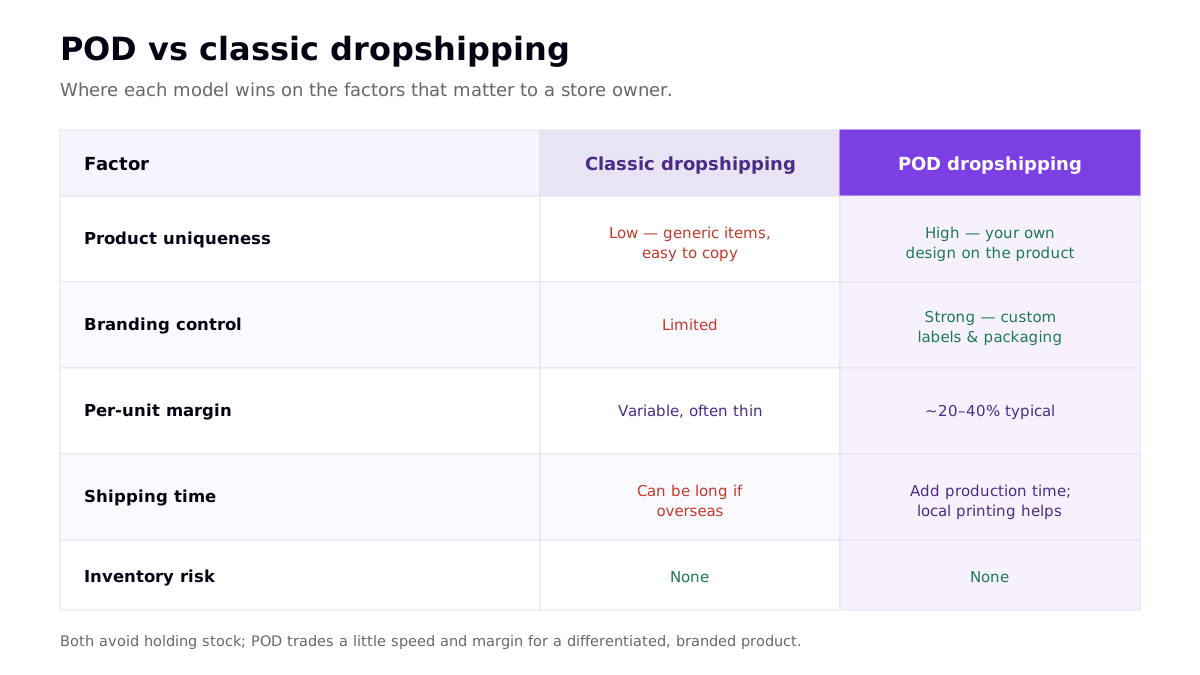
| Factor | Classic dropshipping | Print on demand dropshipping |
|---|---|---|
| Product uniqueness | Low — generic items, easy to copy | High — your own design on the product |
| Branding control | Limited | Strong — custom designs, some custom packaging |
| Per-unit margin | Variable, often thin | Typically ~20%–40% after fees |
| Shipping time | Can be long if sourced overseas | Production time added; local printing reduces it |
| Inventory risk | None | None |
| Competition basis | Mostly price | Design, niche, and brand |
The strategic upside of POD is that you don't compete purely on price. Because your product is unique, a strong design in a well-chosen niche can command a healthier margin than a commodity that ten other stores also list.
What it does to margins and shipping
Margins in POD are real but modest. Take an Etsy t-shirt at $26: 2026 Etsy fees are $0.20 per listing, a 6.5% transaction fee, and 3% + $0.25 payment processing, and a typical DTG base cost is around $9–$14. That leaves roughly $8 net per shirt before ad spend — about a 30% margin. Higher-ticket items like hoodies and framed prints carry more absolute profit per order. The full math is in our print on demand business playbook, and we dig into margins specifically in is print on demand profitable.
On shipping, the production step means customers wait a little longer than for in-stock dropshipping. The fix is local production: routing each order to a facility near the buyer cuts transit time and cost, which is where global networks shine.
Best print on demand dropshipping suppliers by region
Choosing a supplier is really about where your buyers are and what you sell. Grouping providers by fulfillment footprint makes the decision easier.
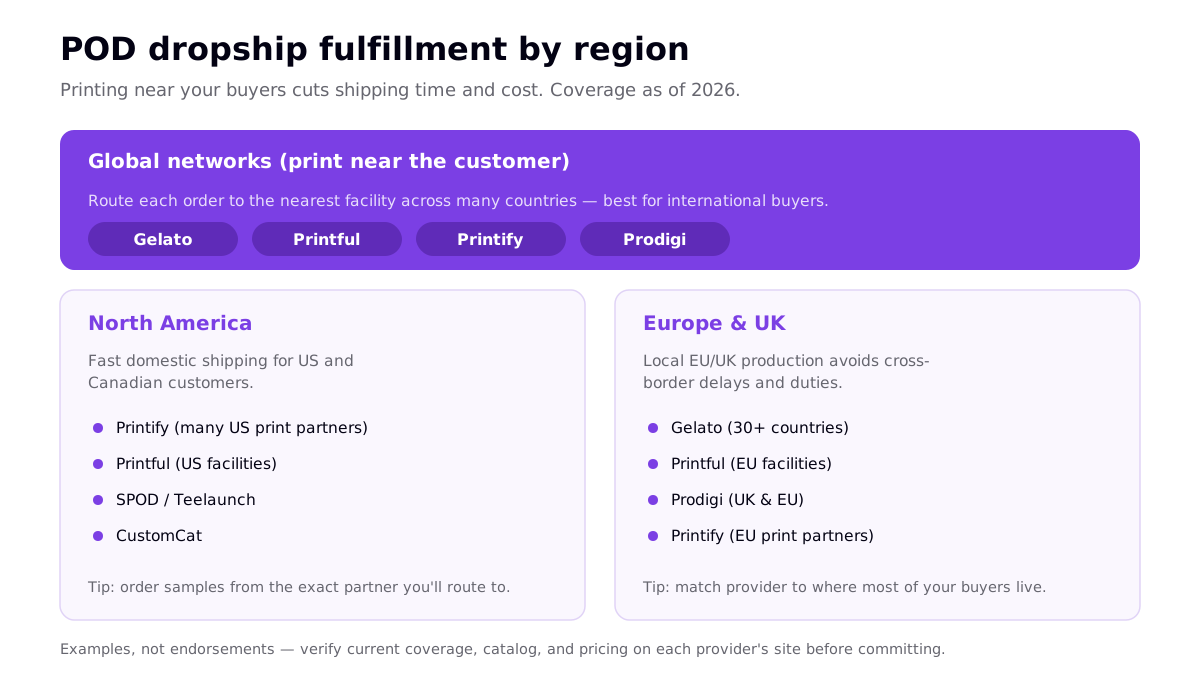
- Global networks: Gelato, Printful, Printify, and Prodigi route orders to the nearest facility across many countries — ideal for international sellers.
- North America: Printify's US print partners, Printful's US facilities, SPOD, Teelaunch, and CustomCat for fast domestic shipping.
- Europe & UK: Gelato (30+ countries), Printful's EU facilities, Prodigi, and Printify's EU partners avoid cross-border delays.
You can run more than one supplier — for example, Printify for apparel and Gelato for posters. For a fuller breakdown, see our guide to the best print on demand companies.
Pros and cons of POD dropshipping
Before committing, weigh the model honestly. Its strengths and weaknesses are the mirror image of each other.
The advantages
- No inventory and no upfront capital. You pay the base cost only after a customer has already paid you.
- A differentiated product. Your own design means you are not one of fifty stores listing the identical dropshipped item.
- Effortless scaling. Whether you sell 10 or 1,000 units a week, the partner absorbs the production and shipping load.
- Low risk to test ideas. A design that flops costs you nothing in unsold stock — you simply unpublish it.
The trade-offs
- Thinner per-unit margins than buying garments in bulk, so volume and pricing discipline matter.
- Less control over production timing, since the partner prints and ships on their schedule.
- Quality varies by partner, which is exactly why ordering samples before you scale is non-negotiable.
- Longer delivery than in-stock dropshipping because each item is produced to order.
POD dropshipping fits creators, designers, and niche brand-builders who want to compete on originality rather than price. If your only edge would be undercutting rivals on a generic product, classic dropshipping — or a different business entirely — may suit you better.
How to start a POD dropshipping store
- Pick a specific niche. "Gifts for climbing dads" beats "outdoor shirts" — it gives you keywords and beatable competition.
- Choose a sales channel. Etsy for built-in buyer traffic, or your own Shopify print on demand store for control and margin.
- Connect a supplier that prints near your buyers, and order samples before scaling.
- Produce designs in volume, print-ready at ~300 DPI, and clear any trademarks first.
- Publish, measure, iterate. Read views and favorites per listing; expand winners, cut dead listings.
Because there is no inventory, the whole loop can start for well under $100 — the real investment is how efficiently you turn time into published, tested listings.
Frequently asked questions
What is print on demand dropshipping?
Print on demand dropshipping is a fulfillment model where you sell products carrying your own design, and a print partner produces and ships each item only after a customer orders. It is a type of dropshipping — you hold no inventory — with one difference: the product is custom-printed to order rather than resold as a generic stock item, giving you a differentiated, branded product.
What is the difference between print on demand and dropshipping?
Both avoid holding inventory and ship directly from a supplier to the customer. The difference is the product: classic dropshipping resells generic items anyone can list, while print on demand sells products printed with your own design. POD adds a production step and often thinner per-unit margins, but gives you far more uniqueness and brand control.
Is print on demand dropshipping profitable?
It can be, with per-order margins commonly in the 20%–40% range after base cost and fees. Because your product is unique rather than a copyable commodity, you compete on design and niche instead of price alone — which tends to support healthier margins than classic dropshipping. Profit still depends on niche selection, design volume, correct pricing, and controlled ad spend.
What are the best print on demand dropshipping suppliers?
The most widely used suppliers are Printful (in-house facilities, consistent quality), Printify (marketplace of print partners, lowest base costs), and Gelato (global local production in many countries for fast international delivery). Others include Prodigi, SPOD, Teelaunch, and CustomCat. Choose based on where your buyers live and the products you sell, and always order samples first.
Resources
- Shopify: Print on Demand vs. Dropshipping
- Printful — custom print on demand & dropshipping supplier.
- Printify — print on demand & dropshipping platform and catalog.
- Prodigi — global print on demand platform and print API.
- Gelato — global local production network.