What Is Print on Demand and How Does It Work?
Print on demand (POD) is a business model where a product is only printed after a customer buys it. You upload a design, put it on an item like a t-shirt or poster, and list it for sale — but nothing is manufactured until an order comes in. A printing partner then produces and ships that single item, and you keep the difference between the price you charged and the base cost.
That one detail — printing after the sale, not before — is what makes print on demand explained so simply: there is no inventory, no minimum order, and almost no upfront cost. This guide walks through exactly how it works, what it costs, what sells, and where the industry is heading in 2026.
Print on demand explained in one sentence
You sell first, then the item is made. In a traditional retail business you buy stock, store it, and hope it sells. In print on demand the order comes first and the product is created on demand for that specific customer. The seller's job is designs and marketing; the production and shipping are handled by a fulfilment partner.
How print on demand works, step by step
The process is the same whether you sell one design or ten thousand:
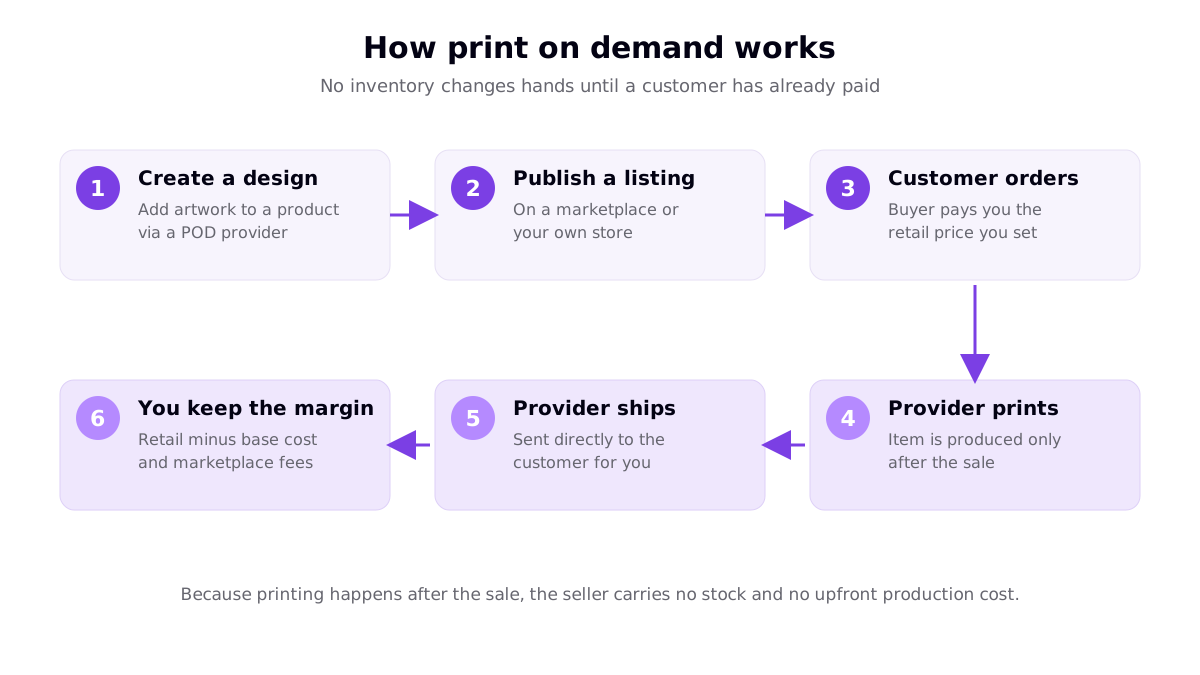
- Create a design. You add artwork to a blank product (a "blank") inside a POD provider such as Printify, Printful, or Gelato.
- Publish a listing. You connect the product to a marketplace like Etsy or Amazon, or to your own store, and set your retail price.
- A customer orders. The buyer pays you the retail price through the storefront.
- The provider prints the item. Only now is anything manufactured — the provider prints your design onto the blank.
- The provider ships it. The finished item goes straight to your customer, often with your branding on the packaging.
- You keep the margin. Your profit is the retail price minus the base cost the provider charges you, minus any marketplace fees.
Why print on demand carries almost no risk
The clearest way to understand POD is to compare its cash flow to traditional bulk printing. With a bulk order you pay for hundreds of units up front, store them, and absorb the loss on anything that does not sell. With print on demand, money only leaves your account after a customer has already paid you.
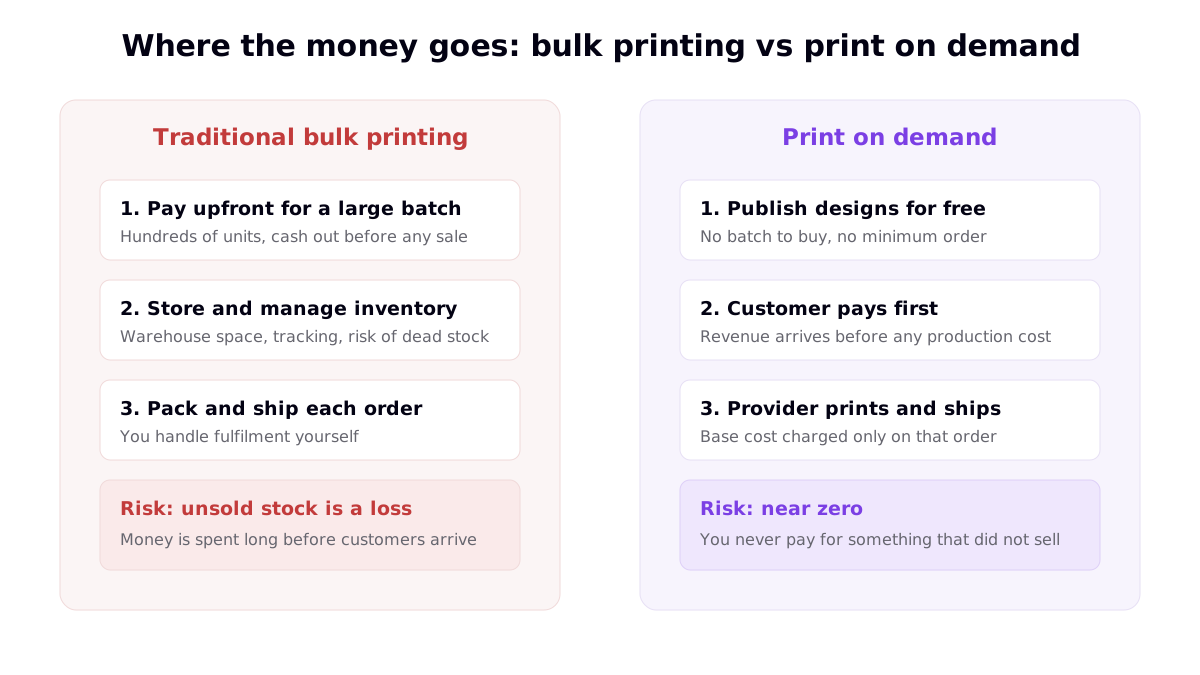
This flipped order of operations is why POD is popular with first-time sellers, artists, and creators. You can test a design idea for the price of a listing fee instead of the price of a print run. The trade-off is thinner per-unit margins than bulk buying, which is why sellers focus on volume of designs and efficient workflows.
What products can you sell with print on demand?
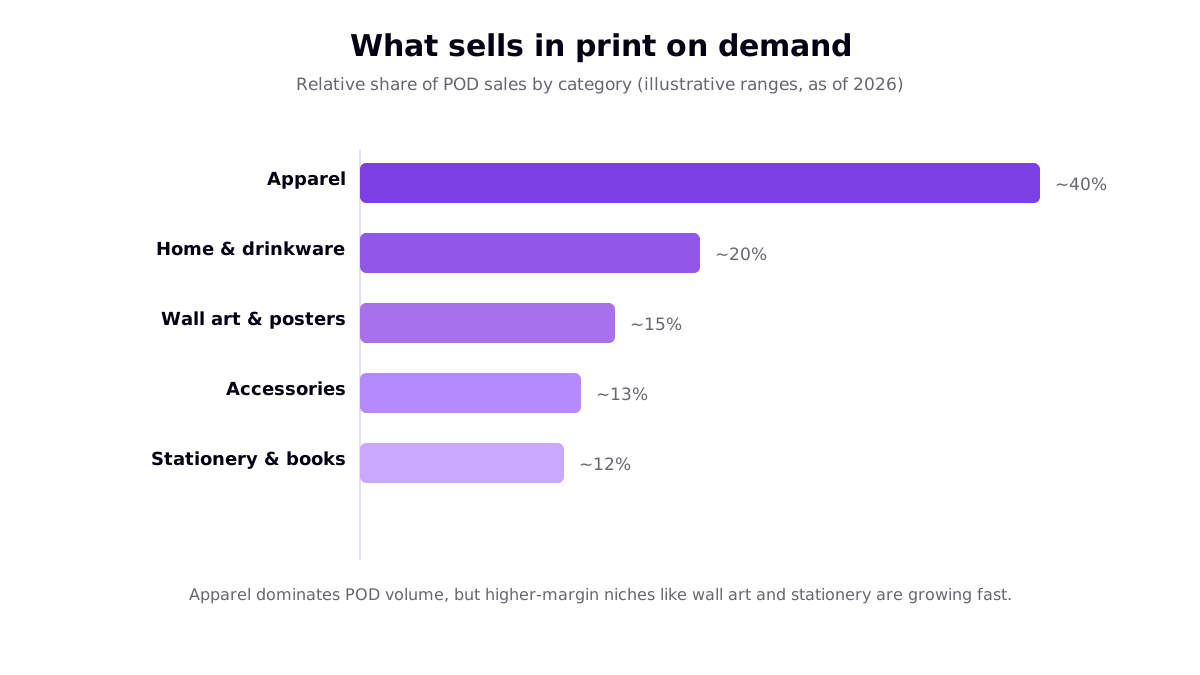
The POD catalogue is wide and keeps growing. Larger providers list hundreds to well over a thousand products. Sales are heavily concentrated in a few categories, with apparel leading by a large margin.
| Category | Typical products | Why it sells |
|---|---|---|
| Apparel | T-shirts, hoodies, tank tops, kids' clothing | Biggest market, endless niches, habitual gifting |
| Home & drinkware | Mugs, pillows, blankets, wall clocks | Low base cost, strong personalised-gift demand |
| Wall art | Posters, framed prints, canvas, metal prints | High perceived value, AI art performs well here |
| Accessories | Tote bags, phone cases, hats, stickers | Impulse buys and easy add-on purchases |
| Stationery & books | Journals, planners, greeting cards, notebooks | Low-content publishing, repeat-buy potential |
If you want a curated shortlist of what performs, see our guide to the best print on demand products to sell.
What does print on demand cost to start?
Very little, which is the whole appeal. The major providers — Printify, Printful, and Gelato — are free to join, and you only pay a base cost once an item sells. Your actual startup costs are modest:
| Cost item | Typical amount (as of 2026) | Notes |
|---|---|---|
| Provider account | Free | Paid tiers add product discounts but are optional |
| Marketplace listing fee | Etsy: $0.20 per listing | Renews on each sale; transaction and payment fees also apply |
| Design tools | $0–30/month | Free tools exist; AI generation speeds up production |
| Sample orders | ~$10–20 each | Order one sample per product type to verify quality |
There is no inventory, no warehouse, and no minimum order. The real investment is time: designing products and writing listings that get found in search.
How big is the print on demand industry?
Print on demand has moved from a niche side hustle to a substantial slice of e-commerce. Market research firms estimate the global POD market at roughly $13 to $15 billion in 2026, with most reports projecting a compound annual growth rate above 20% through the early 2030s. Estimates differ meaningfully between firms — Grand View Research, Precedence Research, and others each use different methodologies — so treat any single figure as an approximation rather than a hard number.
The drivers are consistent across reports: rising demand for personalised gifts, the low barrier to entry for creators, and design tools (including AI image generation) that make it faster to produce sellable artwork.
Print on demand vs dropshipping
The two models are related but not identical. In classic dropshipping you resell an existing, generic product that a supplier ships on your behalf. In print on demand the product is custom — it carries your design and does not exist until someone orders it. POD gives you a unique product and more branding control; generic dropshipping usually offers a wider catalogue but no differentiation. Many stores blend the two.
Frequently asked questions
What does POD stand for?
POD stands for print on demand. It is a fulfilment model where a product is only printed after a customer buys it, so the seller never holds inventory. The same abbreviation is used across apparel, wall art, books, and accessories.
How does print on demand work?
You upload a design to a POD provider, place it on a product, and publish a listing on a marketplace or your own store. When a customer orders, the provider prints and ships the item directly to them and charges you the base cost. You keep the difference between the retail price and the base cost, minus marketplace fees.
Is print on demand free to start?
Almost. The major POD providers are free to join, and you only pay a base cost once an item sells. Your real costs are small: marketplace listing fees (Etsy charges $0.20 per listing as of 2026), optional design tools, and a few sample orders. There is no inventory to buy up front.
What products can you sell with print on demand?
The catalogue is broad. Apparel such as t-shirts and hoodies is the largest category, followed by home goods and drinkware like mugs, wall art and posters, accessories such as tote bags and phone cases, and stationery and books. Larger providers list hundreds to over a thousand products.
Is print on demand a growing industry?
Yes. Market research firms estimate the global print on demand market at roughly $13 to $15 billion in 2026, with most forecasts projecting a compound annual growth rate above 20% through the early 2030s. Exact figures vary by firm, so treat any single number as an estimate.