Print on Demand for Beginners: 2026 Guide
Print on demand for beginners comes down to one idea: you sell a custom product first, and it is only printed after someone buys it. There is no inventory, no minimum order, and almost nothing to pay until money is already coming in. That makes it the friendliest way to start an online store in 2026.
This guide is print on demand 101 — a plain, no-jargon roadmap that takes you from "I have never done this" to your first live listings. We will cover how POD works, the seven steps to launch, realistic startup costs, the best beginner sites, and the mistakes that quietly sink new shops.
Print on demand 101: how it works
Here is the whole model in five lines. You design a product. You list it. A customer buys it at the price you set. A printing partner produces and ships it. You keep the difference. Nothing is manufactured until the sale happens, so your risk is close to zero.
If you want the model explained from the ground up, start with what is print on demand. If you already understand the basics, keep reading — the rest of this guide is about doing it.
The 7-step beginner roadmap
Do these steps in order. Skipping the niche step is the single most common beginner error.
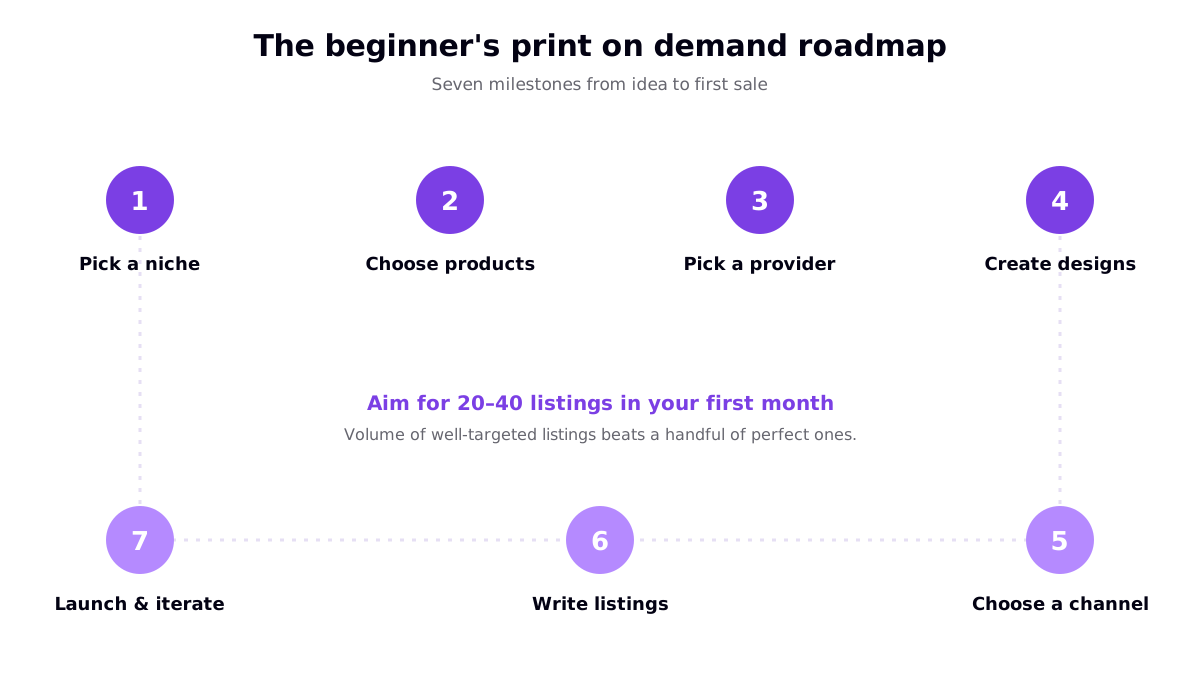
1. Pick a specific niche
"Funny t-shirts" is not a niche; "gifts for dog groomers" is. A specific niche tells you what to design, gives you the exact words buyers search for, and drops you into smaller search results where a brand-new shop can rank. Pick two or three to start.
2. Choose one or two products
Start with products that are cheap to test and commonly bought as gifts: t-shirts, mugs, posters, or stickers. Resist launching ten product types at once. One or two products across one or two niches is a real test; everything else is noise.
3. Pick a POD provider
The three most popular beginner providers are Printify, Printful, and Gelato — all free to join. More on choosing between them below.
4. Create print-ready designs
You do not need Illustrator skills. Free tools like Canva and AI image generators can produce sellable artwork from a text prompt. The one technical rule: files must be print-ready — roughly 300 DPI at the product's print size, usually a transparent-background PNG for apparel.
5. Choose a sales channel
Etsy is the default first channel because it already has buyers searching for gifts and niche apparel. Your own Shopify store gives better margins but no built-in traffic, so it works better as a second step once designs are proven.
6. Write listings that rank
Marketplace search rewards relevance. Put your main keyword near the front of the title, use every available tag with multi-word phrases, and write a description that repeats key phrases naturally.
7. Launch, measure, iterate
Your first listings are data, not a payday. After a few weeks, look at views and favorites: no views is an SEO problem, views with no sales is a design problem, and favorites with sales is a winner to expand.
What it costs to start (with real numbers)
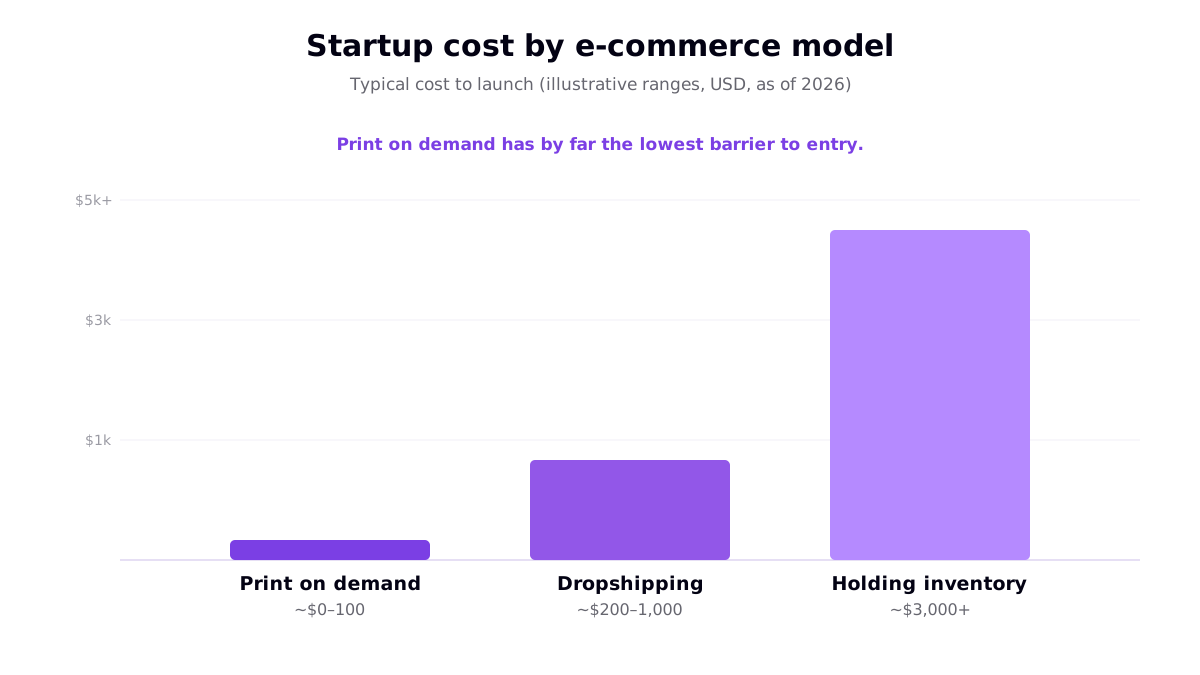
The reason print on demand is beginner-friendly is the price of entry. Compared with generic dropshipping or holding your own inventory, POD is dramatically cheaper to launch.
| Cost item | Typical amount (as of 2026) | Notes |
|---|---|---|
| POD provider account | Free | Printify, Printful, and Gelato are free; paid tiers add discounts |
| Etsy listing fee | $0.20 per listing | Renews on each sale; 6.5% transaction fee and payment fee also apply |
| Design tools | $0–30/month | Canva and AI generators cover most beginner needs |
| Sample orders | ~$10–20 each | Order at least one per product type before scaling |
Etsy's fee structure as of 2026 is a $0.20 listing fee, a 6.5% transaction fee on the order total including shipping, and a payment processing fee (3% + $0.25 for US sellers). Add those in when you price your products so your margin survives.
Best print on demand sites for beginners
You need two things: a fulfilment provider (who prints) and a sales channel (where buyers find you). Here is how the popular beginner options compare.
| Provider | Model | Best for beginners because |
|---|---|---|
| Printify | Network of third-party print shops | Largest catalogue and lowest base costs; you pick the printer per product |
| Printful | In-house printing facilities | Consistent quality and strong branding options; easier to trust for a first store |
| Gelato | Global network printing near the buyer | Fast international delivery; good if you expect overseas customers |
For the sales side, Etsy is the usual first stop. When you are ready to compare more options, see our full list of the best print on demand sites.
Beginner mistakes (and the fixes)
Almost every failed beginner shop makes the same handful of avoidable errors. None of them are about talent — they are about process.
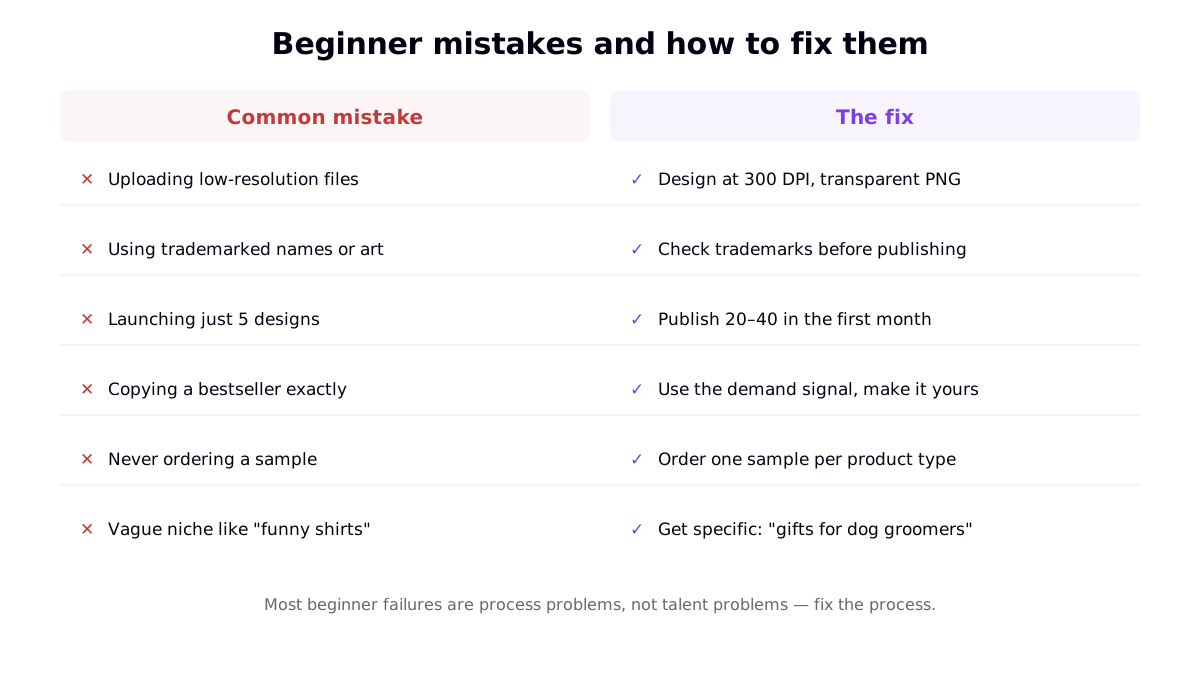
- Low-resolution files. Blurry prints cause refunds and bad reviews. Export at roughly 300 DPI.
- Trademarks. Using a brand name, character, or team logo is the fastest route to a suspended shop. Check first.
- Too few listings. Five designs is not a test. Aim for 20–40 in month one.
- Copying bestsellers. You will always be a worse version of an established listing. Take the demand signal, make a different design.
- Skipping samples. Print quality varies by product and provider. Verify before you scale a design.
Your first-week checklist
- Write down three specific niches you find interesting.
- Search each on Etsy and note whether competition looks beatable.
- Create free accounts with one provider and one sales channel.
- Make five print-ready designs for your strongest niche.
- Publish five listings with keyword-rich titles and tags.
- Order one sample to confirm quality.
Do that, then repeat until you have 20–40 listings. Momentum beats perfection at this stage.
Frequently asked questions
How do I start print on demand as a beginner?
Follow a simple order: pick a specific niche, choose one or two products to test, join a free POD provider like Printify, Printful, or Gelato, create print-ready designs, list them on Etsy or your own store, and launch. Aim for 20 to 40 listings in your first month rather than a handful of perfect ones.
How much does it cost to start print on demand?
You can start for well under $100. POD providers are free to join and only charge a base cost once an item sells. Your real costs are marketplace listing fees (Etsy charges $0.20 per listing as of 2026), an optional design tool subscription, and a few sample orders. There is no inventory to buy.
What are the best print on demand sites for beginners?
Beginners usually start with Printify for its large catalogue and low base costs, Printful for consistent in-house quality and branding, or Gelato for fast global delivery. For a marketplace with built-in buyer traffic, Etsy is the most common first sales channel.
Do I need design skills to start print on demand?
No. Free tools like Canva and AI image generators let beginners create sellable designs without traditional graphic design skills. What matters more is taste — choosing what fits a niche — and making files print-ready at the correct resolution and format.