Best Print on Demand Products to Sell in 2026
The best print on demand products to sell in 2026 are the ones that balance three things at once: healthy profit margin, beatable competition, and low design effort. Apparel like t-shirts sells the most, but it is also the most crowded — the smartest sellers pair a proven category with an underserved niche.
This guide ranks the top POD product ideas by margin, competition, and how hard they are to design, so you can pick where to start instead of guessing. We will cover best-sellers, the most profitable options, trending picks, and high-ticket products, backed by charts you can act on.
The two numbers that decide a good product
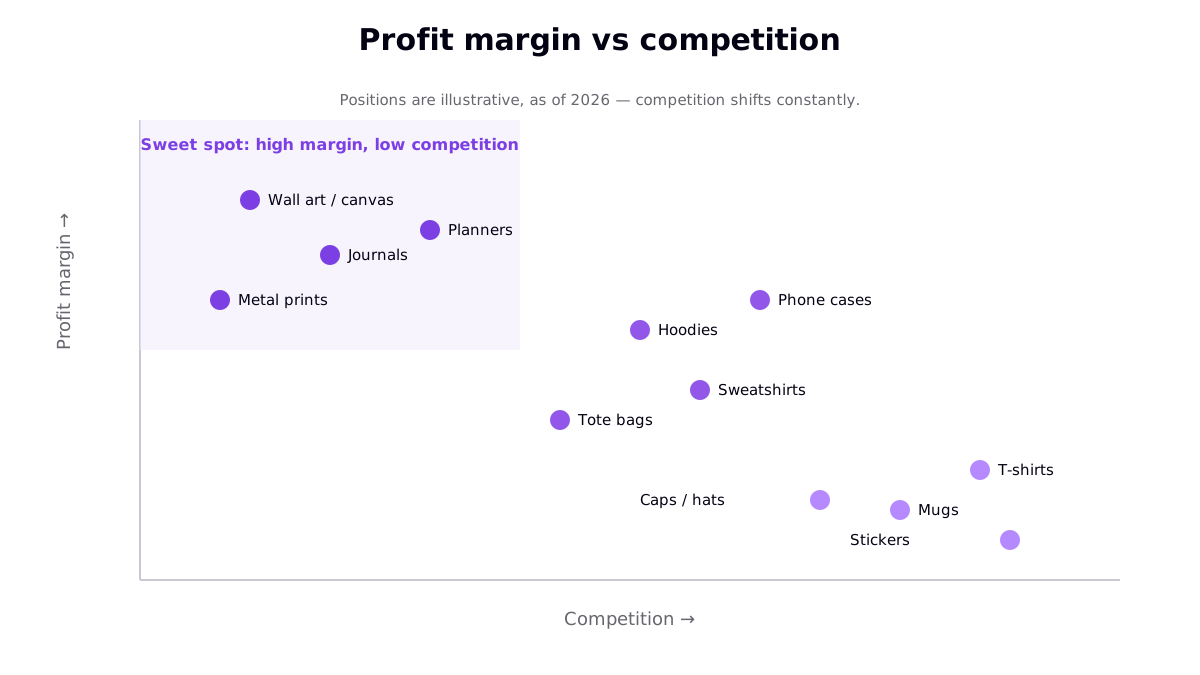
Ignore "top 10" lists that only rank by sales volume. A product is only worth selling if it clears two hurdles: it has enough margin after base cost and fees, and it faces competition you can realistically beat. A t-shirt sells constantly but competes against millions of listings; a niche journal sells less often but faces far fewer rivals.
Best-selling print on demand products
These are the highest-volume categories — the products buyers reach for by habit. They sell reliably, but you compete with everyone.
| Product | Why it sells | Watch out for |
|---|---|---|
| T-shirts | The biggest POD category; endless niches; simple front print | Extremely competitive; needs a sharp niche to stand out |
| Hoodies & sweatshirts | Higher price point; demand spikes in colder months | Higher base cost; sizing and colour variants add work |
| Mugs | Cheap base cost; strong personalised-gift behaviour | Thin margins; wrap-around templates need care |
| Stickers | Impulse buys; customers buy in multiples | Small per-unit margin — sell in packs |
| Tote bags | Simple print area; popular in eco and book niches | Lower search volume than apparel |
Most profitable print on demand products
Profit is not the same as price, and it is definitely not the same as volume. The most profitable products combine a decent retail price with a manageable base cost and, crucially, lower competition so you do not have to discount to sell.
- Wall art, posters & canvas. High perceived value and margins, and a category where AI-generated art performs especially well. See our guide to print on demand wall art.
- Journals & planners. Low-content publishing with strong repeat-buy potential and less design skill required than apparel graphics. More in print on demand journals.
- Hoodies. The highest-margin apparel item by absolute dollars per sale, even after the higher base cost.
Easy to design vs high margin: where to start
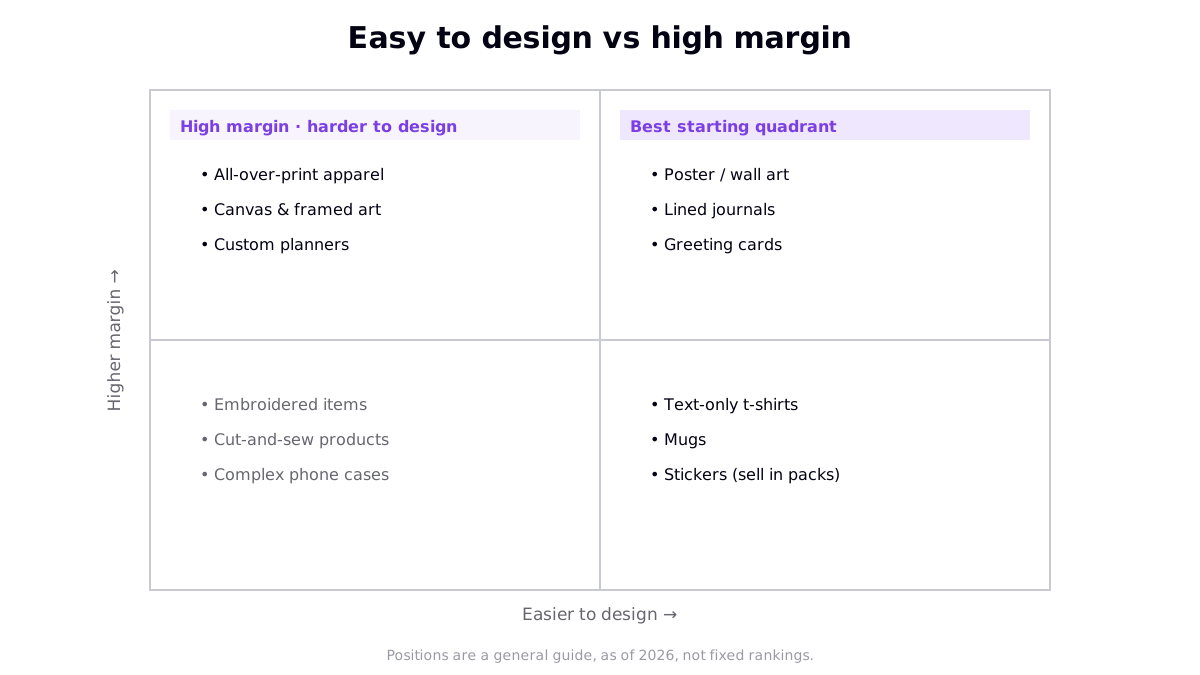
If you are new, you want products in the corner that is both easy to design and high margin. That is where posters, journals, and greeting cards live. Apparel graphics look simple but are surprisingly hard to get right for dark and light garments; wall art forgives a lot more.
High-ticket print on demand products
High-ticket items trade volume for margin. You will sell fewer, but each sale is worth much more, which suits sellers who prefer premium positioning over racing on price.
| Product | Why it commands a premium |
|---|---|
| Framed & canvas prints | Buyers treat them as home decor, not merch, and pay accordingly |
| Metal prints | Distinctive finish with high perceived quality |
| All-over-print apparel | Cut-and-sew production feels custom and justifies a higher price |
| Premium blankets & home textiles | Large printable area and strong gift appeal |
Unique and trending product ideas for 2026
Beyond the staples, a few categories are trending upward as of 2026. Treat these as directions to explore, not guarantees:
- Personalised everything. Products that add a name, date, or photo consistently outsell generic versions and command higher prices.
- Premium drinkware. Insulated bottles and tumblers have moved beyond plain mugs.
- Pet products. Custom pet portraits on apparel, mugs, and blankets are a durable, emotional niche.
- Wall art bundles. Selling matching sets (a gallery wall) raises average order value.
How much can each product actually earn?
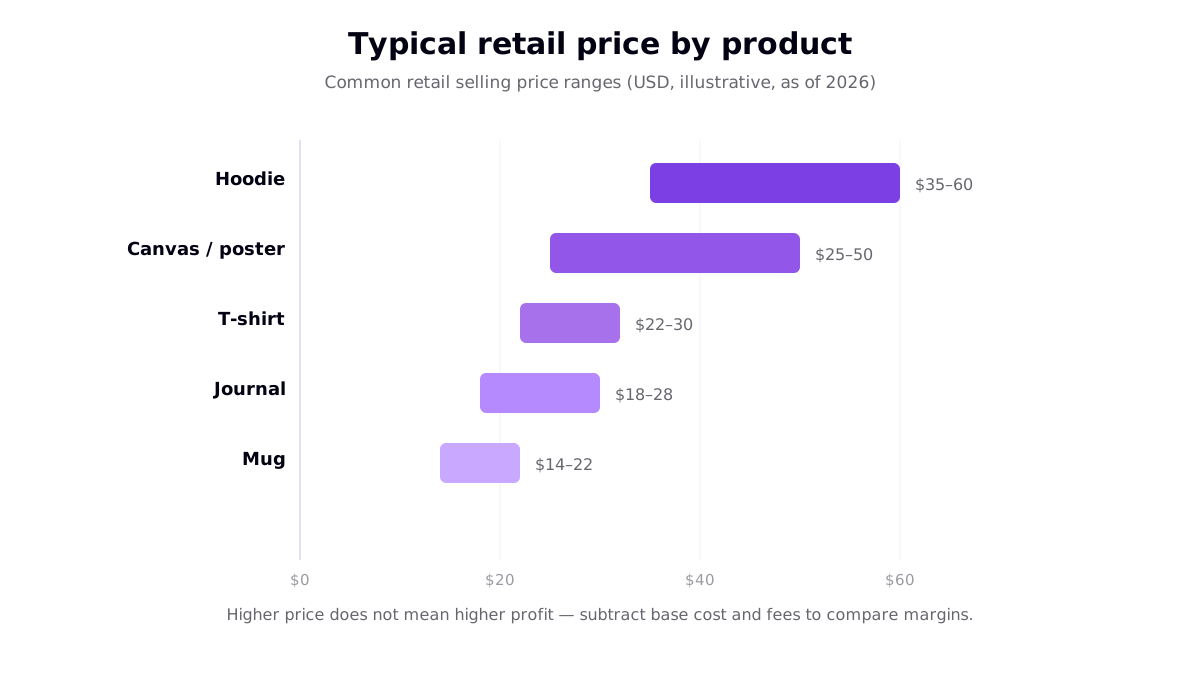
Margin, not price, is what lands in your pocket. To estimate profit on any product, take the retail price you can realistically charge, subtract the provider's base cost, then subtract marketplace fees. On Etsy as of 2026 that means a $0.20 listing fee, a 6.5% transaction fee on the order total, and a payment processing fee (3% + $0.25 for US sellers). Do this before you commit to a product, not after.
| Product | Example retail | Rough profit after base cost & fees |
|---|---|---|
| Poster / wall art | $25–40 | Often the healthiest margin for the design effort involved |
| Hoodie | $40–55 | Highest dollars per sale, though base cost is higher too |
| T-shirt | $24–28 | Modest per sale; profit comes from volume and niche fit |
| Mug | $16–20 | Small per unit; works as an add-on or gift item |
| Journal | $18–26 | Strong margin with repeat-buy and bundle potential |
These are illustrative ranges, as of 2026 — your real numbers depend on the exact garment, provider, and where you sell. The lesson holds regardless: a $16 mug can out-earn a $28 t-shirt once you account for base cost and competition.
Mistakes people make choosing products
- Chasing volume-only "top 10" lists. High sales counts usually mean high competition. A product is only good for you if you can rank against everyone else selling it.
- Ignoring design difficulty. Apparel graphics for both light and dark garments take more skill than they look. Wall art and journals forgive far more, which is why they suit beginners.
- Launching too many product types at once. Spreading ten products across your first designs gives you no clear signal. Master one, then expand.
- Forgetting shipping in the margin. On heavier or bulkier products, shipping can quietly erase the profit you thought you had.
How to pick your first product
Do not overthink it. Choose one product from the easy-and-high-margin quadrant — a poster or journal is ideal — and pair it with a specific niche. Make 10 to 20 designs, list them, and let the data tell you what works before you expand into more product types. A single well-chosen product with a strong niche beats ten products with none. Once one product proves itself, the fastest way to grow is to put the same winning design onto adjacent products in your quadrant, so one piece of artwork earns across several listings.
Frequently asked questions
What are the best selling print on demand products?
Apparel leads by volume, with t-shirts and hoodies the top sellers, followed by mugs, stickers, tote bags, hats, posters, and phone cases. Apparel accounts for a large share of all POD sales, so t-shirts remain the most common starting product.
What are the most profitable print on demand products?
Products with high perceived value and lower competition tend to have the best margins: wall art and canvas prints, journals and planners, and hoodies. High-ticket items like framed art and metal prints can carry strong per-unit profit, though they sell in lower volume than t-shirts.
What are good print on demand products for beginners?
Beginners do well with products that are cheap to test and forgiving to print: t-shirts, mugs, posters, and stickers. Posters and journals are especially beginner-friendly because they are easy to design and carry healthy margins with less competition than apparel.
What are trending print on demand products in 2026?
As of 2026, wall art and canvas, personalised journals and planners, all-over-print apparel, and premium drinkware are trending upward. Personalised and gift-oriented products continue to grow because buyers pay a premium for something made for them.