Print on Demand Art Prints: Wall Art, Posters & Canvas
Print on demand art prints let you sell posters, framed pieces, canvas, and metal wall art without holding stock: you upload artwork once, and a provider prints and ships each order as it comes in. It is one of the highest-margin corners of print on demand because buyers treat wall art as home decor, not merch, and pay accordingly.
This guide covers the formats worth offering, how to choose a wall-art provider, the standard sizes and aspect ratios to design around, realistic base costs and margins, and how to make your files print-ready so prints arrive sharp.
Why wall art is a strong POD category
Apparel is crowded and margins are thin. Wall art flips both problems: competition is lower in many niches, and a framed or canvas piece has enough perceived value that customers happily pay premium prices. One more advantage — a single artwork can sell across every format and size, so one design becomes a whole product line. AI-generated and illustrative art also tends to perform especially well here, where a poster is judged on the image, not on garment fit.
The four wall art formats to offer
Most POD wall-art sales fall into four formats. Offering a range lets buyers self-select by budget and pushes up your average order value.
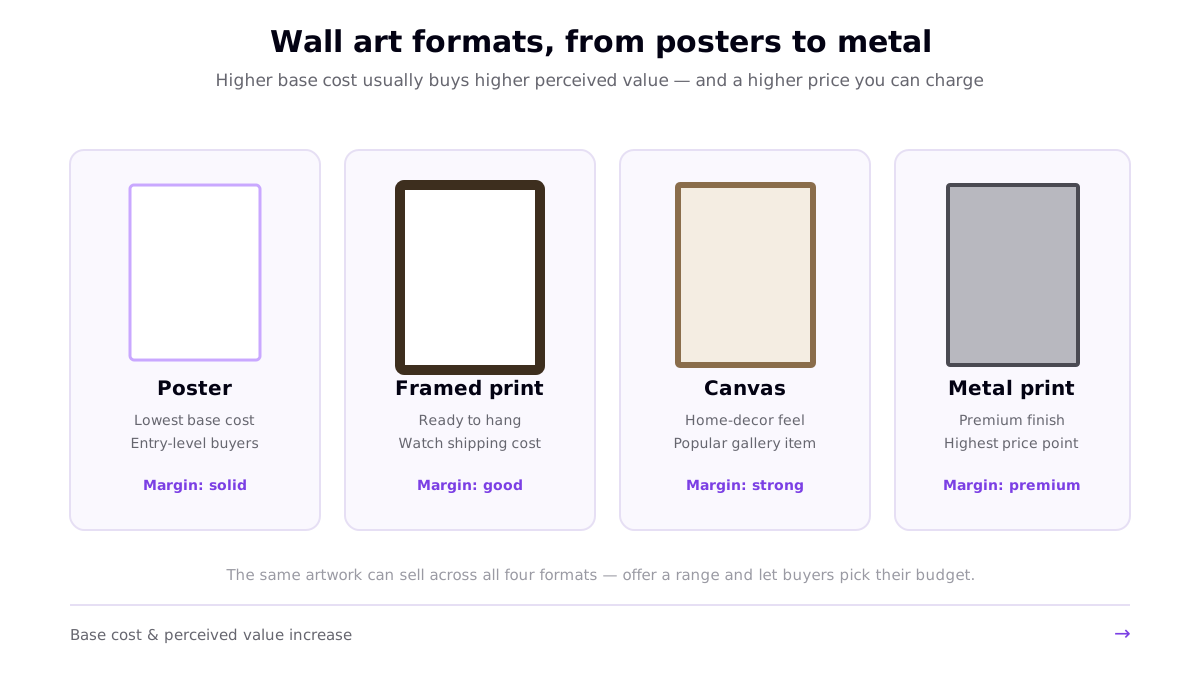
- Posters & art prints. Lowest base cost and the easiest entry point for buyers. Solid margins and the workhorse of most wall-art shops.
- Framed prints. Ready to hang, higher price — just watch shipping cost, which climbs with glass and frame weight.
- Canvas. A gallery feel that reads as decor, popular for living-room pieces and strong margins.
- Metal prints. A premium finish with the highest price point; lower volume, but excellent per-unit profit.
Best print on demand providers for wall art
Wall-art providers fall into two camps: fine-art specialists that live and die on print quality, and broad POD platforms that are convenient if you also sell other products.
| Provider | Focus | Best for |
|---|---|---|
| Prodigi | Fine-art prints and posters, global print network | Colour-accurate art prints with wide format range |
| theprintspace | Giclée fine-art printing and dropshipping | Photographers and artists wanting gallery quality |
| Printseekers | Dedicated wall-art fulfilment (canvas, framed, metal) | Sellers focused only on wall decor |
| Lumaprints | Canvas, paper, metal, framed, peel-and-stick | Wide wall-art catalogue in one place |
| Printful | Giclée and posters alongside apparel | Shops selling both apparel and wall art |
| Gelato | Local production in many countries | Faster, cheaper international delivery |
Whichever you pick, order a sample first. Paper stock, ink, and colour accuracy vary between providers, and a print that looks perfect on screen can shift on paper. For a deeper look at one global option, see our Gelato print on demand review.
Standard sizes and aspect ratios
The single biggest technical mistake in wall art is designing to an odd size that crops badly when a customer picks a different one. The fix is to work at a consistent aspect ratio and offer several sizes within it.
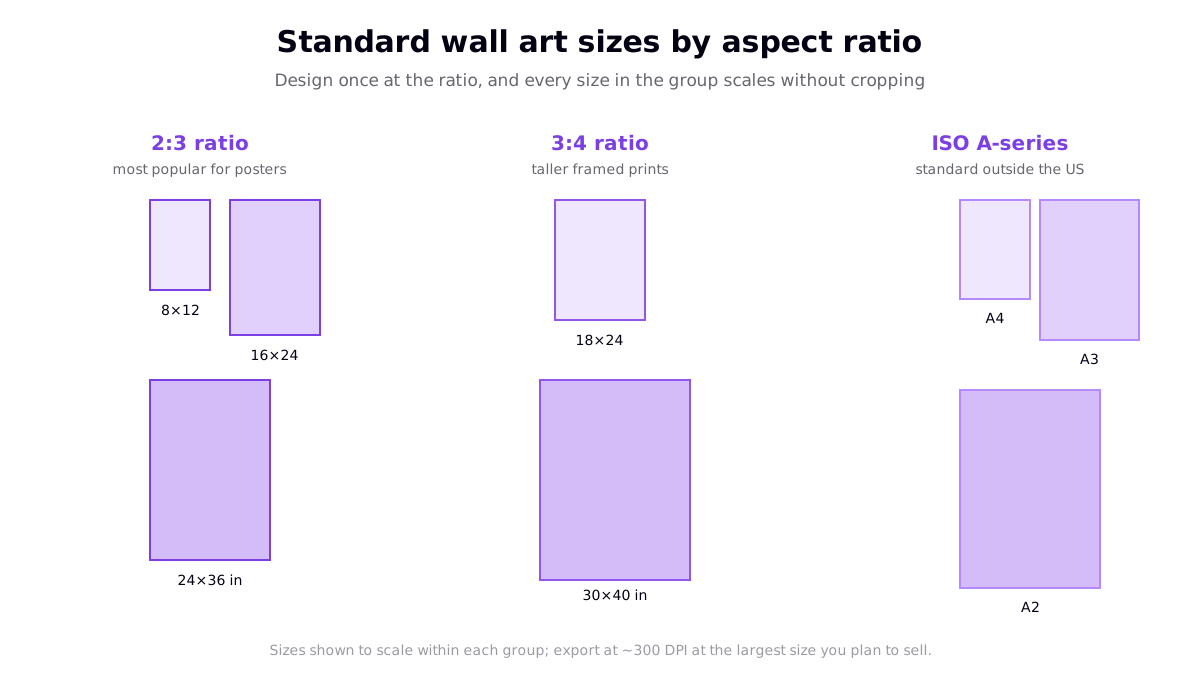
- 2:3 ratio — the most popular for posters. Common sizes: 8×12, 16×24, and 24×36 inches.
- 3:4 ratio — suits taller framed prints. Common sizes: 18×24 and 30×40 inches.
- ISO A-series — standard outside the US, sharing one ratio from A4 up to A2 and beyond.
Pick one ratio per design and export at roughly 300 DPI at the largest size you intend to sell. Everything smaller then downsizes cleanly.
Base costs and margins
Wall art spans a wide price range. Budget poster providers can start very low, while canvas, metal, and true giclée fine-art printing cost more but justify much higher retail prices.
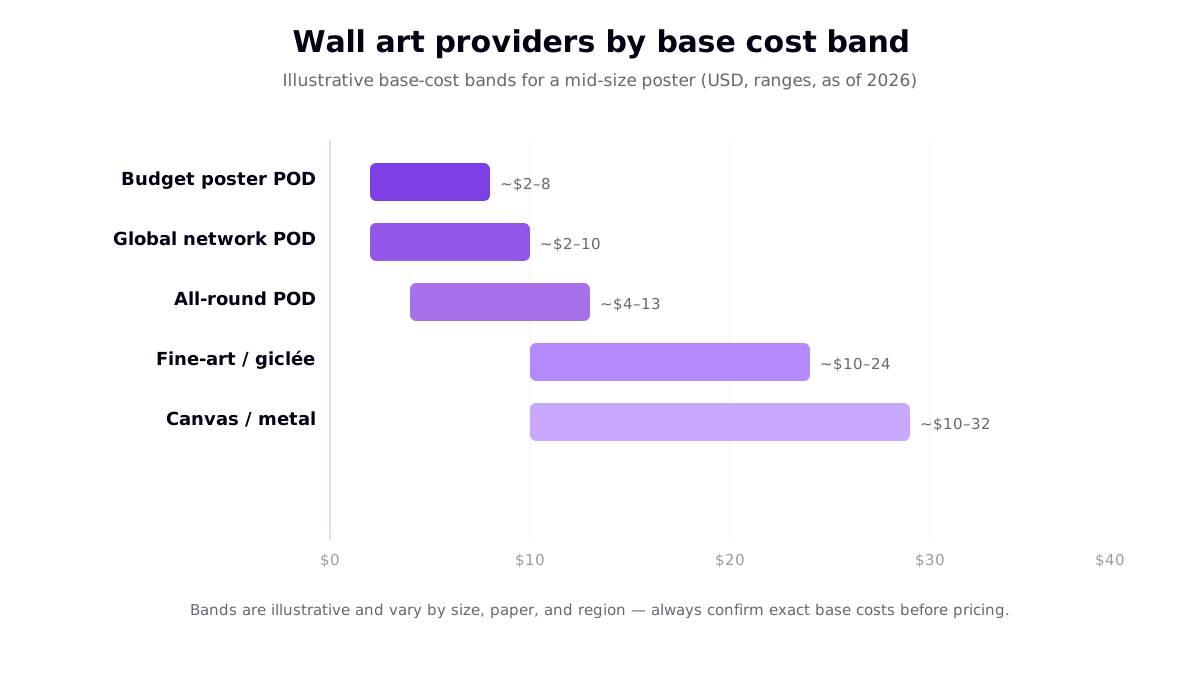
To price any piece, take a realistic retail price, subtract the provider's base cost for that exact size, then subtract marketplace fees. If you sell on Etsy, as of 2026 that means a $0.20 listing fee, a 6.5% transaction fee on the order total, and payment processing (around 3% + $0.25 for US sellers). Do this math before you list, because shipping on framed and large canvas pieces can quietly erase a margin you assumed was healthy.
| Format | Example retail | Notes on margin |
|---|---|---|
| Poster (mid-size) | $20–35 | Low base cost; the reliable volume seller |
| Framed print | $45–90 | Higher price, but factor in heavier shipping |
| Canvas | $40–120 | Strong perceived value and margin |
| Metal print | $60–150+ | Premium, lower volume, high per-unit profit |
These are illustrative ranges, as of 2026 — your real numbers depend on size, provider, and region. The pattern holds regardless: posters win on volume, canvas and metal win on per-sale profit. For a broader view of how wall art stacks up against other categories, see our guide to the best print on demand products.
Making wall art print-ready
Wall art is unforgiving about resolution because it is viewed up close and printed large. Aim for about 300 DPI at the final size — a 24×36 inch poster at 300 DPI is roughly 7200×10800 pixels. Use a colour profile your provider recommends (often sRGB for their pipeline), and preview the crop at every size you offer so nothing important sits near an edge that a different ratio would clip.
If your source art comes from an AI generator or a smaller file, upscale it to the target pixel dimensions before uploading; our 300 DPI print-ready guide walks through exactly how to hit these numbers without softening the image.
How to start a wall art shop
Do not launch ten formats at once. Pick one niche (say, botanical line art or minimalist travel posters), produce 10–20 designs, and offer each as a poster and a canvas at two or three sizes. List them, watch which designs get views and favourites, then expand the winners into framed and metal formats. One strong design across several formats and sizes will out-earn a scattered catalogue every time. Artists specifically should also read our guide to print on demand for artists.
Frequently asked questions
What is the best print on demand for wall art?
It depends on your priority. Dedicated wall-art specialists such as Prodigi, theprintspace, Printseekers, and Lumaprints focus on fine-art and canvas quality; broad providers like Printful and Gelato are convenient if you also sell apparel, with Gelato printing locally in many countries for faster international delivery. Order a sample from any provider before you scale, because paper and colour accuracy vary.
What sizes should I offer for print on demand wall art?
Design at a consistent aspect ratio and offer several sizes within it. The 2:3 ratio (8×12, 16×24, 24×36 inches) is the most popular for posters; 3:4 (18×24, 30×40 inches) suits taller framed prints; and the ISO A-series (A4, A3, A2) is standard outside the US. Export at roughly 300 DPI at the largest size you plan to sell so every smaller size stays sharp.
Is print on demand wall art profitable?
It can be, because wall art has high perceived value and buyers treat framed and canvas pieces as home decor rather than merch. Posters carry solid margins with the lowest base cost, while canvas and metal prints command premium prices. The main things to watch are shipping cost on framed and large items and colour accuracy, which is why sampling matters.
What resolution do print on demand posters need?
Aim for about 300 DPI at the final print size. A 24×36 inch poster at 300 DPI is roughly 7200 by 10800 pixels. Large-format pieces viewed from a distance can look acceptable at 150 DPI, but designing to 300 DPI at your biggest size keeps every size in the range crisp and avoids blurry or pixelated prints.