Print on Demand for Artists: Best Sites & Tips
Print on demand for artists is the simplest way to turn your artwork into sellable products without touching inventory: you upload a design, a customer orders a print or a t-shirt, and a fulfilment partner prints and ships it for you. You keep the difference between the retail price and the base cost, and you never buy stock upfront.
That model has quietly become one of the main ways working artists earn from their catalogue. The global print on demand market was valued in the tens of billions of dollars and is forecast to keep growing at a double-digit rate through the early 2030s, with apparel the single largest product category (Grand View Research, as of 2026). This guide covers how it works for artists specifically, the best types of sites, how the money splits, and the file and pricing tips that separate shops that sell from shops that stall.
How print on demand works for artists
The mechanics are the same whether you sell a poster or a hoodie:
- You upload artwork and place it on one or more products through a print on demand platform.
- You publish it on a marketplace, your own store, or both.
- A customer buys it and pays the retail price.
- The platform prints and ships the item directly to the buyer and charges you the base cost.
- You keep the margin — retail minus base cost, minus any marketplace or platform fees.
Because production only happens after a sale, your risk is close to zero. The trade-off is thinner margins than selling originals, which is why the artists who do well treat it as a catalogue business: many designs, many products, steady listing volume.
The three ways artists sell print on demand
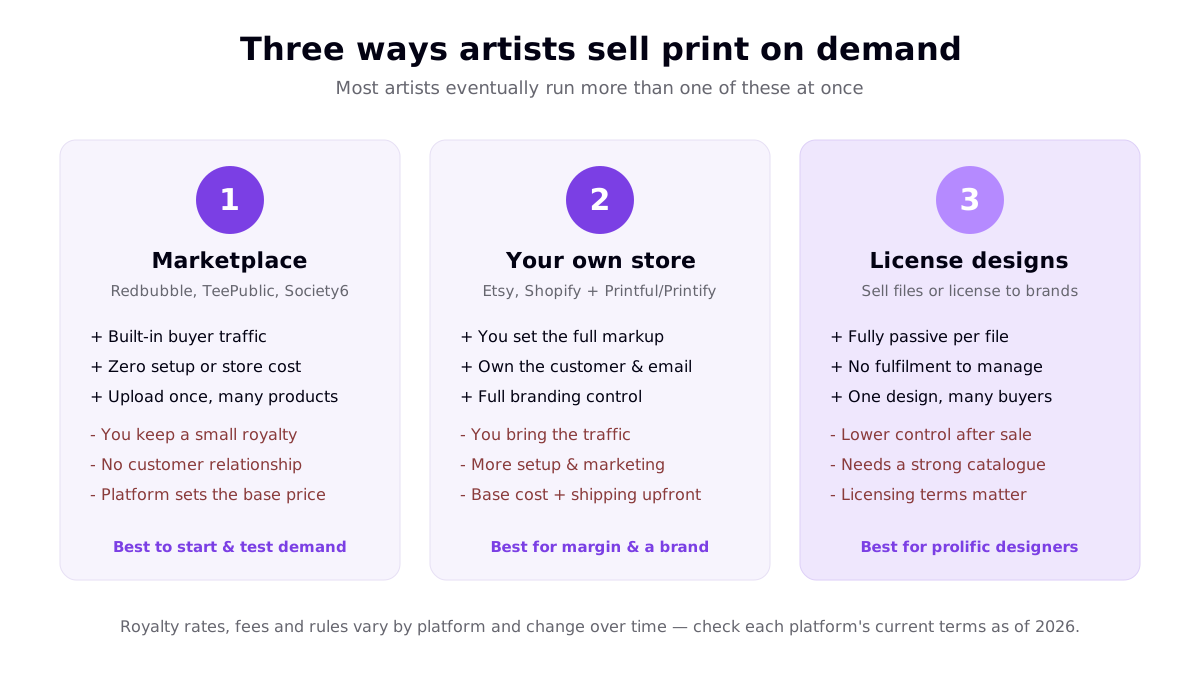
Almost every artist selling print on demand falls into one of three models, and most eventually run more than one at once.
1. Open marketplaces
Sites like Redbubble, TeePublic and Society6 are open marketplaces: you upload art, choose which products it appears on, and the platform handles production, shipping and customer service. They bring their own buyer traffic, which is the biggest advantage for a brand-new artist. The catch is that you keep a smaller royalty, the platform controls the base price, and you do not own the customer relationship. Royalty structures and fees on these platforms have shifted over the years, so always check the current terms before you commit — as of 2026, several have adjusted their fee tiers and payout rules.
2. Your own store
Here you sell on Etsy or your own Shopify site and connect a fulfilment partner such as Printful, Printify or Gelato. These partners charge no per-order royalty — you pay the base cost plus shipping when an order comes in and keep the full retail spread, minus your sales channel's fees. That gives you far more margin and full branding control, but you have to bring your own traffic and do your own marketing. It is the natural home for designs you have already proven.
3. Licensing your designs
Instead of selling finished products, you can sell or license the design files themselves — to other sellers, to brands, or as commercial-use downloads. This is the most passive model per file and removes fulfilment entirely, but you give up control over how the art is used and you need a strong catalogue for it to add up. See our guide to selling t-shirt designs online for how the licensing route works in practice.
Best types of print on demand sites for artists
Rather than crown one winner, it helps to match the platform to what you are selling.
| If you want to sell… | Look at | Why |
|---|---|---|
| Apparel & accessories on a marketplace | Redbubble, TeePublic | Large built-in audiences searching for graphic products; easiest place to test designs |
| Curated design-led products | Society6, Threadless | Design-focused catalogues and communities; more curated in recent years |
| Fine art prints, framed & canvas | Specialist wall-art platforms | Built for display-quality prints with pricing control — see our wall art guide |
| Your own branded store | Etsy or Shopify + Printful / Printify / Gelato | You keep the full markup and own the customer; best for proven designs |
For a broader ranked breakdown across seller types, see our roundup of the best print on demand sites and the deeper look at print on demand marketplaces for artists.
How the money actually splits
The single biggest factor in your earnings is who controls the price. On a fixed-royalty marketplace, the platform sets the base price and you earn a defined royalty or capped markup on top — convenient, but your slice is small. On your own store with a fulfilment partner, you set the retail price yourself and keep everything above base cost and shipping, minus channel and payment fees.
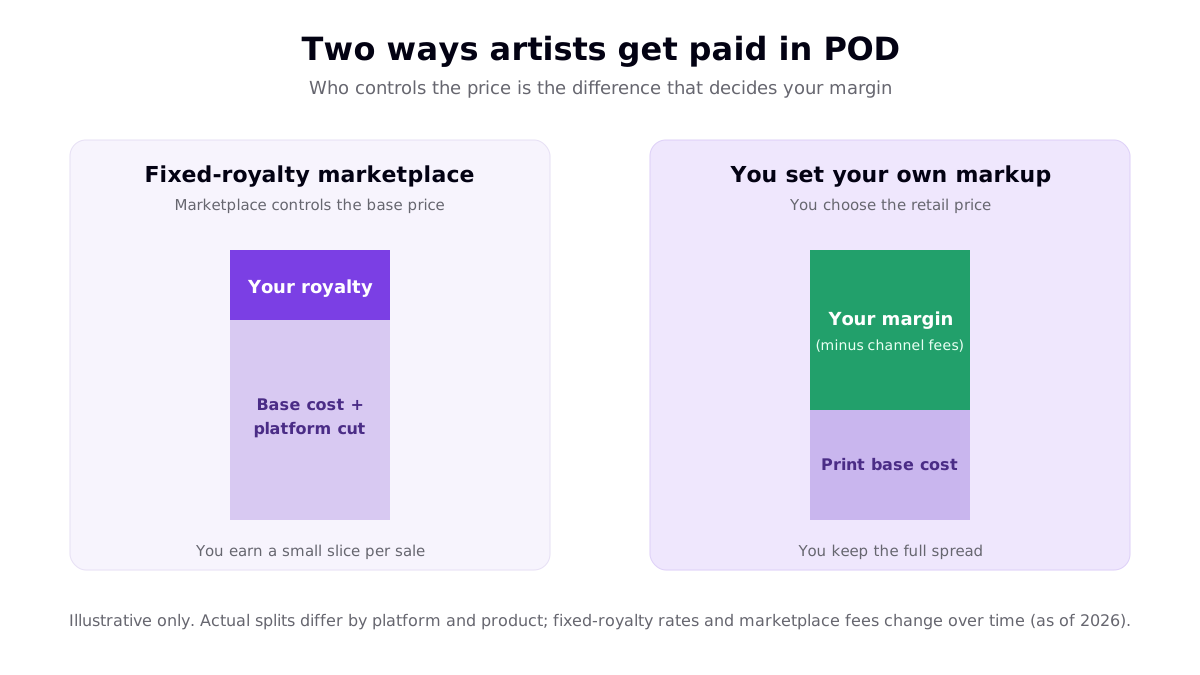
Neither model is "better" in the abstract. Marketplaces trade margin for traffic; own stores trade traffic for margin. The pragmatic play for most artists is to use a marketplace to find out which designs sell, then move those winners to a higher-margin own store where you control pricing and can build a repeat audience.
Preparing print-ready files (the part that trips artists up)
Great art still sells badly if the file is wrong. A few technical basics protect your reviews and your margins:
- Resolution: Aim for roughly 300 DPI at the final print size. A 12-inch-wide design therefore needs about 3,600 pixels across. Low-resolution files print fuzzy and drive refunds.
- Format for apparel: A high-resolution PNG with a transparent background is the widely accepted standard, so the garment shows through around your art.
- Vector where it helps: For logos, text and simple graphics, vector files (SVG, AI, PDF) scale to any size without losing sharpness and separate cleanly for screen printing.
- Photographic wall art: Keep raster files at 300 DPI at print size — see our 300 DPI print-ready guide for how to hit that with AI-generated art.
- Keep a working file: Save your editable original and export a flattened print file for upload, so you can revise without starting over.
Tips to actually sell as an artist
- Pick an audience, not just a style. "Botanical line art for plant lovers" is easier to rank and sell than "my art." Specific niches give you keywords and a buyer.
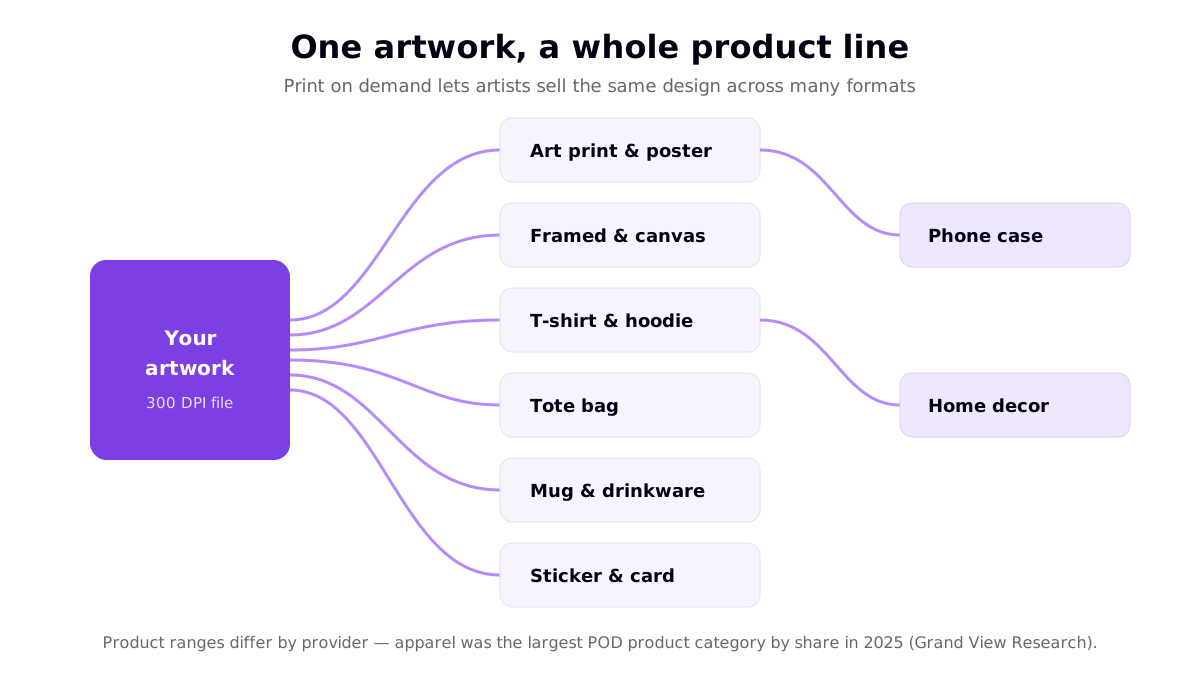
- Turn one artwork into many products. The same design on a print, a tote, a mug and a shirt multiplies your listings from a single upload.
- Publish in volume. POD is a numbers game. A steady stream of listings beats a handful of "perfect" ones — you learn which themes sell only by putting them up.
- Order a sample. Print quality varies by provider and product. Check colour and detail on the real thing before you scale a design.
- Only sell what you own. Fan art of brands, characters or logos is the fastest route to a suspended shop. Read the trademark rules for POD sellers before you publish.
- Generate faster. If it takes an hour to prepare each product, you test few ideas; automate design and file prep and you can test many — see our comparison of the best AI image generators for print on demand.
Is print on demand worth it for artists in 2026?
Yes — with realistic expectations. It will not replace selling originals overnight, and generic uploads no longer sell in a crowded market. But as a low-risk way to earn recurring income from a back catalogue, reach buyers worldwide, and test which of your ideas resonate before investing more, it remains one of the strongest options available to independent artists. The winners are the ones who treat it like a catalogue: a clear niche, print-ready files, and a steady flow of new designs.
Frequently asked questions
What is the best print on demand site for artists?
There is no single best site — it depends on your goal. Open marketplaces like Redbubble, TeePublic and Society6 give you built-in traffic and are the easiest place to start, but you keep a smaller royalty and the platform sets the base price. If margin and brand control matter more, run your own store on Etsy or Shopify with a fulfilment partner such as Printful, Printify or Gelato, where you set the retail price and keep the full spread minus channel fees. Fine art sellers often add a specialist wall-art platform. Most working artists use a marketplace to test demand and an own store for their proven designs.
How do artists make money with print on demand?
Artists upload artwork, put it on products, and earn the difference between the retail price and the print base cost. On fixed-royalty marketplaces you earn a set royalty or markup per sale while the platform handles production, shipping and support. On your own store you pay the base cost plus shipping when an order comes in and keep everything above that, minus marketplace and payment fees. The provider prints only after a customer orders, so there is no inventory and no upfront production cost.
Do you need to be a professional artist to use print on demand?
No. Print on demand rewards designs that fit a specific niche and are technically print-ready more than it rewards fine-art credentials. You do need usable artwork at the right resolution (roughly 300 DPI at print size), a transparent-background PNG for apparel, and the right file format for the print method. Hobbyists, illustrators and designers all sell successfully by focusing on a clear audience and producing a steady volume of listings.
What file format and resolution do artists need for print on demand?
For most apparel a high-resolution PNG with a transparent background is the standard, exported at roughly 300 DPI at the final print size. Vector formats like SVG, AI or PDF are ideal for logos, text and simple graphics because they scale without losing quality. For photographic wall art, a high-resolution raster file at 300 DPI at print size gives sharp results. Always keep an editable working file and export a flattened print file for upload.
Resources
- Grand View Research — Print On Demand Market Size & Share Report (market size and product-category share)
- Printful — Print-on-Demand for Artists (top ranking result for the primary keyword)
- Fourthwall — 10 Best Print-On-Demand Sites for Artists (top ranking result)
- Printify — Best Print-on-Demand Sites for Artists (top ranking result)
- Printful — How to Prepare the Perfect Print File (file format and resolution reference)