How to Design and Sell T-Shirts Online (2026)
You can design and sell t shirts online without ever owning a printer, holding stock, or shipping a single package. The trick most beginners miss is that one design can earn money three different ways — you can sell finished shirts, license the artwork for royalties, or sell the design file itself. Each path has a different amount of work and a different payout, and you can run all three from the same file.
This guide walks through those three models, where to sell, what you can realistically earn per shirt, and how to price and protect your designs so they keep paying out for years.
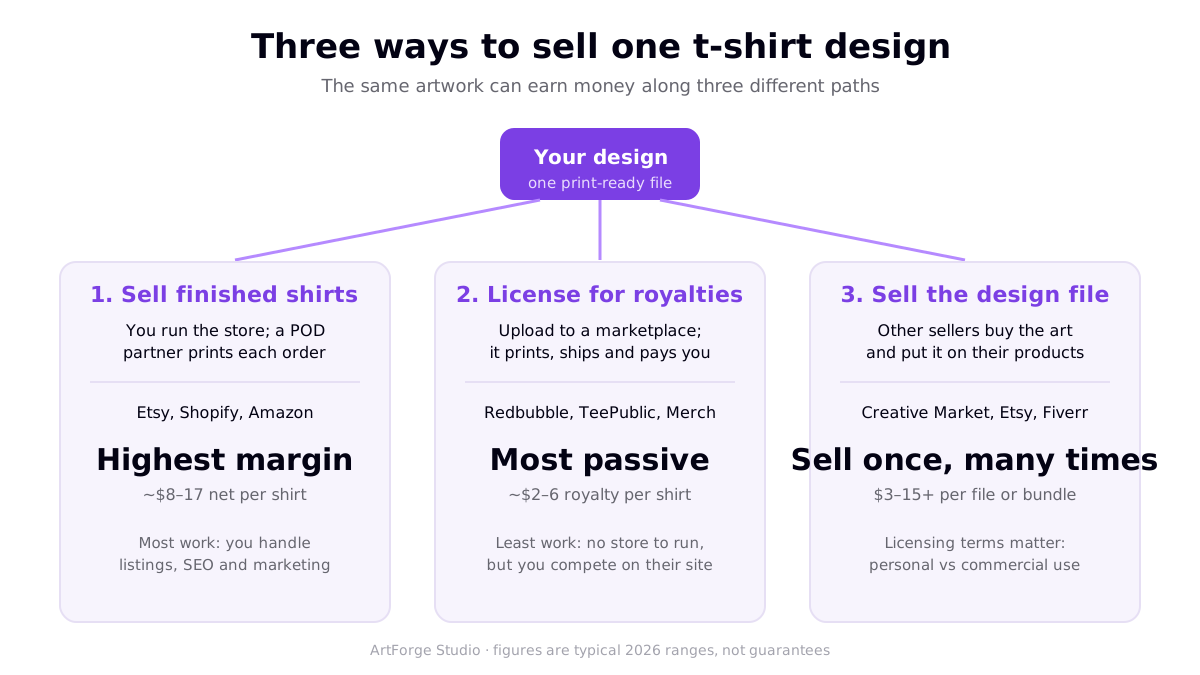
The three ways to sell a t-shirt design
Before picking a platform, decide which model fits how much time you want to spend. The models are not exclusive — the smartest sellers stack them.
1. Sell finished shirts (highest margin, most work)
You create the listing, set the retail price, and a print-on-demand (POD) partner prints and ships each order after a customer buys. You keep the difference between your price and the base cost, minus platform fees. This is where the money is best — net margins commonly land around $8–$17 per shirt — but you are responsible for listings, search optimization, mockups, and marketing. Etsy, your own Shopify store, and Amazon are the usual homes for this model.
2. License the design for royalties (most passive)
On a marketplace like Redbubble, TeePublic, or Amazon Merch on Demand, you upload the artwork and the platform does everything else: it puts your design on its products, prints, ships, handles returns, and pays you a royalty. You give up margin and pricing control in exchange for zero operations. Royalties are typically a few dollars per shirt. It is the closest thing to genuinely passive income in this space, and it pairs well with model 1 because the same file works everywhere.
3. Sell the design file itself (sell once, many times)
Instead of selling shirts, you sell the artwork to other sellers who put it on their own products. Vector bundles, PNG packs, and SVG cut files sell on Creative Market, Etsy, and gig platforms like Fiverr. The appeal is leverage: you make a file once and can license it to many buyers. The catch is that licensing terms matter enormously — you must be explicit about personal vs commercial vs extended use, and buyers will look for exactly that clarity.
Where to sell t-shirt designs online
Every platform is a trade between built-in traffic and margin. Marketplaces hand you shoppers but take a cut and cap your control; your own store keeps more of each sale but you have to bring every visitor yourself.
| Platform | Model | Best for | Trade-off |
|---|---|---|---|
| Etsy | You list, a POD partner fulfils | Buyers already searching for gifts and niche apparel | Listing, transaction and payment fees per sale; you handle SEO |
| Shopify | Your own store + POD app | Best margins and full brand control | You bring 100% of the traffic; monthly cost |
| Amazon Merch on Demand | Upload art, Amazon does the rest | Huge audience, fully hands-off | Invite/approval and tier limits; royalty model |
| Redbubble / TeePublic | Royalty marketplace | Passive income, no store to run | Lower per-sale earnings; heavy competition on-site |
| Creative Market / Fiverr | Sell the file to other sellers | Selling artwork, not shirts | Licensing terms must be crystal clear |
A common, effective setup: run Etsy as your main margin channel, mirror your best designs onto Redbubble and Merch for passive royalties, and package your strongest artwork as files for a fourth income stream. If you need help choosing between them, our roundup of the best print-on-demand marketplaces for artists compares the royalty models side by side.
How much can you make selling t-shirt designs?
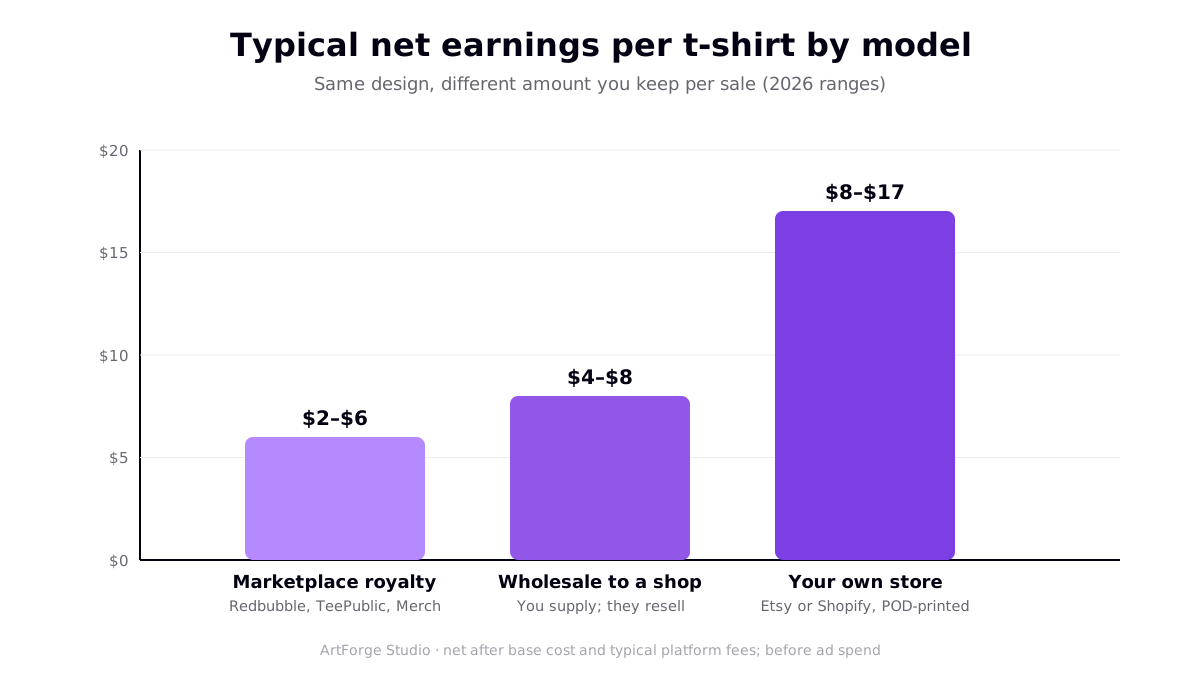
Earnings vary wildly by niche, design quality, and volume, so treat any number as a range, not a promise. As of 2026, realistic per-shirt figures look roughly like this:
- Marketplace royalty: about $2–$6 per shirt sold, depending on the platform tier and how you price.
- Own store (POD-printed): about $8–$17 net per shirt after base cost and typical fees, before any ad spend.
- Selling the file: a few dollars for a single graphic up to $15+ for a bundle or commercial license — and you can sell the same file repeatedly.
Note one important 2026 shift on royalty marketplaces: several have moved to tiered platform fees, where casual sellers keep less of each sale and consistent, higher-volume sellers unlock better rates. Read each platform's current payout terms before you build a plan around it — these change often.
The number that actually matters is not per-shirt earnings; it is designs × listings × conversion. A single design almost never pays the bills. A catalog of 50 designs, each listed in three places, with five that consistently sell, is what a real income looks like.
The workflow: from a design to recurring income
Once you understand the models, the operating loop is the same regardless of platform.
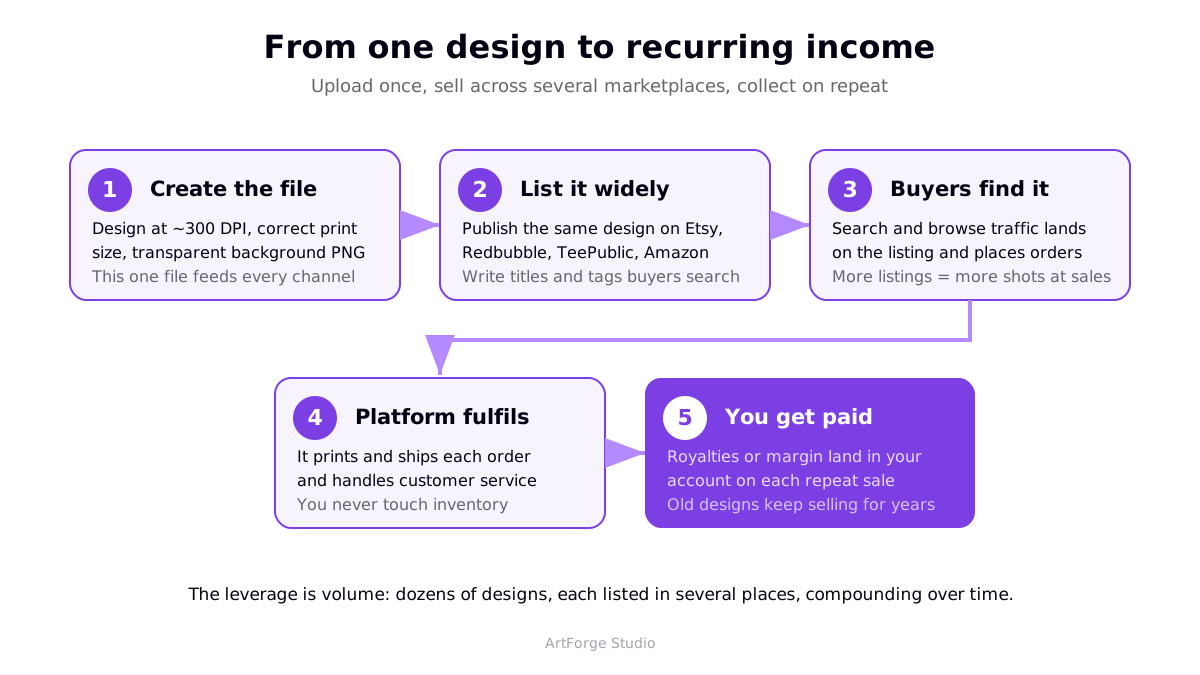
- Make a print-ready file. Most POD printing needs roughly 300 DPI at the product's print size, usually a transparent-background PNG for apparel. See our guide to making images 300 DPI and print-ready.
- List it in several places at once. The same file goes on Etsy, Redbubble, TeePublic, and Merch. Write titles and tags around phrases buyers actually type.
- Let buyers find it. More listings mean more shots at search traffic. This is why volume beats perfection.
- The platform fulfils. It prints, ships, and handles support — you never touch inventory.
- You collect on repeat. Royalties or margin land on each sale, and a good design can sell for years.
The sellers who win run this loop fastest. If making one listing takes an hour, you get a handful of experiments a week; automate it down to minutes and you can test far more ideas than competitors.
Pricing your designs
For finished shirts, work backwards from a target margin: take the POD base cost, add the profit you want, and check the result against comparable listings. If similar shirts sell for $24–$28 and your base cost is around $10–$13, pricing at $24.99 leaves healthy room even after fees. For design files and SVG bundles, price on value and licensing scope — a commercial-use license justifiably costs several times a personal-use one.
Do not race to the bottom. Undercutting on marketplaces is a losing game because there is always someone willing to earn less. Differentiate on niche and design quality instead of price.
Protect yourself: copyright and trademarks
Two different things get confused here. Copyright in your own original artwork usually exists automatically the moment you create it — you generally do not need to register anything to sell it, though registration helps if you ever have to enforce your rights. Trademark is the trap: never sell designs that use someone else's brand names, logos, characters, slogans, or team marks. That is the fastest route to a suspended shop and possible legal claims. Before you publish anything referencing pop culture, check the trademark rules for print-on-demand sellers.
Frequently asked questions
Can you make money selling t-shirt designs?
Yes, but rarely from a single design. The people who earn steadily treat it as a volume game: dozens of designs, each listed on several channels, with a handful of winners carrying the rest. A design can earn a few dollars in marketplace royalties or well over ten dollars per shirt through your own store, and good designs keep selling for years with no extra work.
Where is the best place to sell t-shirt designs?
It depends on how much work you want to do. Etsy and your own Shopify store give the highest margin but you bring the traffic and manage listings. Redbubble, TeePublic and Amazon Merch on Demand are the most passive — you upload the art and they handle printing, shipping and payment for a smaller cut. Many sellers list the same design on several of these at once.
How much can you sell a t-shirt design for?
As a marketplace royalty, expect roughly $2–$6 per shirt sold. Selling finished shirts through your own store, net margins run about $8–$17 after base cost and fees. If you sell the design file itself to other sellers, prices range from a few dollars for a single graphic to $15 or more for a bundle or commercial license — and you can sell the same file many times.
Do I need to copyright a t-shirt design to sell it?
In most countries you own copyright automatically the moment you create an original design — formal registration is optional and mainly helps if you ever need to enforce it. The bigger risk runs the other way: never sell designs that use someone else's trademarked names, logos, characters or slogans, because that can get your shop suspended and expose you to legal claims.
Resources
- Printful — Sell T-Shirts Online with Print-on-Demand (official platform overview of the no-inventory model)
- Amazon Merch on Demand (official royalty program details)
- U.S. Copyright Office — What Is Copyright (authoritative source on automatic copyright)
- Bonfire — Sell Shirts Online (Design & Sell Without Inventory)
- Canva — Custom T-Shirts & Design Tools