Etsy Print on Demand: How to Sell POD on Etsy
Etsy print on demand lets you sell custom-designed products — t-shirts, mugs, posters, tote bags — without ever holding stock. You upload a design, a POD partner puts it on a product, and when a shopper buys from your Etsy shop the partner prints and ships the item directly to them. You never touch inventory, and you only pay the base cost after a sale is already made.
Etsy is the default first channel for most POD sellers because it comes with built-in buyer traffic: millions of people search Etsy every day for exactly the gifts and niche apparel that print on demand is good at. This guide covers the whole path — connecting a partner, building listings, pricing around Etsy's fees, and ranking in search.
How Etsy print on demand works
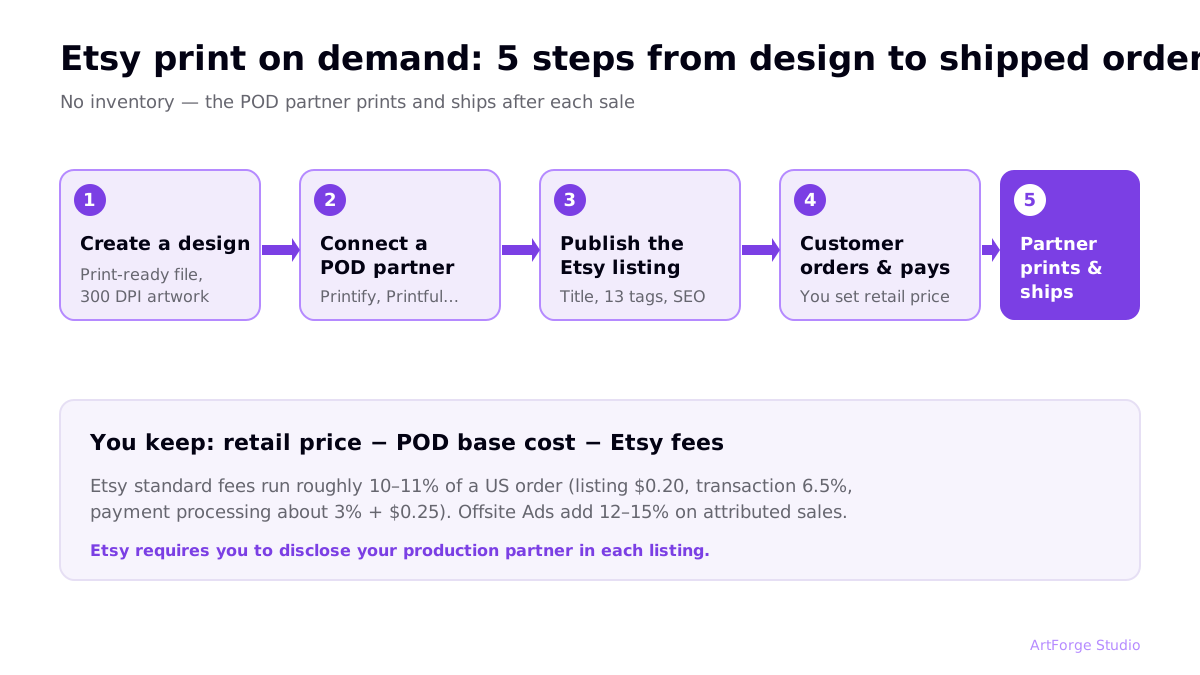
The mechanics are simple once you see the money flow:
- You create a design and place it on a product inside a POD partner's product creator.
- You connect the partner to Etsy and publish the product as an Etsy listing with your own retail price.
- A shopper orders and pays you the retail price through Etsy.
- The partner prints and ships straight to the customer and charges you the base cost.
- You keep the difference between retail price and base cost, minus Etsy's fees.
Because there are two businesses splitting one sale — you and the printer — margins are tighter than handmade goods. That is why niche selection, listing volume, and pricing discipline matter so much.
Is print on demand allowed on Etsy?
Yes, with one rule you must follow: you have to disclose your production partner. Etsy considers a POD printer a "production partner," and every listing made with one has to name it. You add the partner once under your shop's About section, then select it on each listing. Skipping this is a policy violation that can get listings removed, so treat it as a required step, not an optional one.
Etsy also expects the design and creative direction to be genuinely yours. Reselling generic clip-art shirts that thousands of other shops also sell is both a policy risk and a commercial dead end.
Step 1: Choose a POD partner that integrates with Etsy
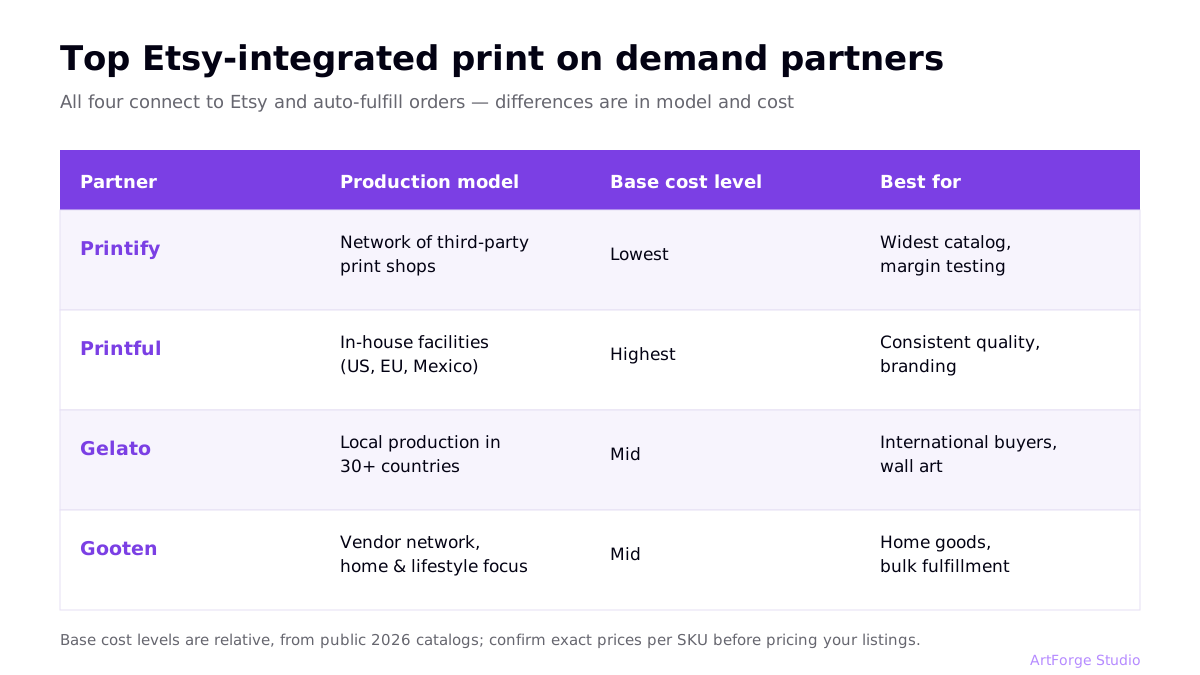
Four partners cover the vast majority of Etsy POD shops. Each connects directly to Etsy and auto-fulfills orders; the differences are in production model, base cost, and product range.
| Partner | Model | Best for | Trade-off |
|---|---|---|---|
| Printify | Network of third-party print shops | Lowest base costs, widest catalog | Quality varies by shop — order samples |
| Printful | In-house facilities (US, EU, Mexico) | Consistent quality, branding options | Highest base costs of the four |
| Gelato | Local production in 30+ countries | International buyers, wall art, home decor | Smaller catalog in some categories |
| Gooten | Vendor network, home & lifestyle lean | Home goods and mixed catalogs | Fewer native integrations than the big two |
You are not locked in. Many sellers run Printify for apparel and Gelato for posters, choosing whichever gives the best economics per product. Start with one to keep the learning curve small, then add a second once you understand your niche.
Step 2: Pick a niche before you pick products
"Cat shirts" is not a niche; "gifts for senior cat owners" is. Specificity tells you what to design, hands you the exact keywords buyers type, and drops you into smaller search results where a new shop can actually rank. Spend twenty minutes validating each idea:
- Search your niche phrase on Etsy. You want clear demand with beatable competition — not tens of thousands of established listings, and not near-zero results signalling no demand.
- Read the search autocomplete. Etsy's suggestions are real buyer queries, ordered roughly by popularity. They are free keyword research.
- Scan recent reviews on competing listings. Recent reviews mean recent sales, and the words buyers use become your titles and tags.
Step 3: Build print-ready designs
Etsy POD lives or dies on design quality and file quality. Printing needs roughly 300 DPI at the product's print size, and apparel usually wants a transparent-background PNG. AI generators can now produce commercial-quality artwork from text prompts, but raw AI output almost always needs upscaling and background removal before it is print-ready — see our 300 DPI print-ready guide for the specifics.
Before you publish anything, check for trademarks. A design referencing a brand, character, or sports team is the fastest route to a suspended shop. Our trademark rules for POD sellers covers what is safe.
Step 4: Understand Etsy's fees before you price
Pricing without knowing the fees is how sellers accidentally lose money on every sale. As of 2026, Etsy's core fees are:
- Listing fee: $0.20 per listing, which renews each time the item sells.
- Transaction fee: 6.5% of the total sale, including item price, shipping and any personalization charge.
- Payment processing: for US sellers, about 3% + $0.25 per order (rates vary by country).
- Offsite Ads (conditional): shops under $10,000 in annual sales pay 15% on attributed orders and can opt out; shops at or above $10,000 pay 12% and cannot opt out.
Together the standard fees usually land around 10–11% of a US order. Here is how that plays out on a single sale:
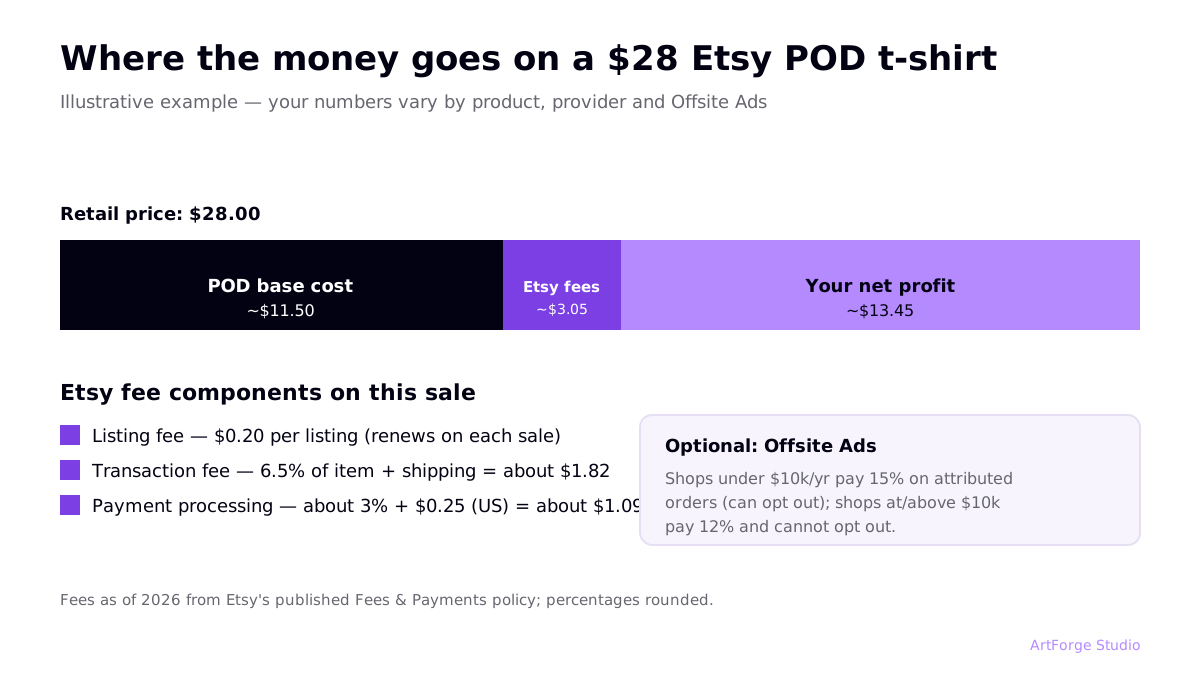
The practical rule: set your retail price so that after base cost and roughly 11% in fees you still keep a margin you are happy to work for. If you plan to rely on Offsite Ads or plan to grow past $10k a year, model the higher fee band too, because at that point Offsite Ads become mandatory on attributed sales.
Step 5: Publish listings that rank in Etsy search
Etsy search rewards relevance and recency. The listing itself is your SEO surface:
- Title: front-load the exact phrase a buyer would type, then add descriptive variations. Write for humans first — keyword-stuffed titles hurt conversion.
- Tags: use all 13, and make them multi-word phrases rather than single words. Match how buyers actually search.
- Description: repeat your key phrases naturally in the first couple of lines, then cover materials, sizing and gifting angle.
- Photos and mockups: Etsy is visual. Clean, lifestyle-style mockups convert far better than a flat product-on-white render.
We go deep on titles, tags and formulas in Etsy SEO for print on demand. The short version: relevance gets you found, mockups get you clicked, and reviews compound over time.
Step 6: Launch a batch, then iterate
Your first 20–40 listings are a data-gathering exercise, not a payday. After three to four weeks, read the signals:
- No views — an SEO problem. Rework titles and tags.
- Views but no favorites or sales — a design or mockup problem. The listing is found but not convincing.
- Favorites and sales — a winner. Make variations and expand it to more products.
The seller who can run this loop fastest wins. If one listing takes an hour to produce, you test a handful a week; automate the repetitive prep down to minutes and you test dozens. That is the difference our print-on-demand automation guide is built around.
Etsy POD as a side hustle vs a business
Plenty of people run Etsy print on demand as a side hustle — a few dozen listings, evenings and weekends, real but modest income. Others treat it as a full business with hundreds of listings across niches. The mechanics are identical; only the volume and consistency differ. Start small, prove that people buy your designs, then scale the parts that work.
Frequently asked questions
How do I start print on demand on Etsy?
Open an Etsy shop, create a free account with a POD partner such as Printify, Printful, Gelato or Gooten, connect that partner to your Etsy shop, then build products in the partner's product creator and push them to Etsy as listings. When a customer orders, the partner prints and ships automatically and charges you the base cost.
Is print on demand allowed on Etsy?
Yes. Print on demand is allowed on Etsy, but Etsy requires you to disclose your production partner in each listing. You add the partner under the About section and select it on the listing so buyers know a third party helps make the item.
How much does Etsy take per sale in 2026?
As of 2026, Etsy charges a $0.20 listing fee, a 6.5% transaction fee on the item plus shipping, and a payment processing fee that is about 3% + $0.25 for US sellers. Together the standard fees usually work out to roughly 10–11% of a US order. Offsite Ads, when they apply, add 12–15% on attributed orders.
What is the best print on demand partner for Etsy?
There is no single best partner. Printify tends to have the lowest base costs and widest catalog, Printful offers the most consistent in-house quality, and Gelato is strongest for international buyers and wall art. Many Etsy sellers run more than one partner and choose per product based on cost and quality.
Can you make money with Etsy print on demand?
Yes, but margins are thinner than handmade goods because you split revenue with a printing partner and pay Etsy fees. Sellers who succeed pick a specific niche, publish many well-optimized listings, price to leave healthy margin after base cost and fees, and iterate on what sells.