Etsy SEO for Print on Demand: Titles, Tags & Descriptions That Rank

You can have the best design in your niche and still make zero sales if Etsy's search engine never shows it to anyone. For POD sellers, SEO is not a growth hack — it is the distribution channel. This guide covers how Etsy search decides what to show, then gets concrete: title formulas, a strategy for all 13 tags, and description structure, with examples you can adapt today.
How Etsy search actually works
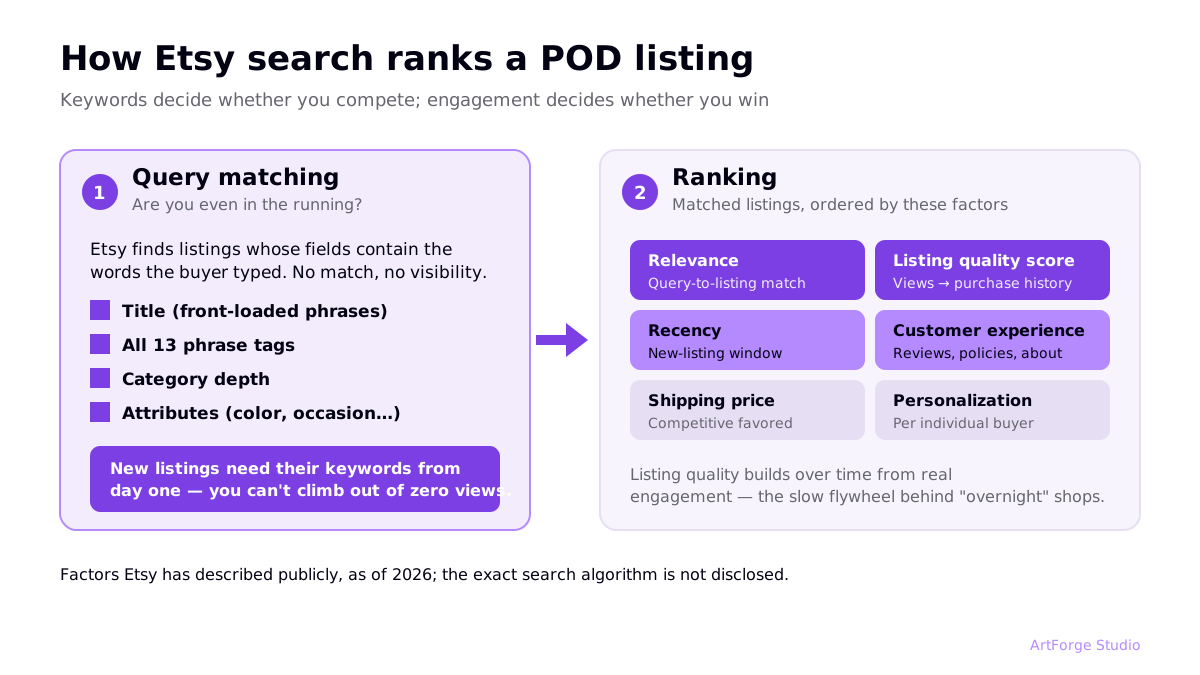
Etsy's ranking has two phases:
- Query matching. Etsy finds listings whose titles, tags, categories, and attributes match what the buyer typed. If your listing does not contain the words, you are not in the running at all.
- Ranking. Matched listings are ordered by factors Etsy has described publicly: relevance, listing quality score (how well the listing historically converts views to purchases), recency, customer experience score (reviews, policies, about section), shipping price, and personalization for the individual buyer.
Two practical conclusions. First, keywords decide whether you compete; engagement decides whether you win. Second, because listing quality builds over time, new listings need their keywords right from day one — you cannot engagement-signal your way out of invisible.
Keyword research: find the words buyers use
- Etsy autocomplete. Type your niche seed ("nurse gift") into Etsy's search bar. The suggestions are real buyer queries — collect 20–30 of them.
- Competitor titles. Open the top results for your target query and note the phrases they repeat. They are ranking for a reason.
- Buyer-language reviews. Reviews say things like "bought this for my mom's retirement" — that phrase ("retirement gift for mom") is a tag.
- Long-tail beats broad for new shops. "funny gardening shirt for grandma" has less volume than "funny shirt" but competition you can actually beat — and higher purchase intent.
Titles: front-load and stay human
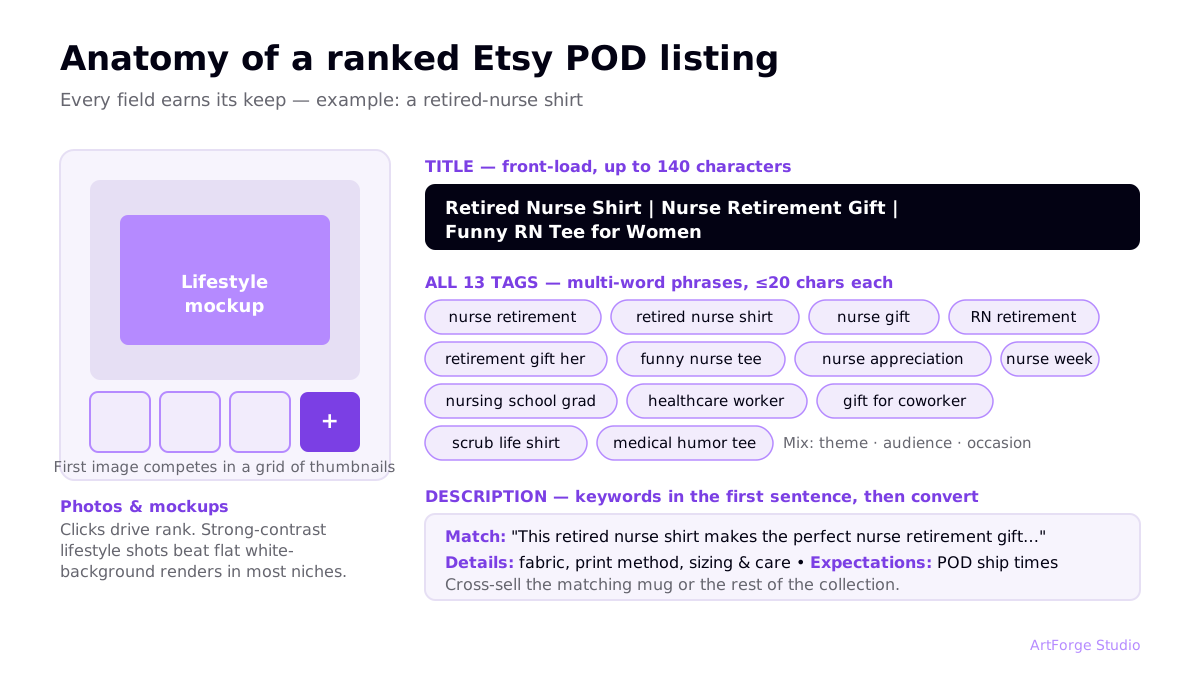
Etsy titles allow up to 140 characters, and the words at the front carry the most weight — for the algorithm and for the buyer scanning results.
Formula: [Primary keyword phrase] | [Secondary phrase] | [Audience/occasion phrase]
| Example | Why | |
|---|---|---|
| Weak | "Cute Design T-Shirt Great Gift Idea!!" | No searchable phrases; nobody types "cute design t-shirt" |
| Keyword-stuffed | "Shirt Tshirt Tee Gift Nurse Nurses Nursing RN Gifts Women Woman" | Matches queries but reads as spam — buyers skip it, and low clicks sink the quality score |
| Strong | "Retired Nurse Shirt | Nurse Retirement Gift | Funny RN Tee for Women" | Three real query phrases, primary first, readable |
Tags: use all 13, think in phrases
Etsy gives you 13 tags of up to 20 characters each. The rules that matter:
- Fill all 13. Empty slots are free visibility left on the table.
- Multi-word phrases, not single words. "nurse retirement" beats "nurse" — phrase tags match phrase queries.
- Do not burn slots repeating one word. "cat shirt", "cat gift", "cat mom" spends three tags on "cat". Cover different query families instead.
- Skip words already covered by attributes (color, size) and by your category — Etsy matches those separately.
- Mix intent types: what it is (design theme), who it is for (audience), and why they are buying (occasion).
Example 13-tag set for the retired-nurse shirt
nurse retirement, retired nurse shirt, nurse gift, RN retirement, retirement gift her, funny nurse tee, nurse appreciation, nursing school grad, healthcare worker, gift for coworker, nurse week gift, scrub life shirt, medical humor tee
Descriptions: rank a little, convert a lot
Etsy has confirmed descriptions are considered in search, so your key phrases belong in the first sentence or two — naturally, the way you would describe the product to a friend. After that, the description's job is conversion:
- Open with the match: "This retired nurse shirt makes the perfect nurse retirement gift…" (keywords, human-readable).
- Details that remove doubt: fabric/material, print method, sizing guidance ("runs true to size — see chart"), care instructions.
- Expectations: production and shipping timeframes for POD (buyers forgive delays they were told about; they punish surprises in reviews).
- Cross-sell: link your matching mug or the rest of the collection.
Beyond text: the signals SEO cannot fake
- Photos and mockups drive clicks, and clicks drive rank. Your first image competes in a grid of thumbnails. Lifestyle mockups with strong contrast outperform flat white-background renders in most apparel niches.
- Price and shipping matter. Etsy has historically favored competitive shipping; factor it into pricing rather than surprising buyers at checkout.
- Reviews compound. Quality products, honest listings, fast responses. This is the slow flywheel behind every "overnight" success shop.
- Legal safety is SEO safety. A takedown for a trademarked phrase hurts your whole shop's standing — screen listing text too, not just designs. See the POD trademark guide.
A repeatable SEO workflow per listing
| Step | Action | Time (manual) |
|---|---|---|
| 1 | Pick primary + 2 secondary phrases from your keyword list | 3–5 min |
| 2 | Write title with the formula, primary phrase first | 2–3 min |
| 3 | Fill 13 phrase tags across theme / audience / occasion | 4–6 min |
| 4 | Write description: match → details → expectations | 5–8 min |
| 5 | Check title and tags for trademarked phrases | 1–2 min |
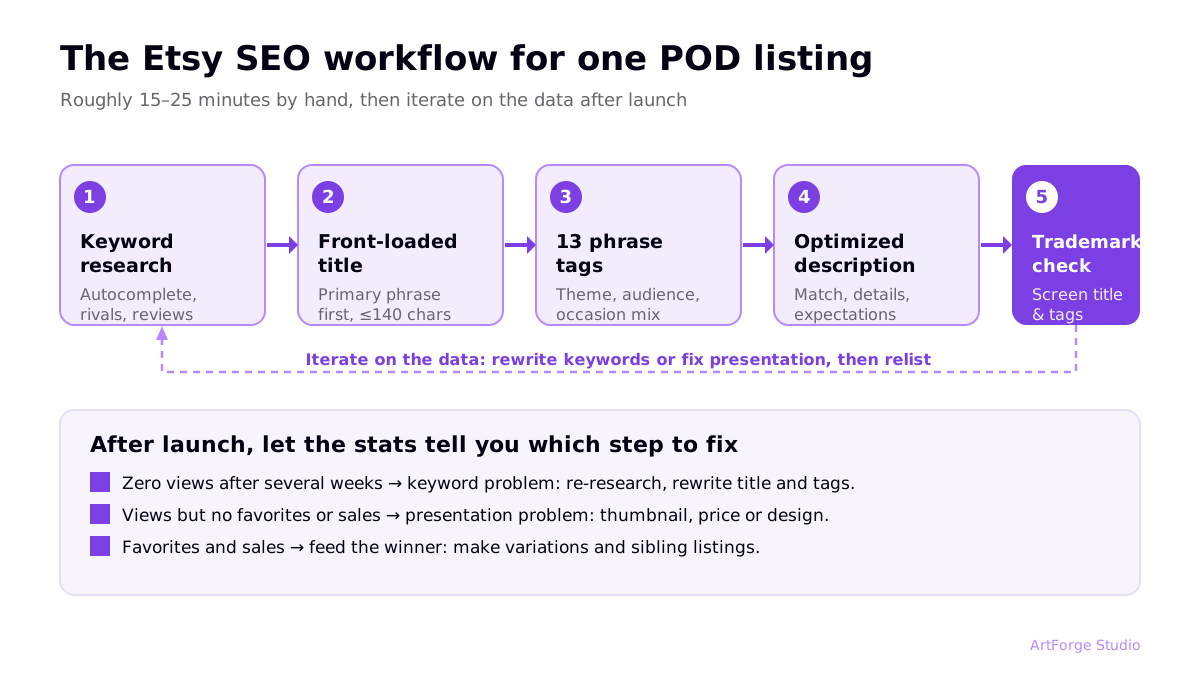
Roughly 15–25 minutes per listing by hand — which is why sellers publishing at volume either template it or let AI draft it and edit. That trade-off is the subject of our automation guide, and if you are still choosing what to sell in the first place, start with the step-by-step POD guide.
Categories, attributes, and the metadata sellers skip
Titles and tags get all the attention, but Etsy matches queries against more than that:
- Category depth matters. "Clothing > Unisex Adult Clothing > Tops & Tees > T-shirts" tells the algorithm far more than a shallow category — and category terms act like free tags, so do not waste tag slots repeating them.
- Fill every attribute Etsy offers (color, occasion, holiday, recipient where available). Attributes power both search matching and the filter sidebar — a listing without a "Father's Day" occasion attribute is invisible to a buyer who filters by it.
- Shop sections are navigation and keywords. Section names like "Nurse Gifts" help buyers browse deeper into your shop, which itself is an engagement signal.
Seasonal SEO: the calendar is a ranking factor
Gift-driven niches spike hard around occasions — Mother's and Father's Day, graduation, Christmas, and niche holidays like Nurses Week. Two timing rules: publish seasonal listings several weeks early, because new listings need time to gather engagement signals before the demand wave peaks, and refresh rather than recreate — updating last year's proven seasonal listing preserves its accumulated sales history, which outranks a fresh copy. Off-season, swap seasonal primary phrases ("Christmas gift for nurse") back to evergreen ones rather than letting the listing chase dead queries for nine months.
Reading the data after launch
- Zero views after several weeks: keyword problem. Your phrases are too competitive or nobody searches them. Re-run research, rewrite title and tags.
- Views, no favorites/sales: presentation problem. The SEO worked; the thumbnail, price, or design is not landing.
- Favorites and sales: feed the winner — make variations, extend it to more products, and build sibling listings around adjacent keywords.
FAQ
How many tags should I use on an Etsy listing?
All 13, every time. Each tag can be up to 20 characters, and empty slots are wasted chances to match a search. Use multi-word phrases ("nurse retirement gift") rather than single words, because phrases match how buyers actually search.
Should I repeat keywords between title and tags?
Yes — matching a query in both title and tags is generally a stronger relevance signal than matching in one place. What you should avoid is repeating the same word across many tags; vary phrases to cover more distinct searches.
How long does Etsy SEO take to work?
New listings typically get an early visibility window, then settle into rankings driven by engagement. Give a listing several weeks before judging. No views at all means wrong keywords; views without sales means the design, mockups, or price need work.
Do Etsy descriptions matter for SEO?
Yes — Etsy has confirmed descriptions are considered in search, so put key phrases in the first sentences naturally. Descriptions also convert: sizing, materials, and shipping expectations reduce hesitation and protect your reviews.