Print-on-Demand Trademark Rules: Don't Lose Your Shop (2026)
Nothing ends a print-on-demand business faster than an intellectual property complaint. Not bad designs, not slow sales — an email saying a listing was removed, followed weeks later by another, followed by a suspended shop with funds on hold. The frustrating part: nearly every case is preventable with a few minutes of checking before publishing.
Note: This article is general information for sellers, not legal advice. For specific situations — especially if you have received a complaint — consult an IP attorney.
Trademark vs. copyright: the two ways to get in trouble
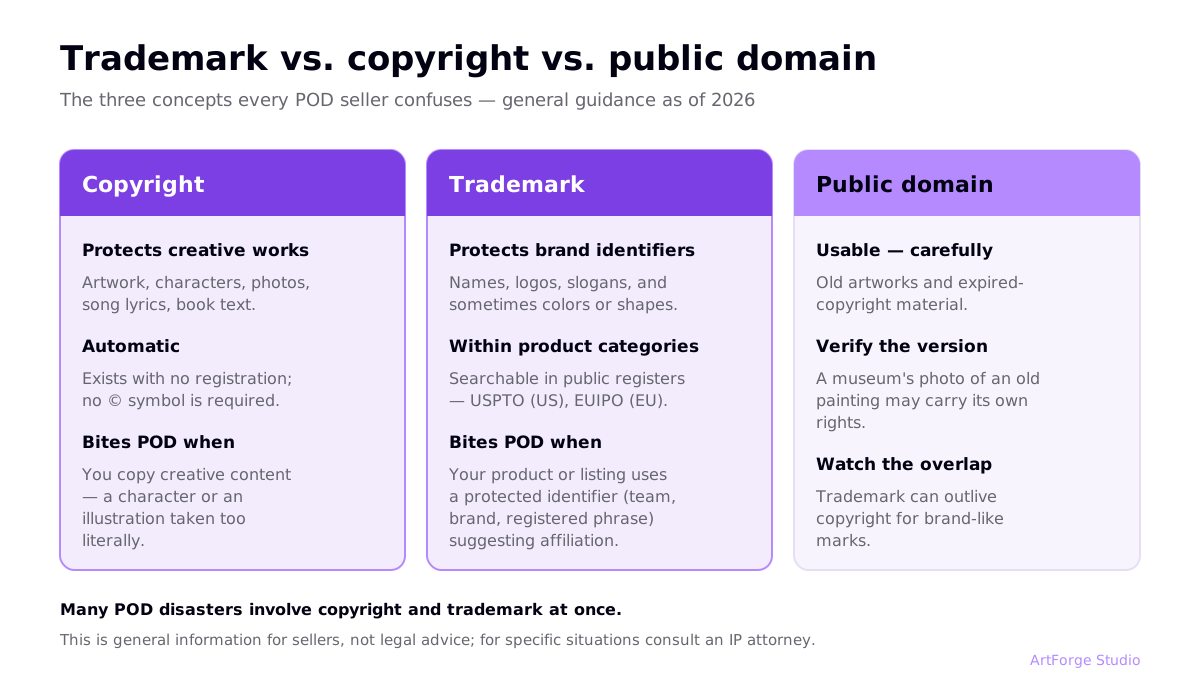
- Copyright protects creative works automatically — artwork, characters, photos, song lyrics, book text. Nobody has to register anything or display a © for the protection to exist.
- Trademark protects brand identifiers in commerce — names, logos, slogans, and sometimes colors or shapes — within particular product categories. Trademarks are searchable in public registers like the USPTO (US) and EUIPO (EU).
The practical difference for POD: copyright bites when you copy creative content (a character, an illustration style taken too literally, lyrics); trademark bites when your product or listing uses a protected identifier (a team name, a brand, a registered phrase) in a way that suggests affiliation. Many disasters involve both at once.
The high-risk categories (where shops actually die)
| Category | Examples of what gets reported | Risk level |
|---|---|---|
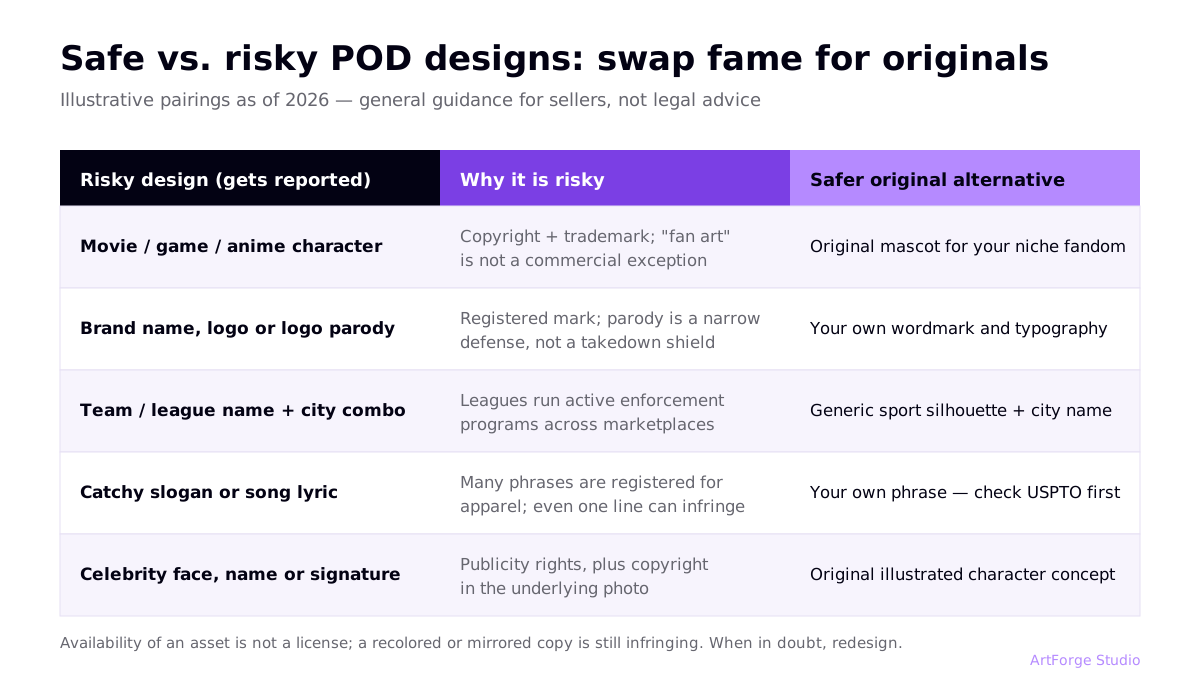
| Entertainment characters | Disney/Pixar, Marvel/DC, anime characters, game characters — including "in the style of" lookalikes | Extreme — actively policed |
| Brand names & logos | Nike, Gucci, John Deere; logo parodies; brand fonts/patterns | Extreme |
| Sports organizations | NFL/NBA/MLB/FIFA team names, logos, city + team combinations | Extreme — leagues run enforcement programs |
| Celebrities & public figures | Faces, names, signatures (publicity rights, plus copyright in photos) | High |
| Song lyrics & book quotes | Even one distinctive line on a shirt | High |
| Registered common phrases | Short catchy phrases registered for apparel (surprisingly many are) | Medium-high — the sneaky one |
| Events & institutions | Olympics marks, university names and mascots | High |
The last quiet trap for AI-first sellers: generators will happily produce a near-perfect trademarked character or logo if your prompt asks for one (or even if it doesn't, for very famous subjects). The tool generating it does not make it legal to sell. When in doubt about a generated design that resembles something famous, drop it — designs are cheap now; your shop is not. Our generator comparison and Midjourney workflow guide both flag where this bites in practice.
The myths that keep getting sellers suspended
| Myth | Reality |
|---|---|
| "I changed it 30%, so it's legal" | No percentage rule exists in law. Substantial similarity and buyer confusion are the tests; recoloring or mirroring changes nothing. |
| "Fan art is allowed" | Fan art sold commercially is infringement in nearly all cases. Some franchises license officially — that is the only safe route. |
| "No © symbol means it's free to use" | Copyright is automatic. Absence of a symbol means nothing. |
| "It's parody, that's protected" | Parody is a narrow, fact-specific defense argued after you have been sued. It is not a shield that prevents takedowns. |
| "Everyone else sells it" | Enforcement is a wave, not a wall. The 500 other infringing listings will be reported in the same sweep as yours. |
| "I found it on Google / a free site" | Availability is not a license. Verify the actual license terms of any asset you did not create. |
What actually happens when you are reported
- Takedown. Marketplaces (Etsy, Amazon) and POD platforms remove reported listings promptly — typically without evaluating the merits. The system is complaint-driven.
- The strike. Your account is flagged. Platforms do not publish exact thresholds, but repeated IP complaints reliably escalate.
- Suspension. Shops with multiple strikes get suspended or permanently closed, often with pending funds held. Appeals exist; success is far from guaranteed.
- Beyond the platform. Persistent or high-volume infringers face direct legal action. Rights holders' firms send settlement demands to POD sellers routinely.
The 5-minute pre-publish check
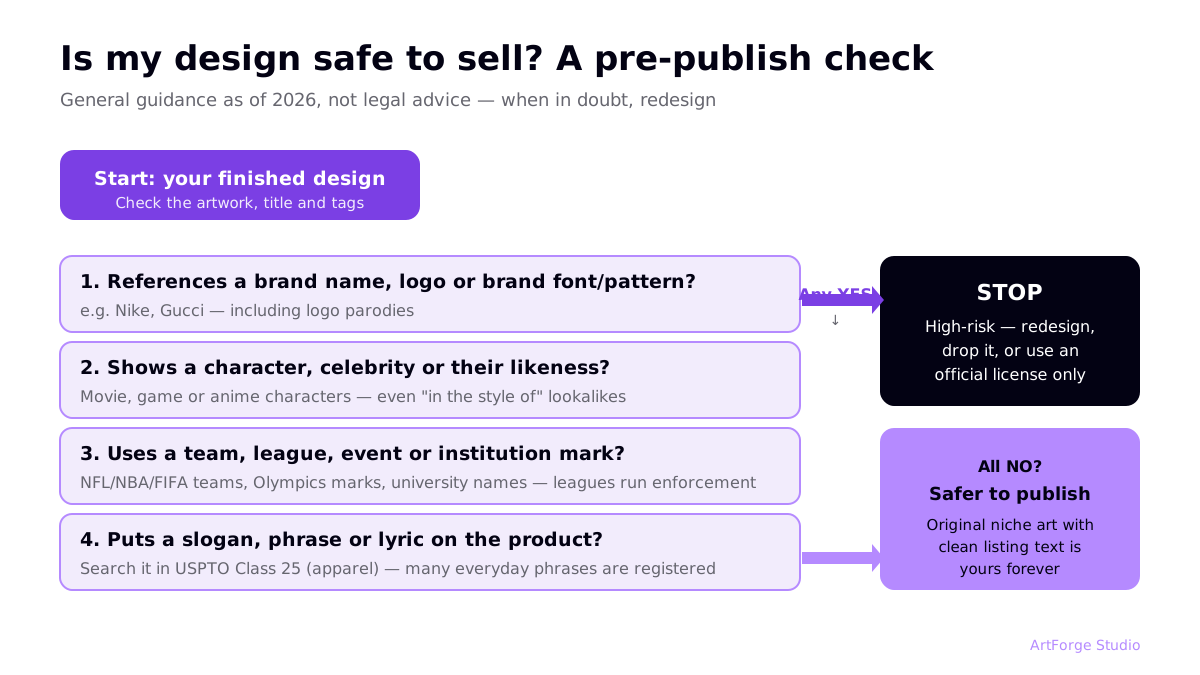
- Search the phrase at the USPTO. Use the USPTO's trademark search for any phrase on your design or in your title/tags. Check live registrations in Class 25 (apparel) and your product's class. Selling to Europe? Repeat at EUIPO.
- Search the marketplace itself. If a phrase suddenly has zero results on Amazon Merch (which pre-screens) but thousands on Etsy, that is a warning sign, not an opportunity.
- Reverse-check lookalike designs. If your AI output resembles something specific, do an image search. Resemblance you can spot, a rights holder can too.
- Screen your listing text. Takedowns hit listings whose tags reference brands ("style of [brand]", team names) even when the design is clean. SEO text is part of the risk surface — bear this in mind when writing titles and tags.
- When in doubt, redesign. A generic basketball silhouette with your city name sells nearly as well as the team logo version — and it is yours forever.
AI-specific questions sellers keep asking
Can I copyright my AI-generated designs?
It is unsettled and jurisdiction-dependent. The U.S. Copyright Office has taken the position that purely machine-generated images lack the human authorship copyright requires, while works with meaningful human creative input (composition, selection, substantial editing) may qualify in part. Practical upshot: you can generally sell AI designs, but your ability to stop others copying them may be weaker than for hand-drawn work. Differentiate on niche depth and listing quality, not on the assumption your design is protectable.
Does using AI protect me from infringement claims?
No — the opposite risk applies. If the output resembles protected work, you are responsible for selling it regardless of how it was made. "The AI generated it" is not a defense a platform or court will accept.
Do POD platforms allow AI art at all?
The major POD providers and marketplaces broadly accept AI-generated designs; some marketplaces (Etsy included) have introduced disclosure expectations around how items are made. Policies here are moving — re-read your platforms' current creativity and IP policies every few months rather than relying on last year's understanding.
Building a shop that cannot be taken down
- Original niches beat borrowed fame. The most durable POD businesses own a niche audience (nurses, gardeners, D&D-style original fantasy) rather than borrowing an existing fandom's IP.
- Public domain is usable — carefully. Old artworks and expired-copyright material can be fair game, but verify the status of the specific version you use (a museum's photograph of an old painting may carry its own rights), and note trademark can outlive copyright for brand-like marks.
- Keep records. Save your prompts, drafts, and generation history. If you ever face a mistaken complaint, evidence that you created the design independently strengthens an appeal.
- Make checking a habit, not an event. One check per design, every design — the same discipline as checking file resolution before upload (see the print-ready guide). New sellers can wire this into their process from day one with the step-by-step starter guide.
FAQ
Can I sell fan art of movies, games, or anime on POD?
Not legally, in almost all cases. Characters, names, and distinctive visual elements are protected by copyright and often trademark, and "fan art" is not a legal exception for commercial sales. Some rights holders run official licensing programs — that is the only safe route.
How different does a design have to be to avoid infringement?
There is no percentage rule — the "30% change" myth has no legal basis. The tests ask whether an ordinary observer would find the works substantially similar, or whether buyers would be confused about the source. Recolored, mirrored, or slightly redrawn versions of protected work are still infringing.
Can common phrases be trademarked?
Yes, for specific product categories. Short everyday phrases have been registered for apparel, meaning printing them on shirts can infringe even though saying them is fine. Search any catchy phrase in the USPTO database for Class 25 before putting it on a product.
What happens if my listing gets an IP complaint?
Marketplaces remove reported listings, typically without a hearing, and record a strike. Repeated complaints commonly lead to suspension or closure, sometimes with funds held. Prevention is dramatically cheaper than appeal.