Best Print on Demand Marketplaces for Artists
Print on demand marketplaces are sites that host your designs, bring their own shoppers, and print and ship products for you in exchange for a share of each sale. For artists, they are the fastest way to earn from artwork with almost no setup: upload a design, and a platform like Redbubble, TeePublic, or Threadless handles storefront, traffic, production, and support.
That built-in demand is the reason to use them — and the reason margins are lower than running your own store. This guide compares the best print on demand marketplaces for artists on earnings, fees, and traffic, then helps you decide when a marketplace beats an own-store.
Marketplaces vs fulfillment services
People conflate two different things. A marketplace (Redbubble, TeePublic, Society6, plus general marketplaces like Amazon and eBay) supplies the customers. A fulfillment service (Printful, Printify, Gooten) only prints and ships — you supply the storefront and traffic. This article is about marketplaces; if you want the production side, start with our best print on demand companies guide.
The best print on demand marketplaces for artists
Redbubble
Founded in 2006, Redbubble is one of the oldest and largest POD marketplaces, with a huge product range — close to a hundred items from stickers and apparel to stationery and wall art. Artists set a markup over the base price (default around 10%, raised to 20–30% for higher-tier sellers). Its strength is enormous built-in traffic; the trade-off is a crowded catalog and, as of a 2025 tier change, a larger platform cut for standard-tier artists.
TeePublic
Owned by Redbubble but with its own audience, TeePublic focuses mainly on apparel with some accessories. It pays a flat artist rate per product — often more per t-shirt than Redbubble's default markup — and charges artists no seller fees. It also ranks well on Google, driving strong organic traffic back to listings.
Threadless
Founded in 2000, Threadless offers three routes: community design challenges, customizable Artist Shops, and its main marketplace. It has a loyal creative community, but artist royalties on most products tend to stay in single-digit dollars, so it is better for exposure and community than for maximizing per-sale earnings.
eBay
A general marketplace with very high traffic. You can sell POD products on eBay by listing them yourself while a supplier fulfills each order behind the scenes. You keep control of pricing but pay eBay's listing and final value fees and must follow its sourcing rules.
Society6 and others
Society6 is popular for art prints and home decor with a design-led audience. Zazzle and Spring (formerly Teespring) round out the field. The right pick depends on your product mix and where your art fits.
How much artists earn on each marketplace
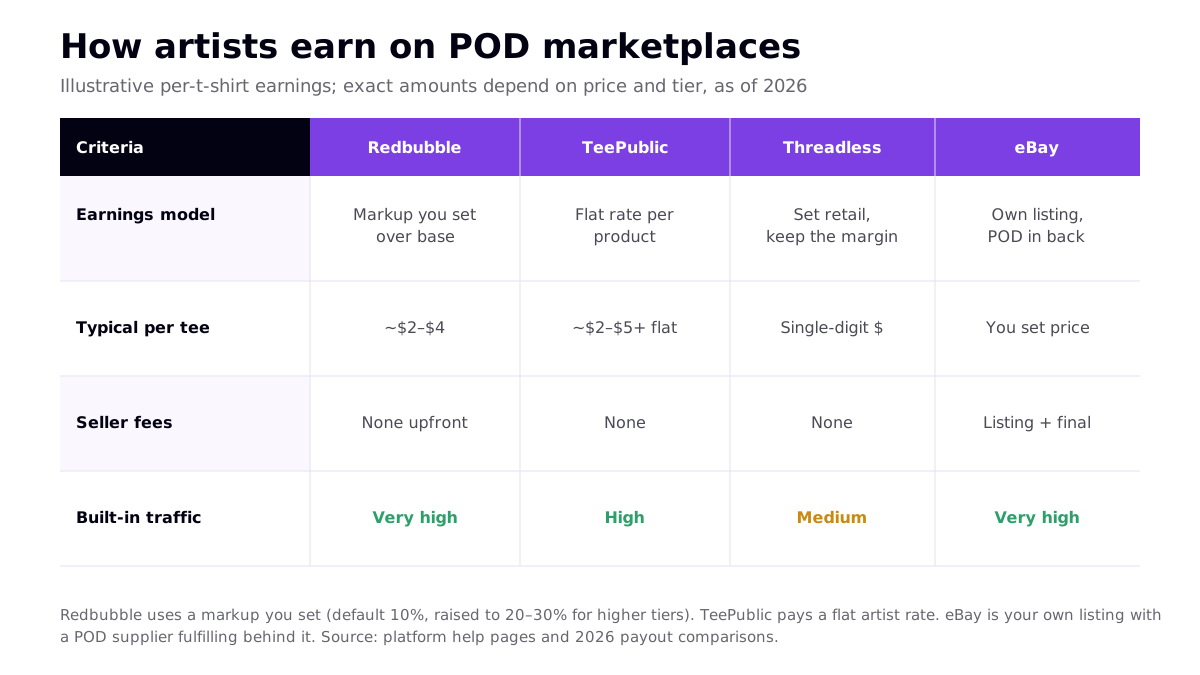
Earnings models differ, which makes direct comparison tricky. The table summarizes the mechanics as of 2026 — treat the per-tee figures as illustrative ranges, not guarantees, because platforms adjust rates and your own pricing drives the result.
| Marketplace | How you earn | Typical per t-shirt | Best for |
|---|---|---|---|
| Redbubble | Markup you set over base | ~$2–$4 (default markup) | Widest product range, most traffic |
| TeePublic | Flat artist rate | ~$2–$5+ flat | Apparel-focused artists |
| Threadless | Set retail, keep margin | Single-digit $ | Community and exposure |
| eBay | Your price minus eBay fees | You set it | High volume, general audience |
Built-in traffic is the real product
The reason to accept lower margins on a marketplace is the traffic you do not have to generate. General marketplaces like Amazon and eBay dwarf the art-focused sites in raw shopper volume, while Redbubble and TeePublic lead among the art-and-apparel platforms.
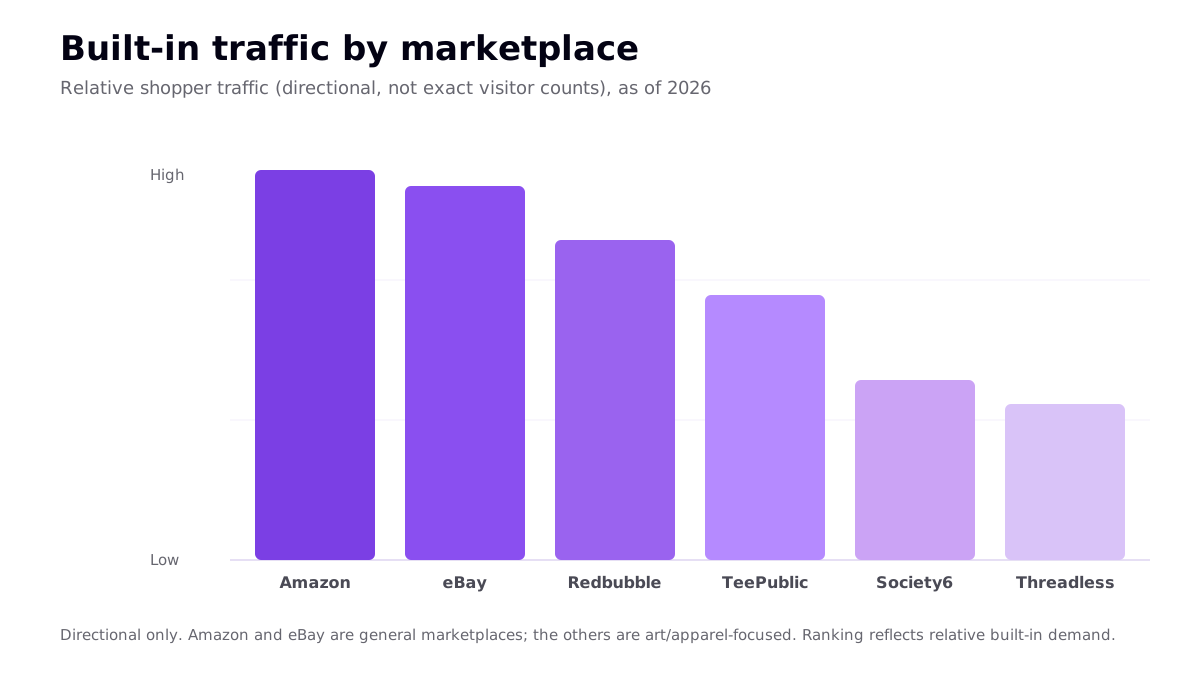
More traffic is not automatically better: high-traffic marketplaces are also the most crowded, so ranking your designs still takes niche focus and good keywords. The advantage over an own-store is that the audience is already there searching.
Marketplace or your own store?
This is the central strategic choice for any POD artist. Neither is strictly better — they optimize for different things.
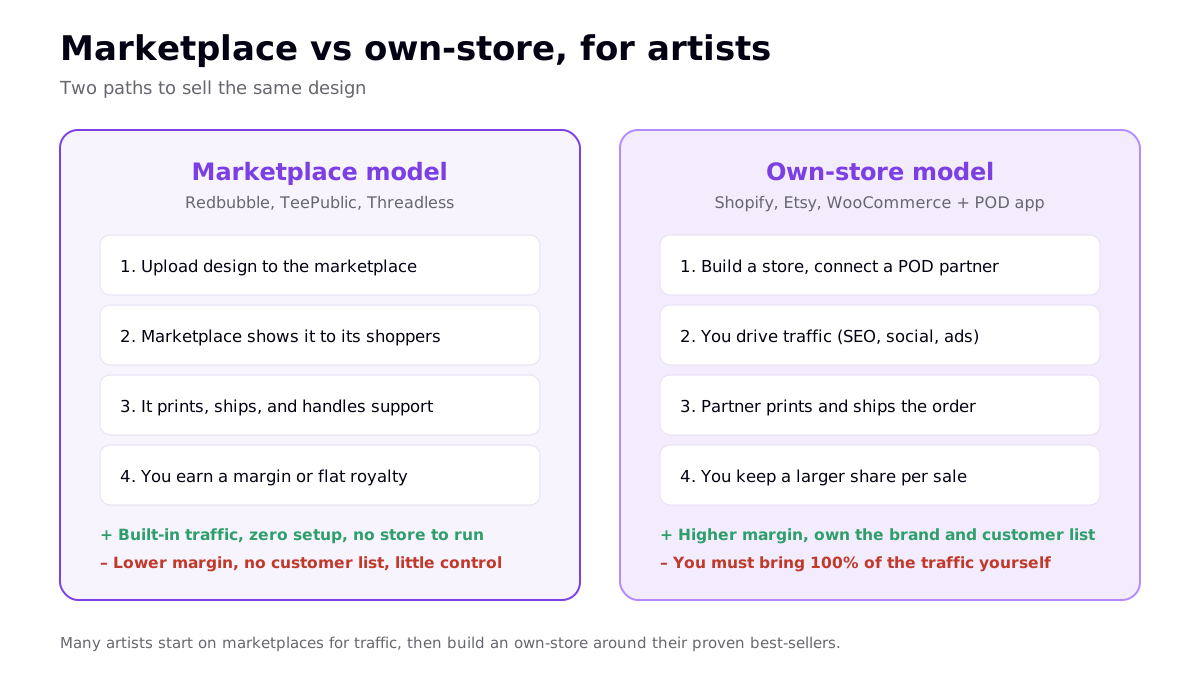
- Choose a marketplace if you want to earn from your art with minimal setup, test many designs quickly, and let the platform handle everything but the artwork.
- Choose your own store (Shopify, Etsy, or WooCommerce) if you want higher margins, control of your brand, and ownership of your customer list — and you are ready to drive traffic.
The pragmatic path for most artists: validate designs on marketplaces, then build an own-store around your proven best-sellers. See our print on demand for artists guide for the full playbook, and Etsy print on demand for the most popular middle-ground channel.
How to rank designs on a marketplace
Built-in traffic only helps if buyers can find your work. On every marketplace, discoverability comes down to the same fundamentals, and artists who treat them seriously outperform those who just upload and hope:
- Pick specific niches. "Cottagecore mushroom illustration" is findable; "cool art" is buried. Specificity gives you exact keywords and less competition.
- Write keyword-rich titles and tags. Use the words buyers actually type. Fill every available tag slot with multi-word phrases rather than single generic words.
- Publish in volume. More listings mean more entry points into search. Ten designs is a start; a serious catalog is dozens to hundreds.
- Apply designs across products. One strong artwork can become a shirt, sticker, poster, and mug, multiplying your listings from a single piece of work.
This is why fast, low-cost design production matters so much on marketplaces: your earnings scale with how many quality listings you can put in front of an audience that is already shopping.
Frequently asked questions
What is the difference between a print on demand marketplace and a fulfillment service?
A print on demand marketplace, like Redbubble or TeePublic, hosts your designs and brings its own shoppers, then prints and ships for you in exchange for a share of the sale. A fulfillment service, like Printful or Printify, only prints and ships; you supply the storefront and the traffic. Marketplaces trade lower margins for built-in demand; fulfillment services trade the work of getting traffic for higher margins.
Which print on demand marketplace pays artists the most?
It depends on how you price and sell. TeePublic pays a flat artist rate per product that many artists find higher than Redbubble's default 10 percent markup, and Redbubble lets higher-tier sellers raise their markup to 20 to 30 percent. Threadless margins tend to stay in single-digit dollars on most products. Because payouts change and depend on your pricing, compare current terms before committing.
Can you sell print on demand on eBay?
Yes. eBay is a general marketplace with very high built-in traffic, and you can list print on demand products there while a supplier fulfills each order behind the scenes. You control the listing and price, but you pay eBay's listing and final value fees, and you must follow its dropshipping and product-sourcing rules.
Should artists use a marketplace or their own store?
Many use both. Marketplaces give you traffic and require almost no setup, which is ideal for testing designs and earning while you build an audience. Your own store on Shopify, Etsy, or WooCommerce gives higher margins and ownership of your customer list but requires you to drive all the traffic. A common path is to validate on marketplaces, then build an own-store around your proven best-sellers.
Related reading
- Etsy Print on Demand: How to Sell POD on Etsy
- Amazon Print on Demand: Merch on Demand Guide
- Print on Demand for Artists: Best Sites & Tips
- How to Sell T Shirt Designs Online