Amazon Print on Demand: Merch on Demand Guide
Amazon print on demand mostly means one thing: Amazon Merch on Demand, Amazon's own program where you upload artwork, Amazon prints it on apparel and accessories, and Amazon handles printing, shipping, customer service and returns. You earn a royalty on every sale and never touch a product. It is one of the lowest-effort ways to put designs in front of the largest shopping audience on the internet.
There is a second, more advanced route too — selling print on demand through Amazon Seller Central with a third-party partner. This guide explains how Merch on Demand's tiers and royalties work as of 2026, what to expect on quality, and how to decide between the two models.
How Amazon Merch on Demand works
Merch on Demand is deliberately simple:
- You apply for a Merch on Demand account (it is invite/approval based).
- You upload a design and choose products and colors, then set a list price.
- Amazon creates the product listing on Amazon.com automatically.
- A customer buys, and Amazon prints, ships and supports the order end to end.
- You earn a royalty — the list price minus Amazon's production cost and referral fee.
Crucially, there is no sign-up fee, no monthly subscription and no listing fee as of 2026. Your only "cost" is the production and referral amount Amazon deducts before paying your royalty. That makes the financial risk close to zero.
The tier system: how many designs you can list
New Merch on Demand accounts start at Tier 10 — you can have up to 10 designs live at once. As you make sales and stay within Amazon's content policies, your account is upgraded to higher tiers (25, 100, 500 and beyond), each unlocking more upload slots.
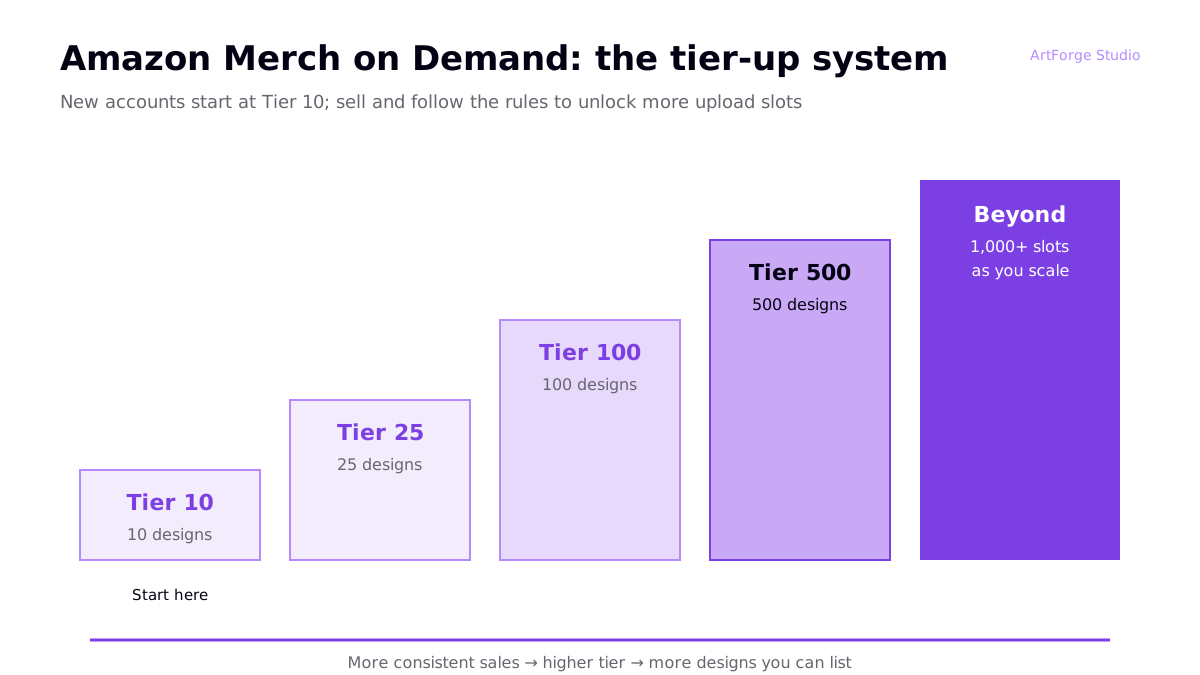
The practical implication is that early on you must be selective. With only 10 slots, every design should be one you genuinely believe can sell. A slot occupied by a design that gets no sales for months is a slot you cannot use for a better idea. This scarcity is actually a useful discipline: it forces you to research niches and validate demand before uploading.
How Amazon Merch on Demand royalties work
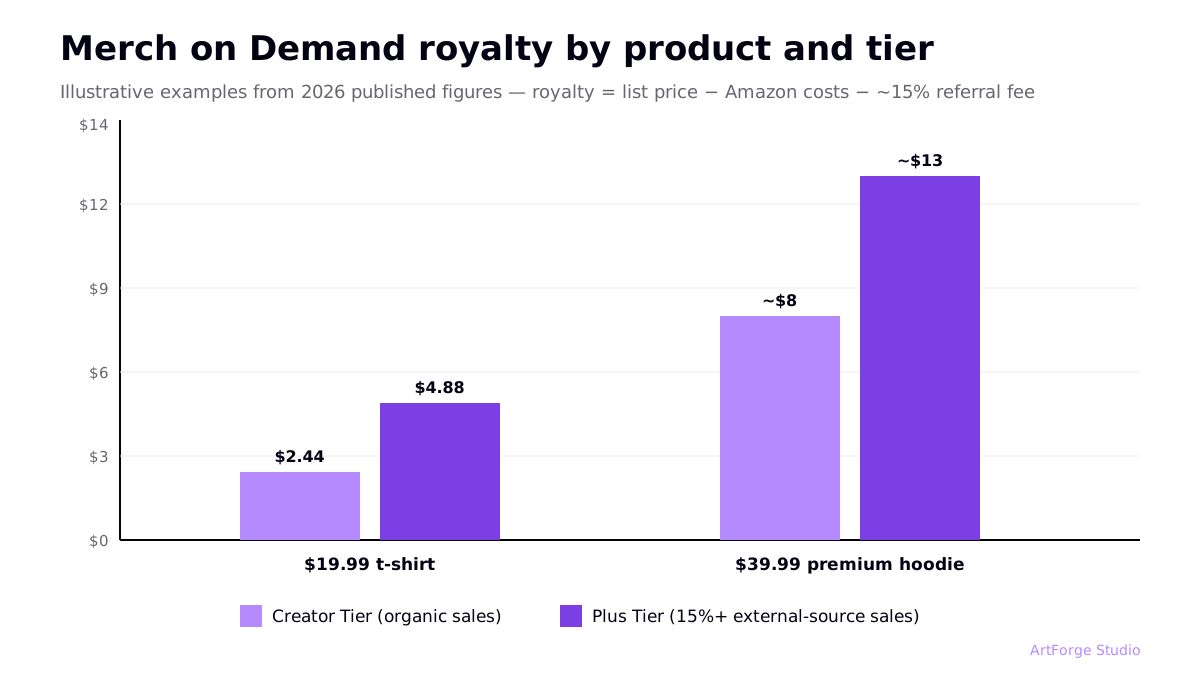
Your royalty is the list price minus Amazon's production cost (blank product plus printing) and a referral fee of roughly 15%, plus any applicable taxes. As of 2026, Amazon uses a tiered royalty structure that rewards sellers who bring in outside traffic:
- Creator Tier — the base rate for organic (Amazon-sourced) sales.
- Plus Tier — a higher rate for sellers whose sales include a meaningful share (reported as roughly 15%+) driven from external sources such as social media or ads.
The gap between the two tiers is significant. On a $19.99 standard t-shirt, the Creator Tier royalty is around $2.44, while the Plus Tier roughly doubles it to about $4.88. Higher-priced premium products earn far more per unit.
| Product & price | Creator Tier royalty | Plus Tier royalty |
|---|---|---|
| Standard t-shirt · $19.99 | ~$2.44 | ~$4.88 |
| Premium pullover hoodie · $39.99 | ~$8 | ~$13 |
These figures are illustrative examples drawn from Amazon's published 2026 royalty information; exact amounts depend on product, price and current production costs. The takeaway is the strategy, not the cents: price with room for a real margin, favor higher-value products where the niche supports it, and drive external traffic if you want the better royalty band.
What about product quality?
Merch on Demand quality is generally solid and consistent because Amazon controls fulfillment, though the catalog and garment options are narrower than dedicated POD partners. If branding, garment choice, or product breadth matter a lot to you, that limitation is the main reason sellers look at the Seller Central route instead.
Merch on Demand vs Seller Central with a third-party partner
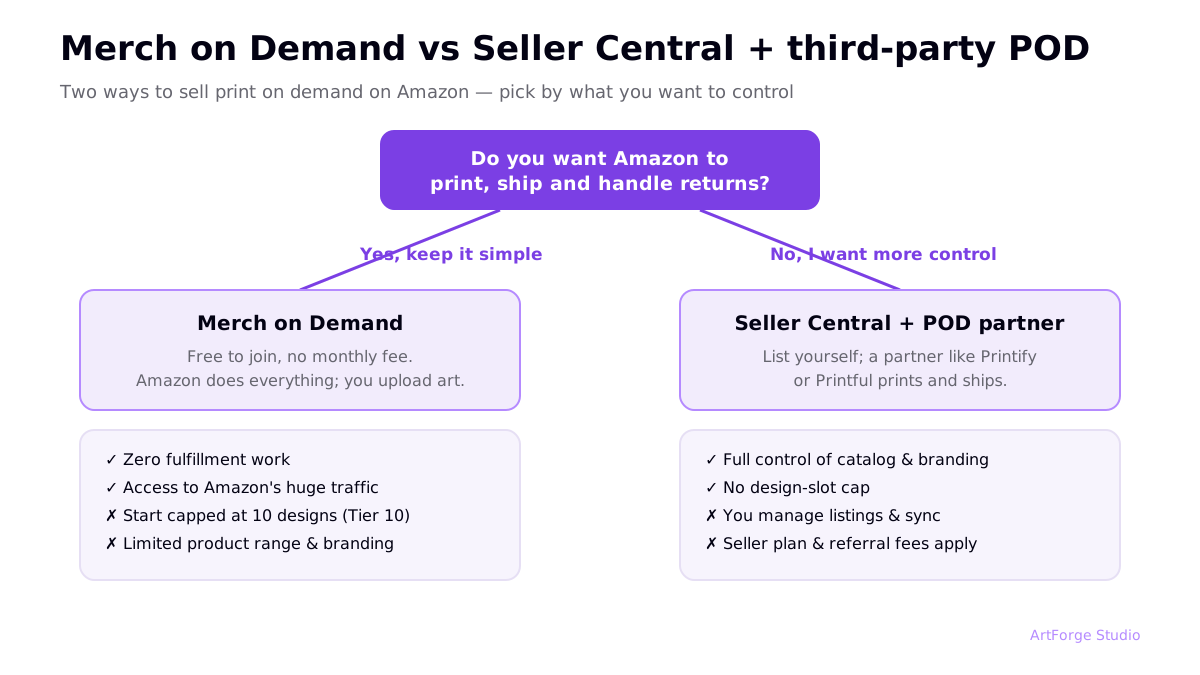
The two Amazon POD models suit different goals:
| Merch on Demand | Seller Central + POD partner | |
|---|---|---|
| Who fulfills | Amazon | A partner (Printify, Printful, etc.) |
| Upfront cost | Free | Seller plan + referral fees |
| Design limit | Starts at 10 (tiers up) | No slot cap |
| Branding & range | Limited | Full control |
| Effort | Very low | You manage listings & sync |
Most people should start with Merch on Demand to learn what sells with near-zero risk, then consider Seller Central once they have proven designs and want more control. The two are not mutually exclusive — plenty of sellers run both.
Getting approved and starting well
Merch on Demand approval can take time and Amazon does reject applications, so write a genuine application and expect a wait. Once you are in, treat your first 10 slots as premium real estate: research niches, validate demand, and only upload designs you would bet on. And as always, avoid trademarked phrases, characters, and logos — infringement is the fastest way to lose an account. Our trademark guide for POD sellers covers the safe boundaries.
If you also want to sell the same designs elsewhere, the mechanics carry over directly to marketplaces like Etsy — see our guide to starting print on demand for the cross-channel playbook.
Frequently asked questions
What is Amazon print on demand?
Amazon print on demand mainly refers to Amazon Merch on Demand, Amazon's own program where you upload artwork, Amazon prints it on products like t-shirts and hoodies, and Amazon handles printing, shipping, customer service and returns. You earn a royalty on each sale. You can also sell POD on Amazon through Seller Central using a third-party partner who fulfills orders.
How much does Amazon Merch on Demand cost to join?
As of 2026, Amazon Merch on Demand has no sign-up fee, no monthly subscription and no per-listing fee. Amazon deducts its production and referral costs from each sale and pays you the remaining royalty, so there is no upfront cost to start.
How do Amazon Merch on Demand tiers work?
New accounts start at Tier 10, meaning you can have up to 10 designs live. As you make sales and follow the platform rules, Amazon upgrades your account to higher tiers such as 25, 100, 500 and beyond, unlocking more upload slots. The tier system limits how many designs you can list, not how many you can sell.
How much royalty do you earn on Amazon Merch on Demand?
Royalty is the list price minus Amazon's production cost and a referral fee of roughly 15%. As of 2026 the program uses tiers: at the base Creator Tier a $19.99 standard t-shirt earns around $2.44, and at the Plus Tier (for sellers driving external traffic) the same shirt earns around $4.88. Premium hoodies at higher price points earn the most per unit.
Is Amazon Merch on Demand or a third-party POD partner better?
Merch on Demand is simplest because Amazon handles everything, but it starts you at 10 design slots and limits product range and branding. Selling through Seller Central with a partner like Printify or Printful gives you full control of catalog and branding and no slot cap, but you manage listings and order sync yourself and pay Amazon's seller and referral fees.