Print on Demand Merch: Sell Custom Merchandise
Print on demand merch is custom merchandise — apparel, mugs, hats, accessories — that is only printed after someone buys it. It lets creators, brands, and communities sell branded swag without ordering boxes of stock, because a fulfilment partner produces and ships each item on demand.
For anyone with an audience, merch on demand turns attention into revenue with almost no risk. This guide covers how it works, how much each sale actually pays across different platforms, where to sell, and how to run a merch drop that sells out without leaving you holding inventory.
How merch on demand works
The flow is simple and identical whether you sell ten items or ten thousand. Your audience is the starting point; the product is manufactured only when a fan buys it.
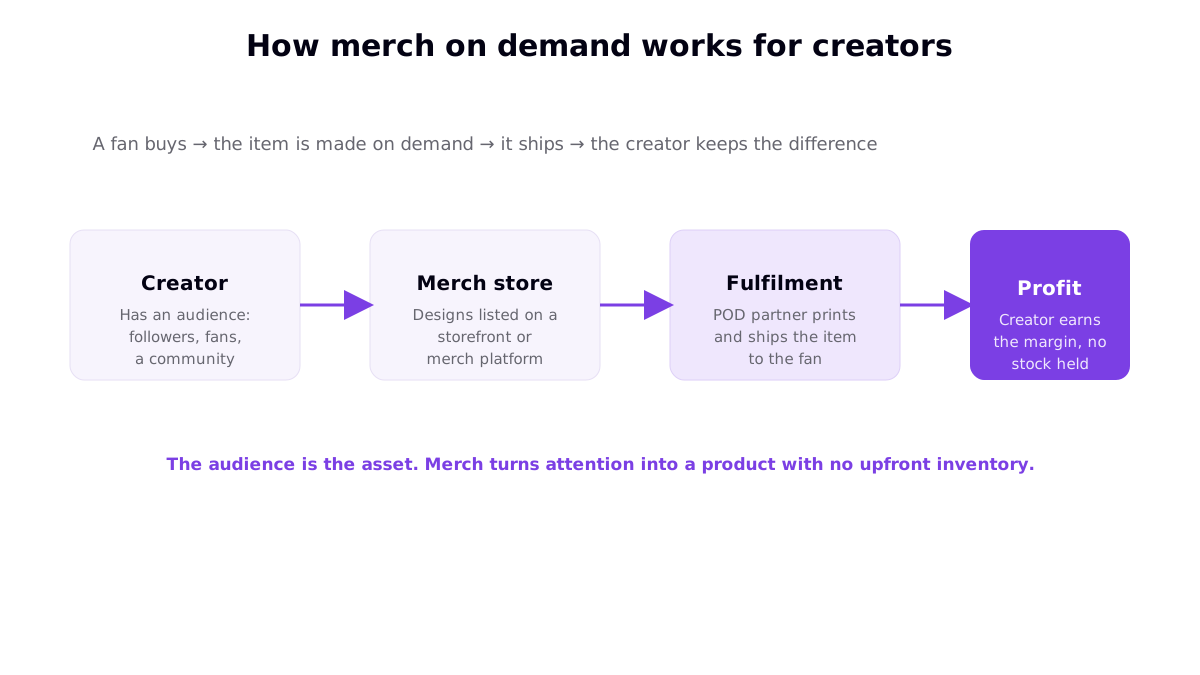
Because nothing is printed until the order is placed, a merch line costs nothing to keep live. You can list ten designs, sell three, and never pay for the seven that did not move. That is the whole reason print on demand merchandise has replaced bulk-ordered swag for most independent creators.
What merch products sell best
Merch buyers reach for a predictable set of products. Start with a small range and expand only into what sells.
| Product | Why it works as merch |
|---|---|
| T-shirts | The default merch item; wide sizes, everyday wear, strong fan appeal |
| Hoodies & sweatshirts | Higher price point and margin; fans treat them as premium swag |
| Mugs & drinkware | Cheap, giftable, and a low-commitment first purchase for new fans |
| Hats & beanies | Logo-friendly; work well for embroidered brand merch |
| Stickers & accessories | Low-price impulse buys that spread your brand for you |
For a broader ranking beyond merch specifically, see the best print on demand products to sell.
How much profit does merch pay?
This is where the selling model matters more than the product. The same t-shirt earns you very different profit depending on where you sell it, because each channel trades margin against how much traffic it brings you.
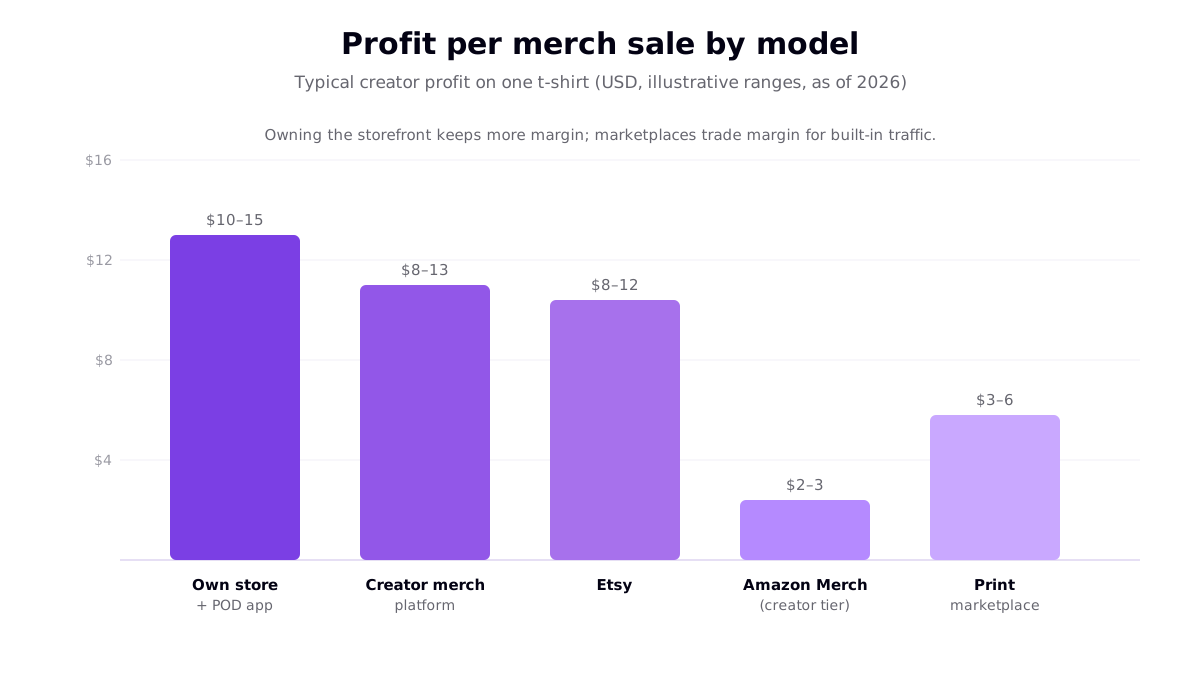
- Your own store + POD app. The highest margin — often $10–15 on a t-shirt as of 2026 — but you supply 100% of the traffic.
- Creator merch platforms. Slightly lower margin in exchange for a simpler, merch-focused setup.
- Etsy. Solid margin with built-in gift-buyer traffic, minus Etsy's fees (a $0.20 listing fee and 6.5% transaction fee as of 2026).
- Amazon Merch on Demand. Amazon prints, ships, and handles customer service; you earn a royalty. In 2026 Amazon moved to a tiered royalty system, so a standard t-shirt at the base creator tier pays only a couple of dollars, rising for sellers who drive external traffic. See our Amazon print on demand guide.
Where to sell your merch
There is no single best channel — the right one depends on whether you already have an audience.
| Channel | Best for | Trade-off |
|---|---|---|
| Own store (Shopify/WooCommerce + POD) | Creators with an audience who want maximum margin and control | You bring all the traffic |
| Creator merch platform | Streamers, YouTubers, and musicians wanting a fast setup | Less design and pricing flexibility |
| Etsy | Sellers without an audience who want built-in buyers | Per-sale fees; you compete in search |
| Amazon Merch on Demand | Hands-off royalty income at scale | Lower per-sale royalty; approval and tier hurdles |
Many creators run an owned store as the high-margin home base and add one marketplace to catch buyers who search rather than follow. If you want a fuller comparison, see the best print on demand companies.
How to run a merch drop
A "drop" is a limited-time merch launch. It works because scarcity and anticipation drive far more sales than a store that is quietly always open. And because fulfilment is on demand, a drop carries no inventory risk even if it sells out.
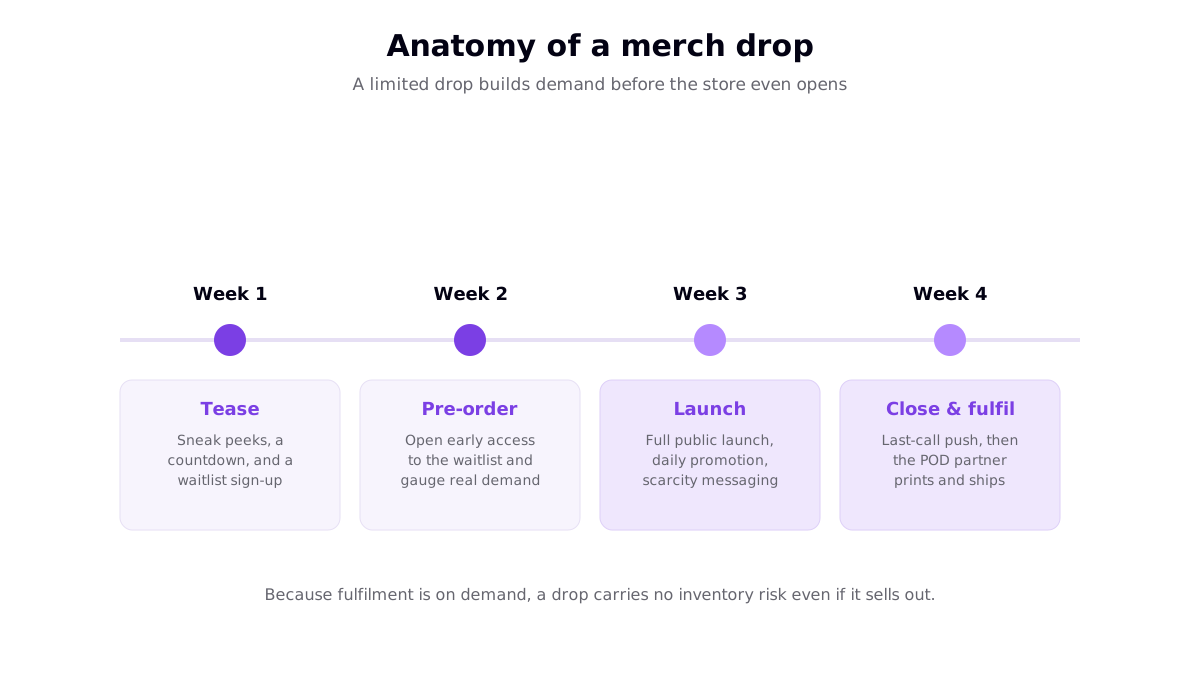
- Tease. Share sneak peeks and start a waitlist a week or two before launch.
- Pre-order. Give the waitlist early access to gauge real demand and reward your most engaged fans.
- Launch. Go fully public, promote daily, and lean on the limited-time framing.
- Close & fulfil. Send a last-call reminder, then let your POD partner print and ship everything.
How to price your merch
Pricing merch is a balance between margin and what your audience will happily pay. Start from the provider's base cost, add your target profit, then sanity-check the total against similar merch your audience already buys. A useful rule of thumb: a t-shirt priced at roughly double its base cost leaves room for platform fees while staying in the range fans expect. Premium items like hoodies can carry a higher markup because buyers treat them as a bigger commitment.
Do not undercharge to seem generous. Fans of a creator are buying the connection, not hunting for the cheapest shirt — a price that feels too low can even read as lower quality. Leave enough margin to run the occasional discount or free-shipping promotion during a drop without going underwater.
Print methods behind your merch
Most POD merch is produced with one of a few printing methods, and the method affects how your design looks and lasts. Direct-to-garment (DTG) prints detailed, full-colour artwork straight onto the fabric and suits complex designs. Direct-to-film (DTF) transfers are durable and work across more fabric types. Embroidery is the premium choice for logos on hats and polos. You rarely choose the method directly — the provider picks it per product — but knowing the basics helps you design files that print well.
Tips for merch that actually sells
- Design for your community's in-jokes. The most successful creator merch references something only the audience gets — that exclusivity is the product.
- Order a sample. Wear it, photograph it, and use those real photos in your listings.
- Keep the range tight. A few strong products beat a bloated catalogue no one finishes browsing.
- Respect trademarks. Never put another brand, team, or character on your merch — it is the fastest way to get a store shut down. See the trademark rules for POD sellers.
Frequently asked questions
What is print on demand merch?
Print on demand merch is custom merchandise — usually apparel, mugs, and accessories carrying your brand or design — that is only printed after a customer orders it. Creators and brands use it to sell merch without buying stock up front, because a fulfilment partner produces and ships each item on demand.
How much money can you make selling print on demand merch?
Profit per sale depends on the model. Selling from your own store with a POD app typically keeps the most margin — often $10 to $15 on a t-shirt as of 2026 — while marketplaces like Amazon Merch on Demand pay a lower royalty per sale in exchange for built-in traffic. Total income depends on audience size and how consistently you promote.
Where can I sell print on demand merch?
You can sell merch through your own store built on Shopify or WooCommerce with a POD app, through dedicated creator merch platforms, through marketplaces such as Etsy and Amazon Merch on Demand, or through print marketplaces. Many creators combine an owned store with one or two marketplaces.
Do I need a big audience to sell merch on demand?
No, but an audience helps a lot. Creators with an engaged following can drive their own traffic and keep more margin on an owned store. Sellers without an audience usually start on a marketplace like Etsy, where buyers are already searching, and build from there.