Print on Demand Books: KDP, IngramSpark & Lulu
Print on demand books let you self-publish a paperback, hardcover, or low-content book with zero inventory: the platform prints each copy only when someone buys it, then ships it to the reader. The three names that matter are Amazon KDP, IngramSpark, and Lulu — and choosing between them comes down to where you want the book sold and how much royalty you keep.
This guide compares the three platforms on royalties, distribution, and cost, works through a real royalty example, and walks the full workflow from manuscript to a distributed book.
How print on demand book publishing works
You upload two files — a formatted interior and a cover — set a price, and the platform lists your book. When a reader orders, the book is printed on demand and shipped, and you receive a royalty. There is no print run to fund, no boxes in a garage, and no risk of unsold stock. The trade-off versus a traditional print run is a higher per-copy printing cost, which is why pricing and format choices matter so much.
KDP vs IngramSpark vs Lulu at a glance
Each platform is built for a different distribution goal. The fastest way to choose is to decide where your readers actually buy books.
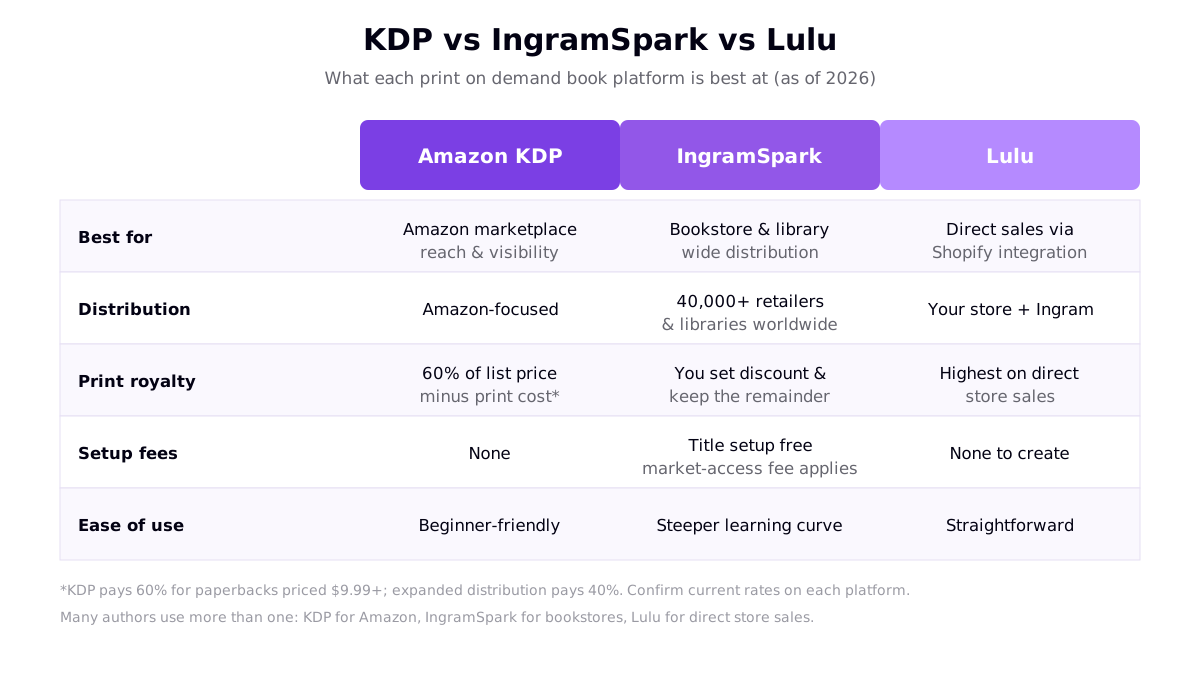
| Platform | Best for | Distribution | Ease of use |
|---|---|---|---|
| Amazon KDP | Amazon marketplace reach and visibility | Amazon-focused; huge built-in audience | Beginner-friendly |
| IngramSpark | Bookstores and libraries | 40,000+ retailers and libraries worldwide | Steeper learning curve |
| Lulu | Direct sales from your own store | Your store (Shopify integration) plus wider options | Straightforward |
The pragmatic answer for many authors is not "one of them" but "more than one": KDP for Amazon sales, IngramSpark for bookstore and library distribution (which shops prefer to order through Ingram), and Lulu for high-margin direct sales.
Royalties: what you actually keep
Royalty is the number that decides whether print on demand is worth it. On Amazon KDP, paperbacks priced at $9.99 and above earn 60% of the list price minus the printing cost; choosing Expanded Distribution drops that to 40%. On IngramSpark you set a wholesale discount and keep the list price minus that discount and the printing cost. Selling direct through Lulu or your own store keeps the most, because there is no marketplace commission — but you have to bring the reader.
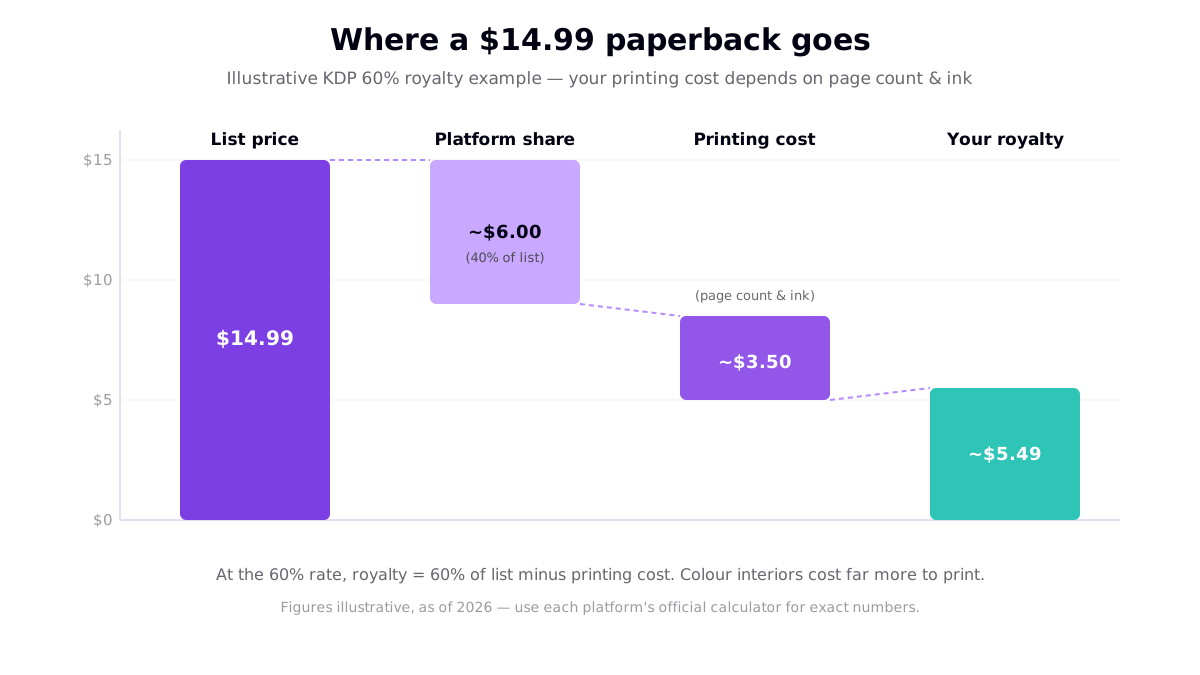
Work through the example: on a $14.99 paperback at the 60% rate, roughly $6.00 is the platform's share, a black-and-white printing cost might be around $3.50 depending on page count, leaving an author royalty of roughly $5.49. Change one variable — a colour interior, say — and the printing cost can jump above $12, forcing a much higher list price to stay profitable. Always run your exact specs through each platform's official royalty calculator before you set a price.
What it costs to publish
The upfront cost is lower than most people expect. Creating a title is generally free on KDP and Lulu, and as of 2026 IngramSpark no longer charges title setup fees, though it applies a market-access (global distribution) fee on routed sales and a revision fee if you change files after approving a proof. Your genuine cost is the per-copy printing cost, driven by four factors.
| Cost factor | Effect on print cost |
|---|---|
| Page count | Each page adds a small per-page charge; long books cost more to print |
| Trim size | Larger formats generally cost more |
| Ink (black vs colour) | Colour interiors cost dramatically more than black and white |
| Paper type | Premium and colour paper stocks raise the cost |
For journals and other low-content titles specifically, the economics differ slightly — our guide to print on demand journals and planners covers that niche in detail.
How to publish a print on demand book
The publishing process is the same shape on every platform. Do it once and every future order fulfils itself.
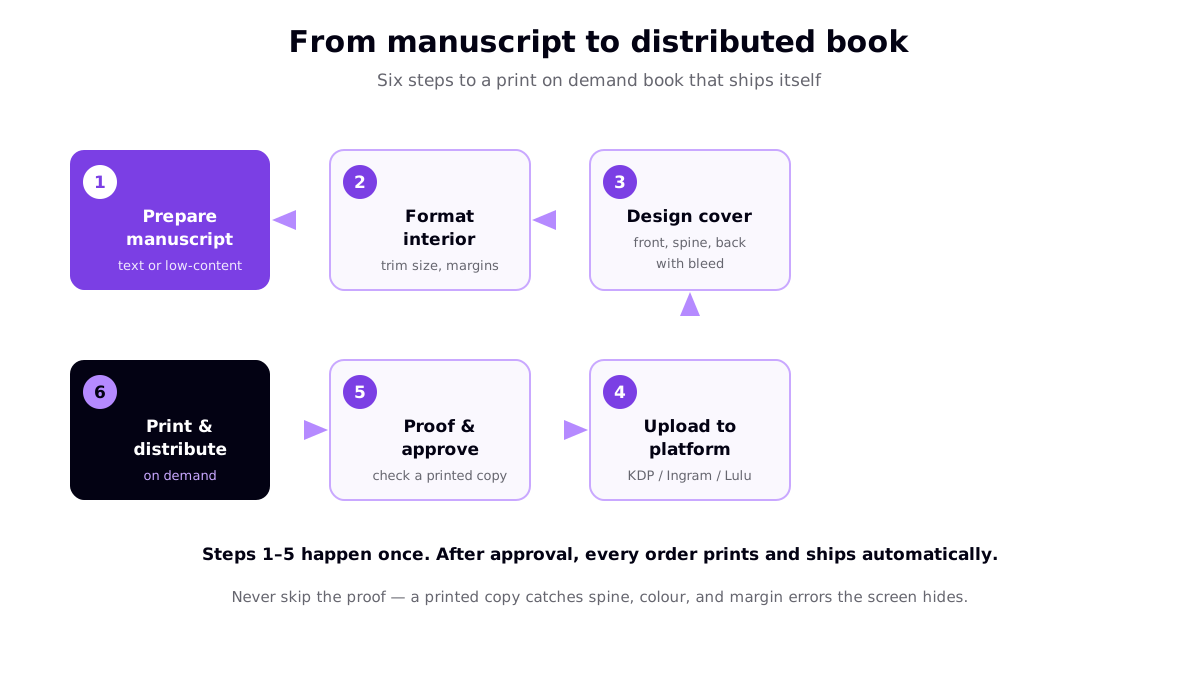
- Prepare the manuscript — a full text for a novel or non-fiction, or a templated interior for a low-content book.
- Format the interior to the trim size with correct margins, and export a print-ready PDF with fonts embedded.
- Design the cover as a single wraparound file — front, spine, and back — with bleed, sized to the page count so the spine width is exact.
- Upload to your platform(s) and set your price, categories, and distribution options.
- Order and approve a proof. Never skip this — a printed copy catches spine, colour, and margin problems the screen hides.
After approval, the book is printed and distributed on demand. If you are designing a cover from AI-generated or low-resolution art, upscale it to the template's pixel dimensions first so it prints sharp — see our 300 DPI print-ready guide.
Which platform should you choose?
- Just want Amazon sales and simplicity? Start with KDP alone.
- Want bookstores and libraries too? Add IngramSpark for its distribution network.
- Selling to your own audience or from a store? Use Lulu for the best direct-sale margins.
- Doing all three? The common combination is KDP for Amazon plus IngramSpark for everywhere else, optionally Lulu for direct sales.
For how book publishing fits into the wider print-on-demand landscape, see Amazon print on demand and our overview of the best print on demand companies.
Frequently asked questions
What is the best print on demand for books?
There is no single winner. Amazon KDP is best for reaching Amazon shoppers and is the easiest to use; IngramSpark is best for getting into bookstores and libraries thanks to distribution to 40,000+ retailers; and Lulu is best for selling directly from your own store, with a Shopify integration. Many self-published authors use more than one — often KDP for Amazon and IngramSpark for wider distribution.
How much does it cost to publish a print on demand book?
Creating a title is generally free on KDP and Lulu, and as of 2026 IngramSpark no longer charges title setup fees, though it applies a market-access (global distribution) fee on routed sales and a revision fee after a proof is approved. Your real cost is the per-copy printing cost, which depends on page count, trim size, ink (black or colour), and paper. Colour interiors cost significantly more to print than black and white.
How much royalty do you earn on a print on demand book?
On Amazon KDP, paperbacks priced at $9.99 and above earn 60% of the list price minus the printing cost; with Expanded Distribution the rate drops to 40%. On IngramSpark you set a wholesale discount and keep the list price minus that discount and the printing cost. Selling direct through Lulu or your own store keeps the most because there is no marketplace commission, but you supply the traffic.
What is the difference between KDP and IngramSpark?
KDP is Amazon's own platform: easy to use, free to publish, and focused on Amazon's marketplace. IngramSpark distributes through the Ingram network to more than 40,000 bookstores, libraries, and online stores worldwide, which bookstores prefer to order from, but it has a steeper learning curve. A common strategy is to publish on KDP for Amazon sales and on IngramSpark for everywhere else.