Print on Demand Business: The 2026 Playbook
A print on demand business sells custom products — t-shirts, mugs, wall art, journals — that are printed only after a customer buys them. You upload a design, publish a listing, and a fulfillment partner prints and ships each order while you keep the margin. There is no inventory to buy and no warehouse to rent, which makes it one of the lowest-risk ways to start an online business in 2026.
That low barrier is exactly why the model is crowded. This playbook covers what actually separates a print on demand business that earns from one that stalls: the unit economics, a defensible niche, the right provider and sales channel, and a repeatable flywheel that turns each sale into better designs.
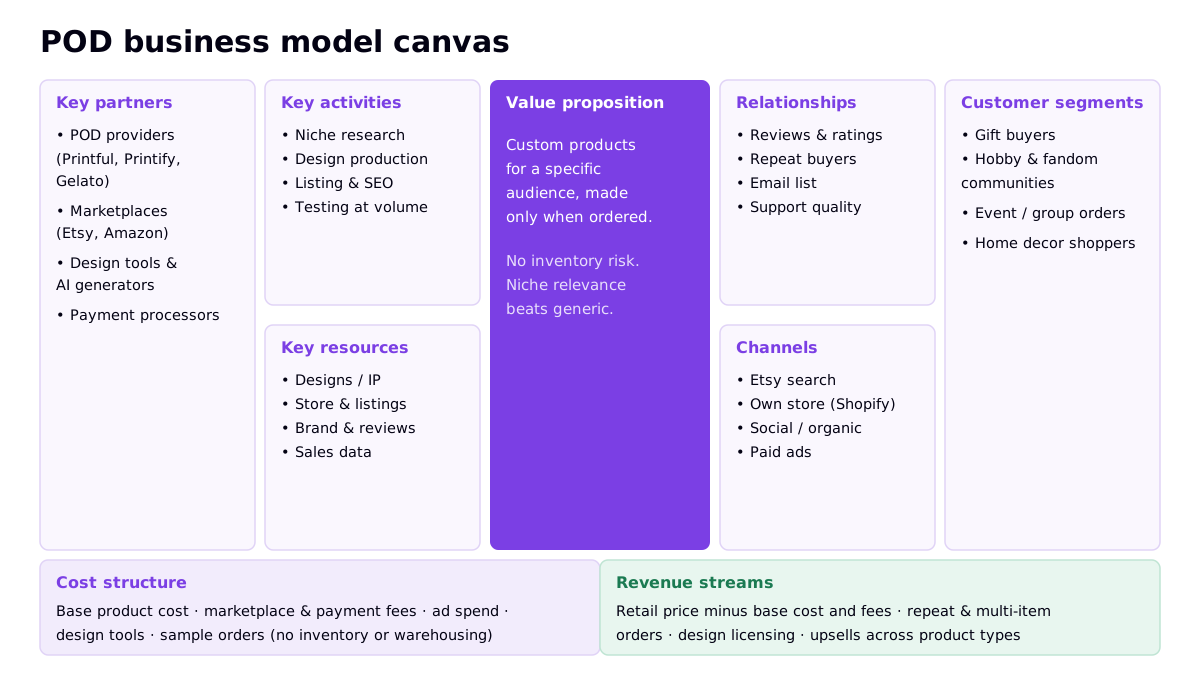
How the print on demand business model works
Print on demand (POD) is a form of dropshipping with one crucial addition — the product carries your design. The money flow is short:
- You create a design and place it on a product through a POD provider such as Printful, Printify, or Gelato.
- You publish a listing on a marketplace (Etsy, Amazon) or your own store (Shopify, WooCommerce).
- A customer orders and pays your retail price.
- The provider prints and ships directly to the customer and charges you the base cost.
- You keep the difference between retail price and base cost, minus marketplace and payment fees.
Because production capacity is the provider's problem, a POD business scales from 10 orders a week to 1,000 without a bottleneck. The trade-off is thinner per-unit margins than buying inventory in bulk, so efficiency and volume of tests become the levers that matter.
Print on demand unit economics
Everything downstream depends on the per-unit math. Take a t-shirt sold on Etsy at $26. As of 2026, Etsy charges a $0.20 listing fee, a 6.5% transaction fee, and 3% + $0.25 payment processing. A typical DTG t-shirt base cost runs roughly $9–$14 depending on provider and garment. Here is where the money goes:
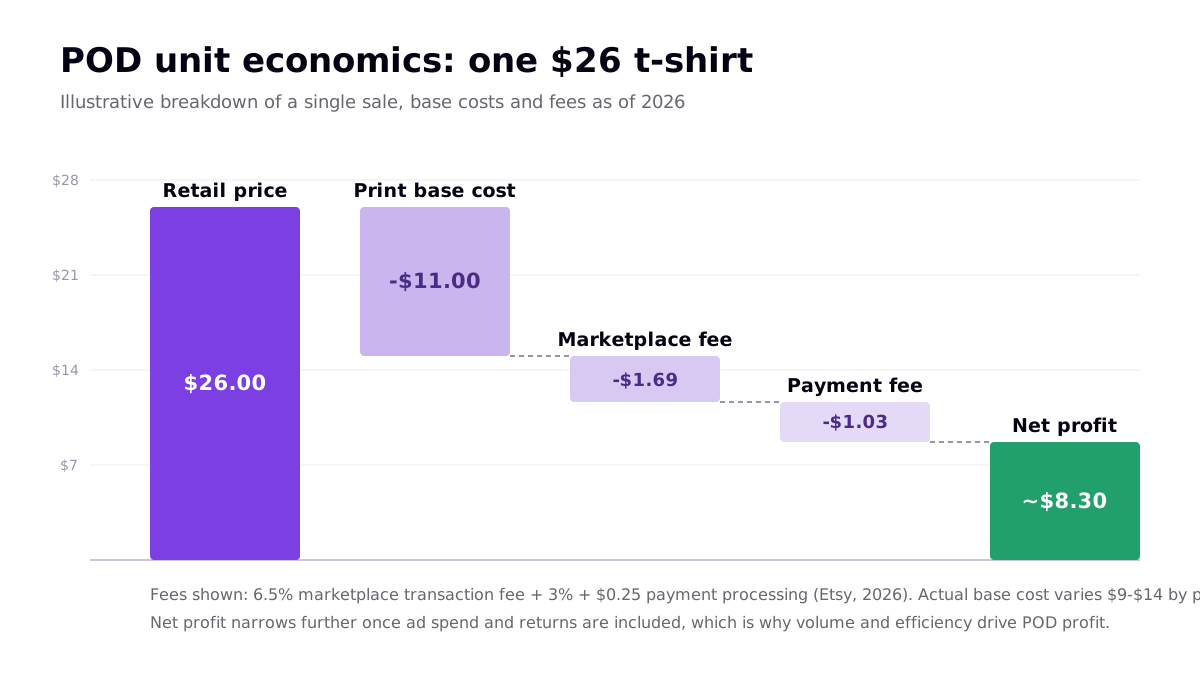
That leaves roughly $8 net per shirt before any ad spend or returns — a ~30% margin, in line with the 20%–40% range that is realistic for POD. Two conclusions follow. First, price matters more than it feels like it should: dropping from $26 to $22 can cut your net profit by a third. Second, higher-ticket products carry the model: a framed print or a hoodie with a $20+ base cost sold at $55 often nets more absolute profit than three t-shirts.
| Product | Typical base cost (2026) | Common retail | Rough net after fees |
|---|---|---|---|
| T-shirt | $9–$14 | $24–$28 | ~$7–$10 |
| Mug | $5–$9 | $16–$22 | ~$6–$9 |
| Hoodie | $20–$30 | $45–$60 | ~$14–$22 |
| Poster / wall art | $6–$18 | $22–$45 | ~$10–$20 |
| Journal / notebook | $5–$10 | $16–$26 | ~$6–$11 |
Numbers are illustrative ranges as of 2026 and vary by provider, size, and shipping. The point is directional: build your catalog around products whose margin survives fees and the occasional refund.
Step 1: Choose a niche you can actually rank in
"Funny t-shirts" is not a niche. "Retirement gifts for nurses" is. Specificity does three jobs at once: it tells you what to design, it gives you the exact keywords buyers type, and it drops you into smaller search results where a new shop can rank. Validate a niche fast:
- Search the marketplace for your niche phrase. Thousands of results with giant shops on page one means brutal competition; near-zero results may mean no demand. Aim for the middle.
- Read the autocomplete. Suggestions in the Etsy and Amazon search bars are real buyer queries, ordered roughly by popularity.
- Check recent reviews on competing listings. Recent reviews mean recent sales, and buyers tell you in their own words what the product is for — that language becomes your titles and tags.
Pick two or three niches to start. You will learn more from launching 20 designs across two niches than from another month of research.
Step 2: Pick your provider and sales channel
The big three providers each run a distinct model. Printify is a marketplace of third-party print shops (lowest base costs, quality varies by partner). Printful runs in-house facilities (consistent quality, higher base costs). Gelato prints near the customer through a global network (fast international delivery). You are not married to one — many sellers run Printify for apparel and Gelato for posters.
On the channel side, start where the buyers already are:
| Channel | Best for | Trade-off |
|---|---|---|
| Etsy | Built-in buyer traffic for gifts, niche apparel, wall art | Per-sale fees; you compete on search relevance |
| Amazon (Merch on Demand) | Massive volume and buyer trust | Approval hurdles and fierce competition |
| Own store (Shopify / WooCommerce) | Best margins and full brand control | You supply 100% of the traffic |
Most sellers should open on Etsy unless they already have an audience, then expand proven designs to their own store. For a deeper comparison of the fulfillment side, see our guide to the best print on demand companies, and for the ecommerce mechanics read print on demand dropshipping.
Step 3: Produce designs in volume, print-ready
AI has removed the design bottleneck — you no longer need Illustrator skills, you need good prompts and correct file preparation. The production loop is simple but must be fast:
- Generate candidates from text prompts.
- Select ruthlessly — generate ten, keep two. Attempts are cheap; bad listings are not.
- Make it print-ready — roughly 300 DPI at the print size, usually a transparent-background PNG for apparel.
- Clear trademarks — a design that references a brand, character, or team can get your shop suspended. Check before you publish.
Step 4: Spin the growth flywheel
A print on demand business is not a launch, it is a loop. Every sale produces data; that data makes the next batch of designs better; better designs sell more. The sellers who win in 2026 are the ones who spin this flywheel fastest.
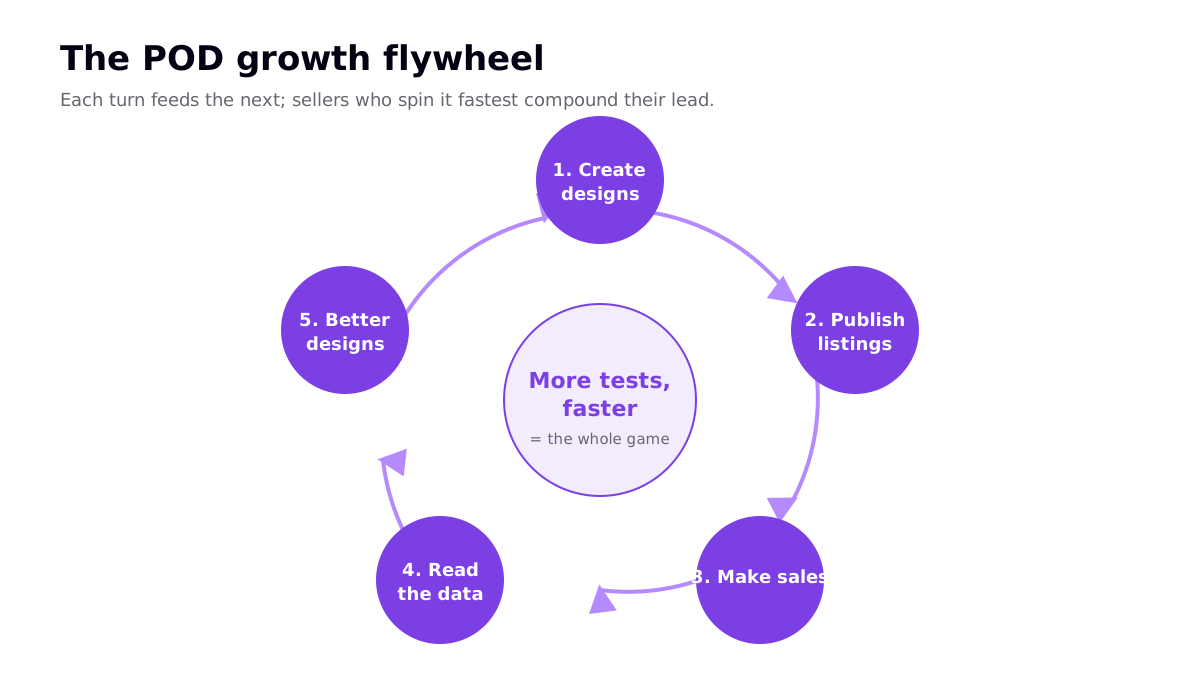
After three to four weeks, read views and favorites per listing. No views is an SEO problem — rework titles and tags. Views but no sales is a design or mockup problem. Favorites and sales mark a winner — make variations and expand it to more products. That diagnostic loop, run relentlessly, is the entire strategy.
Common mistakes that stall a POD business
- Treating it as passive income. POD rewards operators who test constantly, not people waiting for luck.
- Under-pricing. Thin margins plus fees plus a refund can turn a "sale" into a loss.
- Launching five designs and waiting. Five listings is not a test; aim for 20–40 in month one.
- Ignoring the numbers. Track base cost, fees, and ad spend per product — not just top-line revenue.
- Skipping samples. Order at least one of each product before you scale it.
Frequently asked questions
How much does it cost to start a print on demand business?
Very little. There is no inventory to buy — the provider prints after a customer orders. Realistic startup costs are marketplace listing fees (Etsy charges $0.20 per listing as of 2026), an optional design tool subscription, and a few sample orders at roughly $10–$20 each to check quality. Most people launch for well under $100.
Is a print on demand business profitable?
It can be. Per-order margins commonly land in the 20%–40% range once base cost and fees are covered, and the model scales without inventory risk. Profit comes from a specific niche, designs produced in volume, listings optimized for search, and low fulfillment costs. Generic designs at generic prices rarely clear a profit after fees and ads.
Do I need an LLC to run a print on demand business?
You can usually start as a sole proprietor while validating demand, then register a formal structure such as an LLC once sales are consistent. Rules vary by country and state, so confirm local tax and registration requirements before scaling. Either way, treat it as a real business early: separate your finances and track every fee.
How long before a print on demand business makes money?
It varies widely. Shops with a focused niche and 20–40 well-optimized listings often see first sales within a few weeks to a couple of months, then grow as they add proven designs. Progress depends on listing volume, niche specificity, and SEO quality far more than luck.
Resources
- Etsy Fees & Payments Policy — official listing, transaction, and payment fees.
- Printful pricing — base product costs and plan details.
- Grand View Research: Print on Demand Market Report — market size and growth estimates.
- Printify: How to start a print-on-demand business
- Printful: How to start a print-on-demand business in 8 steps
- Wix: How to start a print-on-demand business