How to Start a T Shirt Printing Business
To start a t shirt printing business in 2026 you make one decision before all others: how the shirts get printed. You can use a print on demand partner that prints and ships each order for you, buy your own equipment and print at home, or send bulk orders to a local print shop. That single choice sets your startup cost, your margins, and how quickly you can launch.
This guide walks through choosing that fulfillment model, budgeting for equipment (or skipping it entirely), building a brand and designs, pricing for profit, and a realistic 12-month plan from first listing to scaling your winners.
Step 1: Choose how you'll print
There is no single right answer — the best model depends on your budget, expected order volume, and how much control you want over production. The three main paths:
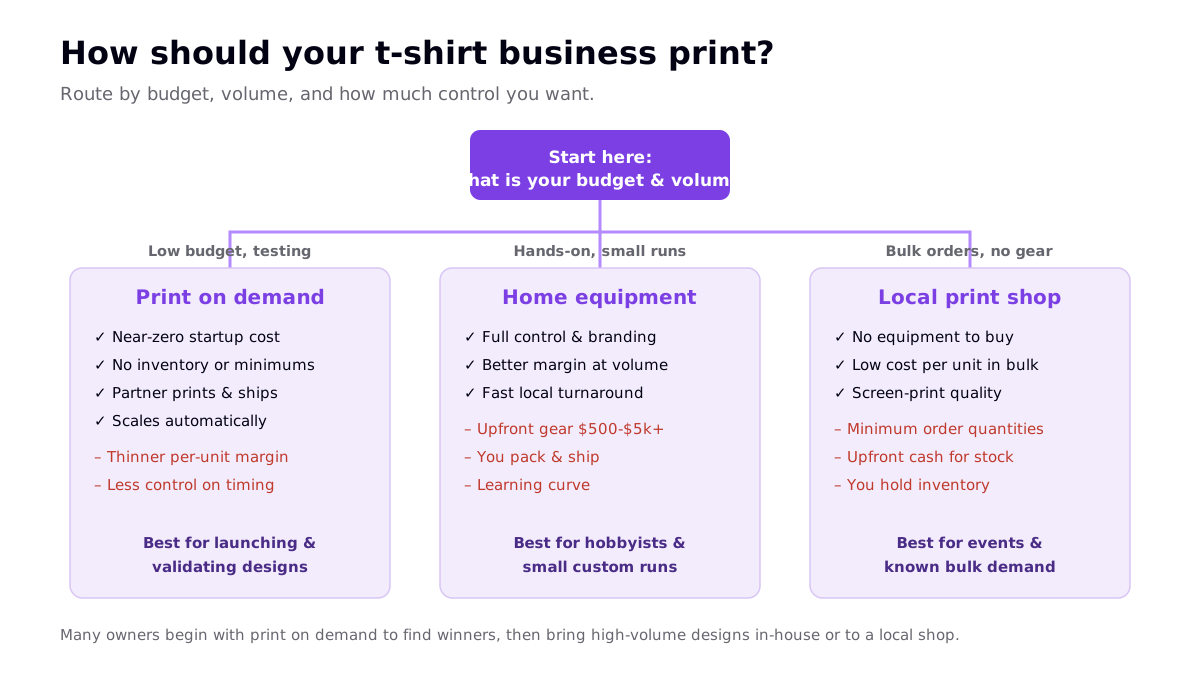
Print on demand (POD) is the lowest-risk entry point. A partner such as Printful, Printify, or Gelato prints and ships each shirt after it sells, so you carry no inventory and pay only a per-order base cost. Home equipment gives you full control and better margins at volume, but you buy the gear and pack every order yourself. A local print shop removes equipment while offering true screen-print quality — at the cost of minimum orders and holding stock. For the fulfillment mechanics, see our guide to print on demand dropshipping.
Step 2: Budget realistically
Startup cost swings enormously by method. Print on demand needs essentially no capital; equipment-based printing is a real investment you must earn back before you profit.
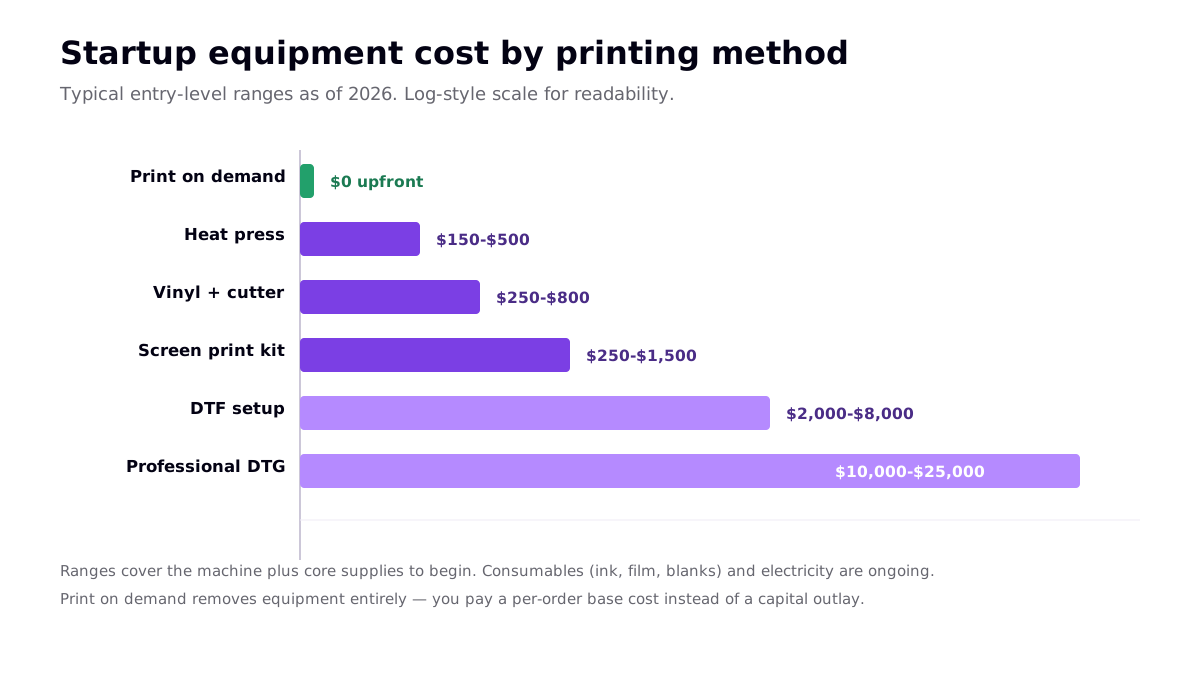
| Method | Typical startup cost (2026) | Best fit |
|---|---|---|
| Print on demand | $0 equipment (per-order base cost ~$9–$14/shirt) | Launching and validating designs with no risk |
| Heat press + transfers | $150–$500 | Small custom runs, personalized orders |
| Vinyl (HTV) + cutter | $250–$800 | Names, numbers, simple graphics |
| Screen printing kit | $250–$1,500 starter; $5,000+ full setup | Bulk orders of the same design |
| DTF setup | ~$2,000–$8,000 | Full-color transfers, mixed fabrics |
| Professional DTG | $10,000–$25,000 | High-volume, photo-detail direct printing |
Ranges are illustrative as of 2026 and vary by brand and region. A pragmatic path: start on POD, let sales reveal your best designs, then invest in equipment only for the shirts that reliably sell. For a full cost breakdown of printing itself, see t-shirt printing cost.
Step 3: Pick a niche and build a brand
"T-shirts" is not a business; a niche is. "Trail-running dad jokes" or "vintage botanical illustrations for gardeners" gives you a design direction, the exact keywords buyers search, and a smaller pond where a new shop can rank. Validate demand by searching your niche phrase on Etsy and Amazon, reading the autocomplete for real buyer queries, and checking whether competing listings have recent reviews (recent reviews signal recent sales).
Then wrap it in a brand: a memorable name, a simple logo, and a consistent visual voice across your store and mockups. A coherent brand converts browsers into buyers and earns the reviews that fuel future sales.
Step 4: Create designs and choose a print method per design
AI generators have removed the design bottleneck — you need good prompts and print-ready files rather than illustration skills. Generate many candidates, keep only the best, and prepare each at roughly 300 DPI with a transparent background for apparel. Match the print method to the design: screen printing shines for one- or two-color graphics at volume; DTG and DTF handle full-color detail; vinyl suits names and numbers. Learn the trade-offs in our guide to screen printing shirts.
Always clear trademarks before publishing — a shirt referencing a brand, character, or team is the fastest route to a suspended shop.
Step 5: Price for profit
A common starting rule is to price at 2–3x your total cost (base cost plus fees). For a shirt with an $11 base cost sold on Etsy — where 2026 fees are $0.20 per listing, a 6.5% transaction fee, and 3% + $0.25 payment processing — a $26 retail price leaves roughly $8 net before ad spend. Don't race to the bottom: shaving a few dollars off price can erase a third of your margin. The deeper unit-economics math is covered in our print on demand business playbook.
Step 6: Launch, measure, and scale over 12 months
Your first month is about volume of tests, not revenue. Aim for 20–40 listings, then read the data and double down on what sells.
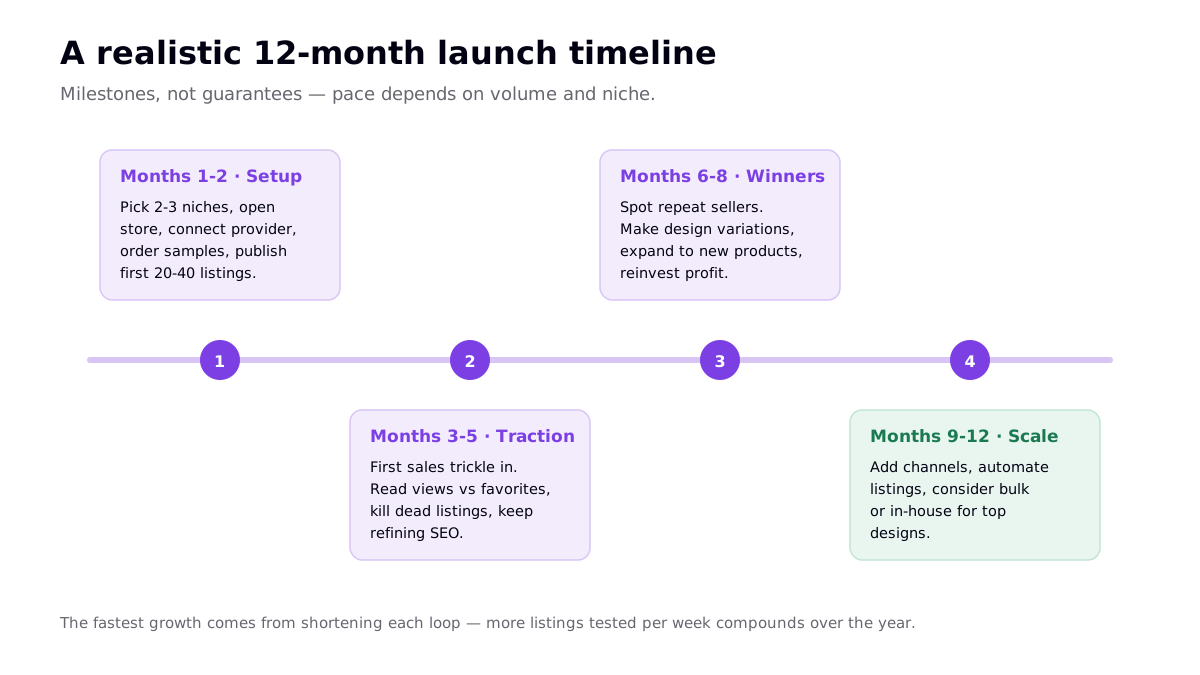
Review views and favorites per listing every few weeks. No views means an SEO problem; views without sales means a design or mockup problem; favorites and sales mark a winner to expand. By months nine to twelve you can add sales channels, automate listing work, and consider bringing your best-selling designs in-house or to a local shop for a better per-unit cost.
Which printing method should you choose?
Beyond the fulfillment decision, the print method shapes your cost, quality, and which orders you can take. Each has a sweet spot:
- Screen printing is unbeatable on cost per shirt for large runs of one- or two-color designs, but the setup per screen makes small or full-color orders expensive.
- Direct-to-garment (DTG) prints full-color, photo-detail designs directly onto cotton with no minimums — ideal for POD and small batches, though per-shirt cost stays flat as volume grows.
- DTF (direct-to-film) transfers work across cotton, blends, and synthetics, making them versatile for mixed catalogs and darker garments.
- Heat transfer vinyl (HTV) is cheapest to start and perfect for names, numbers, and simple graphics, but it is labor-intensive per shirt and not suited to complex art.
- Sublimation produces vivid, permanent prints — but only on polyester and light fabrics, which limits its use for classic cotton tees.
A common pattern is to run POD (which uses DTG or DTF behind the scenes) while you find winners, then move your highest-volume single-color designs to screen printing for a much lower per-unit cost. That way capital only follows proven demand.
Mistakes that sink new t-shirt businesses
- Buying equipment before proving demand. A $10,000 DTG printer is a liability if nothing sells yet.
- Under-pricing. Thin margins plus fees plus a refund can turn a sale into a loss.
- One design, endless waiting. Launch a batch, not a single shirt.
- Skipping samples. Order and inspect each product before scaling it.
- Using trademarked content. Check before you publish, every time.
Frequently asked questions
How much does it cost to start a t shirt printing business?
It depends entirely on the fulfillment model. With print on demand you can start for well under $100 because there is no equipment — you pay a per-order base cost of roughly $9–$14 per shirt (2026). A home setup runs $500–$5,000 for a heat press or entry screen-printing kit and blanks, while a professional DTG printer can cost $10,000–$25,000. Most owners begin with print on demand and add equipment only once designs are proven.
Is a t shirt printing business profitable?
It can be. Per-shirt margins commonly fall in the 20%–40% range after base cost and marketplace fees. Profit hinges on a specific niche, designs produced in volume, correct pricing (often 2–3x total cost), and controlled ad spend. Buying equipment lowers per-unit cost at high volume but adds fixed costs you must cover before profiting.
What equipment do I need to print t-shirts at home?
The minimum viable home kit is a heat press ($150–$500 in 2026) plus transfer material — printable heat-transfer paper, cut vinyl with a cutter, or DTF transfers. Screen printing adds screens, emulsion, inks, and a press, from a $250 starter kit to several thousand dollars for a full setup. DTG printers deliver full-color detail but start around $10,000.
Do I need a business license for a t shirt business?
In most places you can begin as a sole proprietor while validating demand, then register a formal structure and collect any required sales tax as you grow. Requirements vary by country, state, and platform, so confirm local rules before scaling. Keep business finances separate and track every cost from day one.
Resources
- Printify: T-shirt printing business start-up cost guide (2026)
- Etsy Fees & Payments Policy — official 2026 seller fees.
- Printful pricing — base product costs.
- Printful: Start a T-Shirt Business for Free
- VistaPrint: How to start a T-shirt printing business
- Wix: How to start a t-shirt business in 12 steps