Screen Printing Shirts: Process, Cost & Tips
Screen printing shirts is the oldest and most durable way to decorate apparel: ink is pushed through a fine mesh stencil onto the fabric, one color at a time, then heat-cured so the design survives 50 washes or more. It is the method behind most band merch, team jerseys, and bulk promotional tees — and for orders above a few dozen shirts, it is usually the cheapest per unit.
This guide covers how screen shirt printing actually works, what it costs per shirt in 2026, the order minimums to expect, and exactly when screen printing beats DTG, DTF, and vinyl for your project.
How screen printing shirts works
At its core, screen printing is stencil printing. A design is separated into individual colors, and each color gets its own screen — a wooden or aluminum frame holding a taut polyester mesh. A light-sensitive emulsion coats the mesh; where the design should print, the emulsion is washed away, leaving an open stencil that lets ink pass through onto the shirt below.
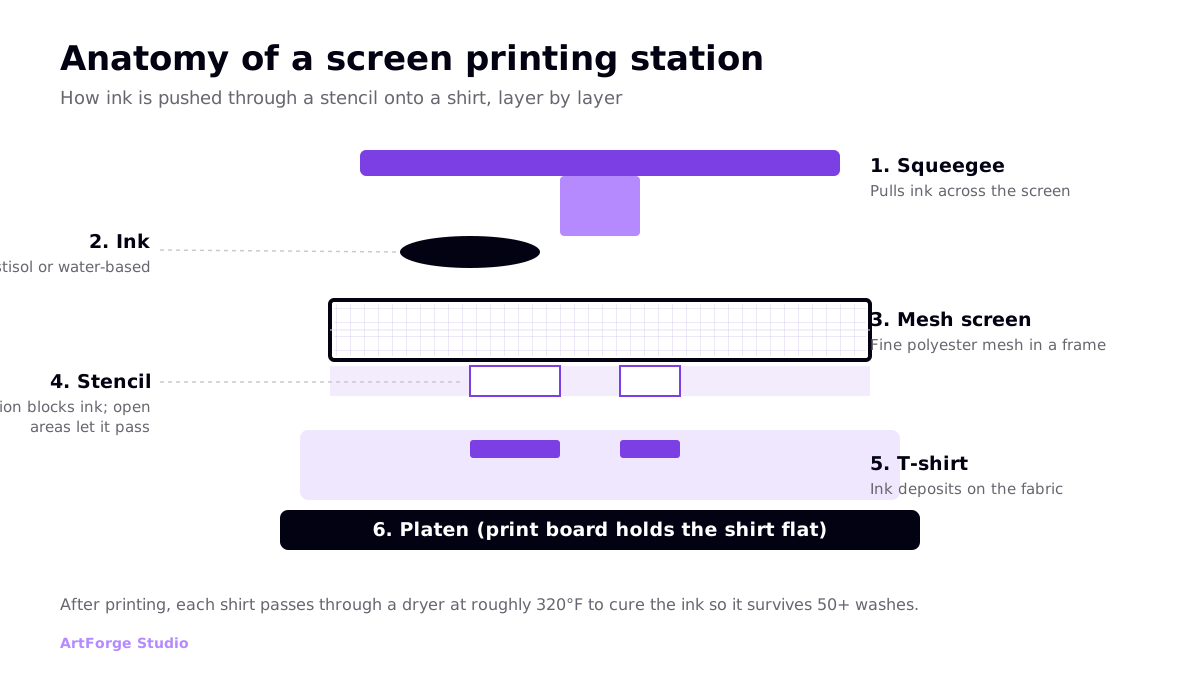
Because every color needs a separate screen, setup labor is the defining cost of screen printing. That is why the method rewards volume — the effort of separating art, burning screens, and registering colors is the same whether you print 12 shirts or 1,200, so the cost spreads thinner the more you print.
The step-by-step process
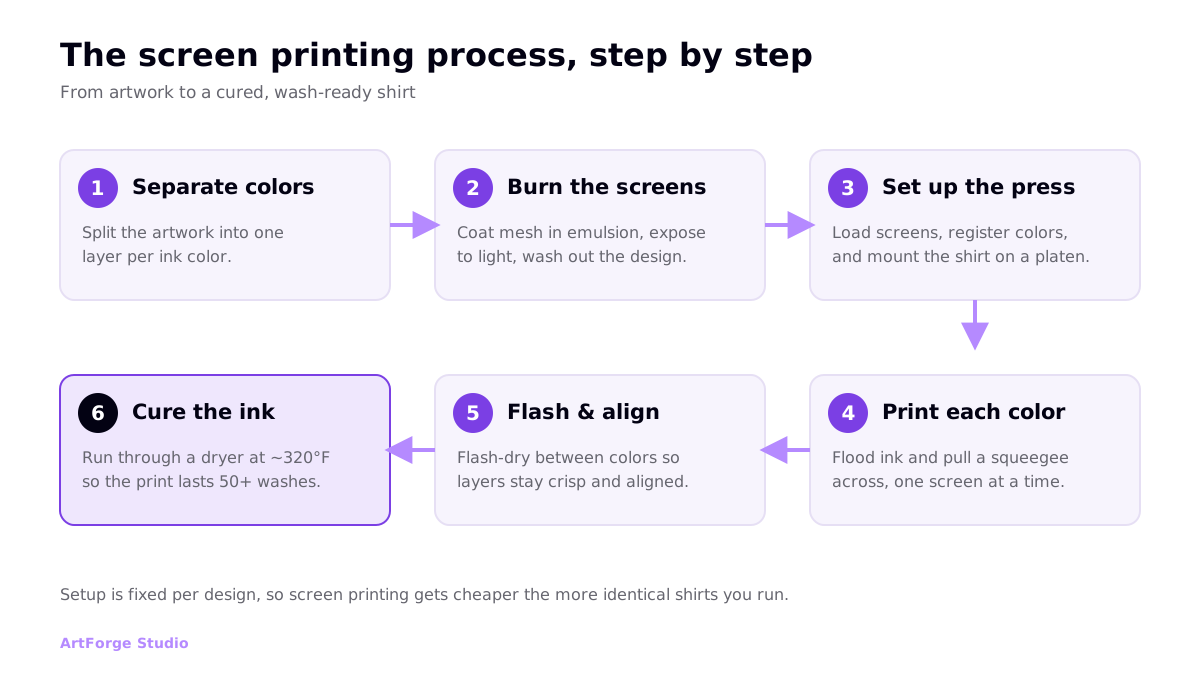
- Color separation. Artwork is split into one layer per ink color. A one-color logo needs one screen; a four-color design needs four.
- Burning screens. Emulsion is coated onto the mesh, exposed to light through a film positive, then washed out to reveal the stencil.
- Press setup. Screens are loaded onto a press, colors are registered so they line up, and the shirt is fixed to a platen.
- Printing. Ink is flooded across the screen and a squeegee pulls it through the open mesh onto the fabric, one color at a time.
- Flashing. Between colors, the ink is flash-dried so the next layer prints cleanly on top without smearing.
- Curing. The finished shirt runs through a conveyor dryer at roughly 320°F to permanently bond the ink.
How much does screen printing cost per shirt?
All-in pricing for a custom screen-printed shirt in 2026 typically runs from about $9 to $30 (blank garment plus printing), with most orders settling in the $12 to $22 range. Two things drive the number: the one-time screen setup and the size of your run.
- Screen setup fee: commonly $20–$35 per color, per print location. A one-color front print is one screen; a two-color front plus one-color back is three screens.
- Number of colors: each extra color adds both a screen and a small per-shirt increment, so simple one- and two-color designs are dramatically cheaper than full-color art.
- Print locations: adding a back or sleeve print roughly doubles the printing labor for that garment.
- Garment choice: premium blanks and performance fabrics cost more than standard cotton tees.
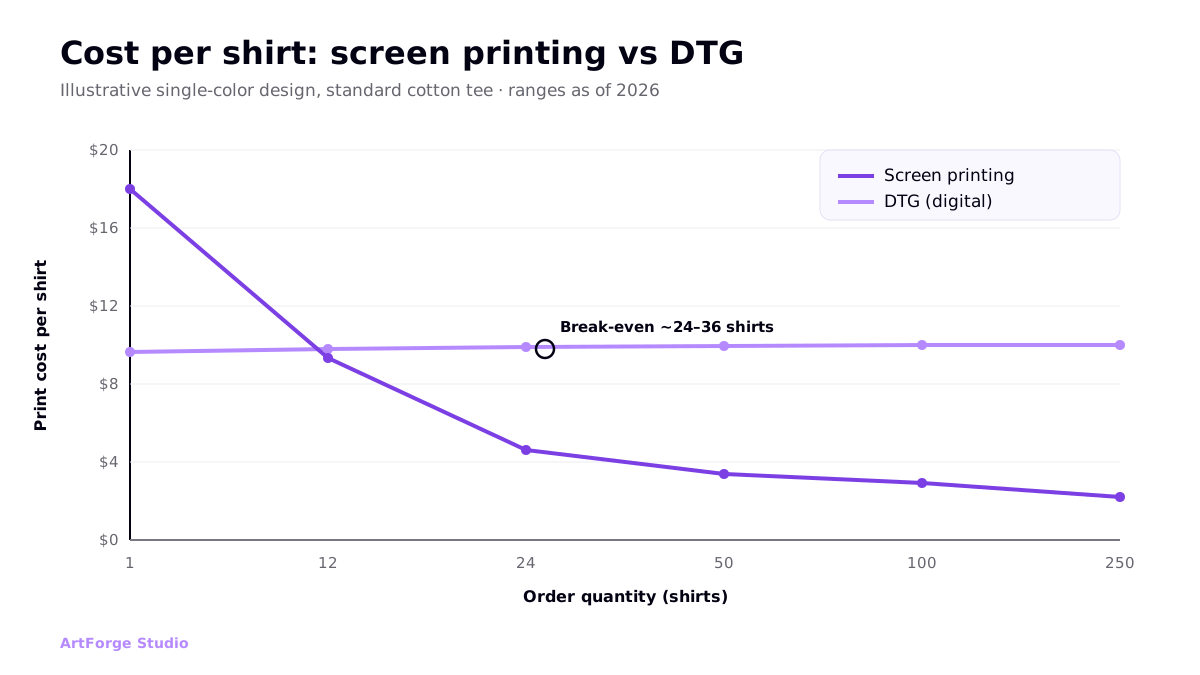
The single biggest lever is quantity. As one industry price sheet illustrates, a one-color print can cost over $9 per shirt at a dozen pieces, drop to roughly $4–$5 around 24 pieces, and fall under $3 per shirt once you pass 60 — because the fixed setup is spread across more garments (figures from ScreenPrinting.com and QRSTs, as of 2026).
Screen printing vs DTG: where the lines cross
The most useful cost comparison is against DTG (direct-to-garment) digital printing, which has no setup fee and a flat per-shirt price. Screen printing starts expensive per unit and gets cheaper; DTG stays roughly level. The two methods break even somewhere around 24 to 36 shirts for a simple design.
| Factor | Screen printing | DTG |
|---|---|---|
| Setup fee | ~$20–$35 per color/location | None |
| Best order size | ~50+ shirts | 1–24 shirts |
| Colors | Priced per color; spot & Pantone matching | Unlimited colors, no extra cost |
| Photo-realistic art | Difficult and costly | Excellent |
| Durability | 50–100+ washes | ~50 washes on cotton, less on blends |
| Typical minimum | 12–24 shirts | 1 shirt |
Ranges reflect published shop pricing and method comparisons as of 2026; your quote depends on garment, colors, and location. For a fuller cost picture across methods, see our t-shirt printing cost breakdown.
Order minimums and when they matter
Most screen print shops require a minimum of 12 to 24 shirts per design. This is not arbitrary: below that count, the screen setup cost dominates and the per-shirt price stops being competitive. If you only need a handful of shirts, a shop will often steer you toward DTG or DTF, or quote a screen job at a premium that reflects the fixed setup.
This is also why screen printing sits awkwardly with pure print-on-demand. Traditional POD fulfills one order at a time with no minimum, which favors digital methods. That said, "screen print on demand" services do exist for merch drops where you commit to a batch upfront — the economics look more like a bulk order than one-off fulfillment.
Which ink? Plastisol vs water-based
Two ink families dominate garment screen printing, and the choice affects feel, opacity, and cure requirements.
| Ink type | Feel & look | Best for |
|---|---|---|
| Plastisol | Sits on top of fabric; bright, opaque, thicker hand | Bold graphics, dark garments, vibrant spot colors |
| Water-based | Soaks into fibers; soft, almost no hand | Vintage/soft prints, light garments, all-over feel |
| Discharge | Removes garment dye and re-dyes; very soft | Soft prints on dark 100% cotton |
Plastisol is the workhorse because it is forgiving and opaque, especially on dark shirts where a white underbase is needed. Water-based and discharge inks give the coveted soft, "worn-in" feel but demand tighter control over curing.
Tips for better screen printed shirts
- Keep colors low. Every color is another screen, another setup fee, and another registration headache. One- and two-color designs are cheaper and often look sharper.
- Supply vector artwork. Clean vector files separate into colors far more reliably than low-resolution images. A properly prepared file saves setup time and money.
- Order a sample or proof. Confirm color placement and ink choice before committing to a full run — a fixed setup mistake multiplies across every shirt.
- Cure properly. Under-cured ink cracks and peels in the wash. This is the number-one cause of screen print failure at home.
- Wash inside out, cold. Even a great cure lasts longer with gentle washing and no high-heat drying.
How screen printing compares to other methods
Screen printing is one of four common ways to decorate shirts, and each has a sweet spot. If your project is a small run, full-color, or a single custom piece, one of the digital methods is usually the better fit:
- DTG printing — digital, no minimum, ideal for detailed full-color art on small runs.
- DTF printing — a transfer method that works on cotton, blends, and polyester with no setup screens.
- Vinyl (HTV) — heat-pressed cut vinyl, great for names, numbers, and one-off custom shirts.
The rule of thumb: choose screen printing for volume, spot colors, and maximum durability; choose a digital method for small quantities, photo-realistic designs, and print-on-demand.
Frequently asked questions
How much does it cost to screen print a shirt?
For a standard custom screen-printed shirt in 2026, expect roughly $9 to $30 all-in (blank garment plus printing), with most orders landing in the $12 to $22 range. Screens carry a one-time setup fee of around $20 to $35 per color per side. The per-shirt price drops sharply with volume: a one-color print might be over $9 each at a dozen shirts but under $4 each at 60 or more.
What is the minimum order for screen printing shirts?
Most screen print shops set a minimum of 12 to 24 shirts per design because the screen setup cost has to be spread across the run. Below that threshold, per-shirt cost climbs quickly, which is why single shirts and tiny runs are usually printed with DTG or DTF instead of screen printing.
Is screen printing better than DTG?
It depends on quantity and design. Screen printing wins on bulk orders (roughly 50+ shirts), spot-color and Pantone-matched brand colors, and durability, with properly cured prints surviving 50 to 100+ washes. DTG wins for small runs, photo-realistic or full-color artwork, and single shirts with no setup fee. The two methods cross over near 24 to 36 shirts.
How long do screen printed shirts last?
A properly cured screen print is one of the most durable garment decorations available, typically surviving 50 washes without visible fading and often lasting 100+ washes. Washing inside out in cold water and skipping the dryer's highest heat extends print life further.
Can you screen print at home?
Yes. Starter kits with a pre-stretched screen, emulsion, a squeegee, and ink let you screen print simple one- or two-color designs at home for a modest upfront cost. The trade-offs are a learning curve on registration and curing, and the fact that hobby setups struggle with fine detail and many colors.