DTG Printing: Direct to Garment Explained
DTG t shirt printing — short for direct-to-garment — is a digital method that sprays water-based ink straight onto fabric, the same way an inkjet printer lays ink on paper. Because the ink soaks into the fibers, DTG produces soft, full-color prints with no color limit and no order minimum, which is exactly why most print-on-demand companies rely on it.
This guide explains how DTG printing works, how good the quality and durability really are, what a print costs, and when a fulfillment partner will choose DTG over DTF or screen printing.
What is DTG printing?
Direct-to-garment is digital textile printing. A modified inkjet printer reads your artwork file and jets microscopic droplets of water-based ink onto the shirt, reproducing gradients, fine detail, and unlimited colors in a single pass. Unlike screen printing, there are no screens to burn and no per-color setup — a one-color logo and a full-color photograph cost the printer the same effort.
That digital nature is DTG's superpower for online sellers: you can print a single shirt on demand, profitably, the moment a customer orders it. It is the backbone of platforms like Printful and Printify for cotton apparel.
The three stages: pretreat, print, cure
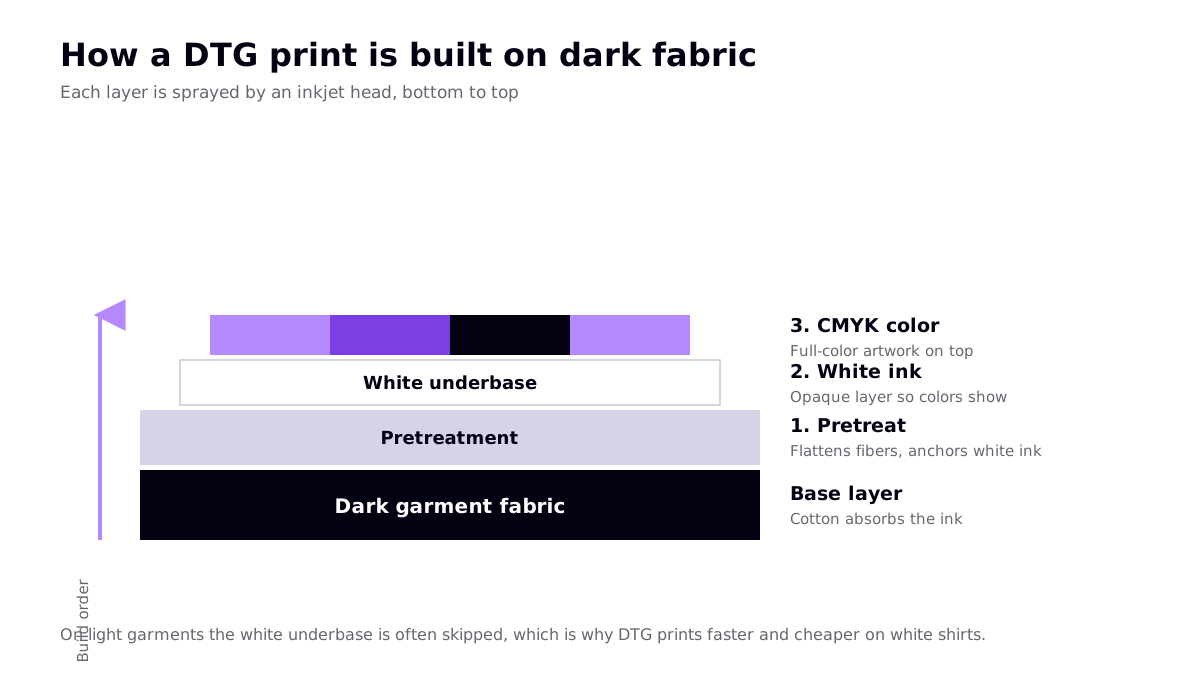
- Pretreatment. The garment is sprayed with a pretreat solution that flattens the fibers, helps the ink bond, and (on dark shirts) anchors the white underbase.
- Printing. The printer lays down ink. On dark garments it first prints an opaque white underbase, then the CMYK color on top so the design stays vivid.
- Curing. Heat from a press or conveyor dryer bonds the ink permanently, locking in wash durability.
DTG print quality and feel
DTG shines on detailed, colorful artwork. It can reproduce photographs, watercolor gradients, and intricate illustrations that would be impractical to screen print. Because the ink absorbs into the fabric rather than sitting on top, the print has a soft hand — you barely feel it, unlike the thicker plastisol layer of a screen print.
The trade-offs: colors are slightly less punchy than screen-printed spot colors, brand-exact Pantone matching is harder, and results depend heavily on fabric. This is why file preparation matters — DTG rewards clean, high-resolution artwork. If you generate designs with AI, make sure they are upscaled and print-ready first; see our guide to getting images to 300 DPI and print-ready.
How durable is DTG printing?
A properly cured DTG print on 100% cotton generally survives around 40 to 50 washes before visible fading (ranges as of 2026). That is respectable for everyday wear, but it falls short of screen printing, which can last 100+ washes. Some comparisons put DTG longevity at roughly a quarter to half that of a screen print on identical garments.
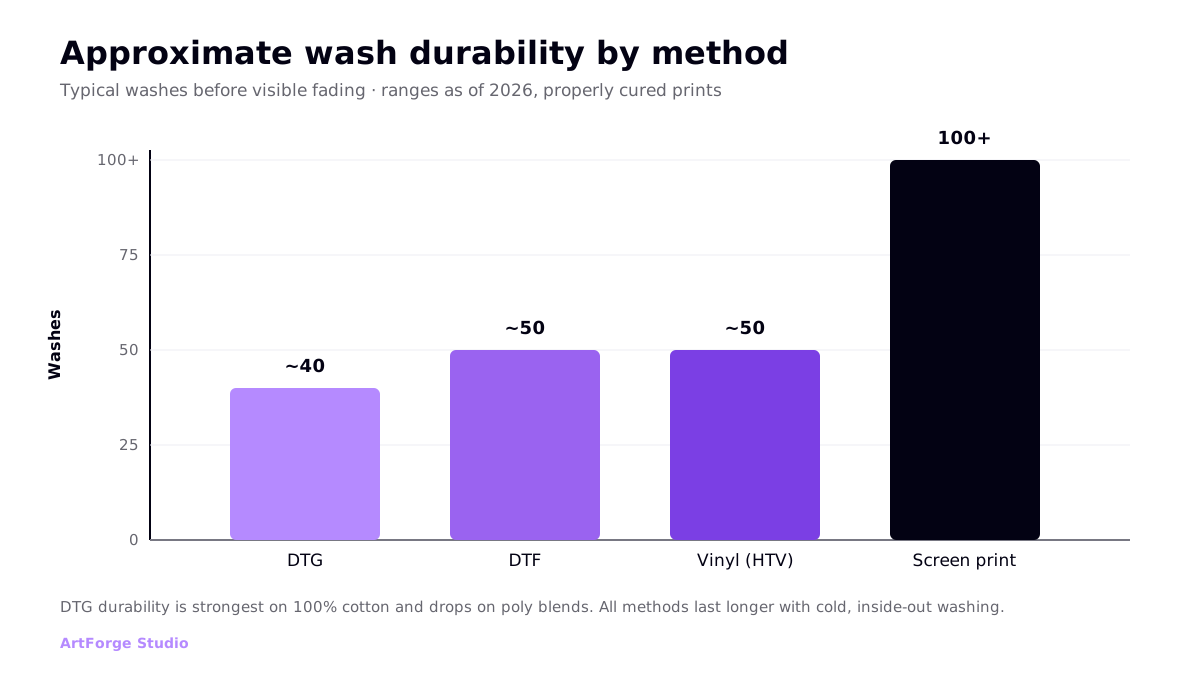
To maximize a DTG print's life: choose 100% cotton, wash inside out in cold water, skip bleach and fabric softener, and tumble dry low or hang dry.
DTG cost per shirt
Because DTG has no setup fee, its cost per shirt is roughly flat regardless of quantity. In independent method comparisons, a single-shirt DTG print on a mid-range blank runs about $9 to $15 for the print portion as of 2026, depending on the garment, print size, and whether it is a dark shirt (which needs a white underbase).
| Cost factor | Effect on DTG price |
|---|---|
| Order quantity | Little effect — per-shirt cost stays flat (no setup) |
| Number of colors | No effect — unlimited colors at the same price |
| Garment color | Dark shirts cost more (pretreat + white underbase) |
| Print size | Larger prints use more ink, raising cost |
| Blank garment | Premium tees raise the total |
For a side-by-side view of DTG against every other method, see our full t-shirt printing cost breakdown.
DTG vs screen printing vs DTF
DTG is one of three digital-era methods sellers weigh. The right choice comes down to quantity, fabric, and design:
| Method | Best for | Weakness |
|---|---|---|
| DTG | Cotton, full-color art, single shirts & small runs, soft feel | Weaker on polyester; less durable than screen |
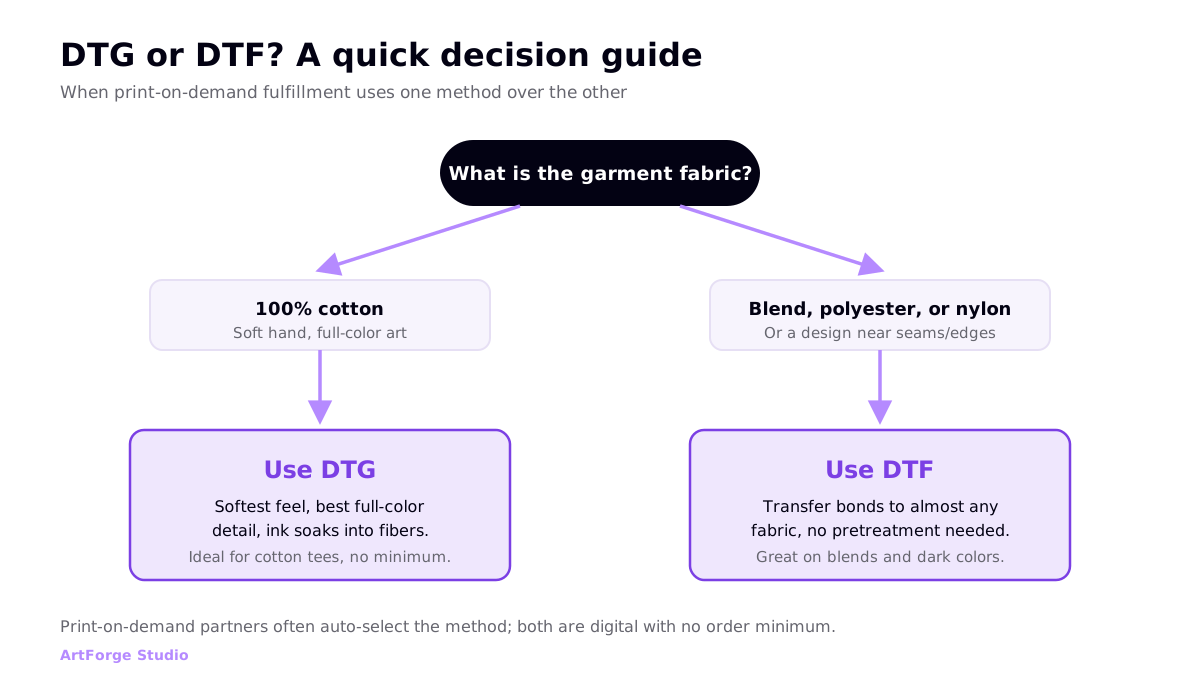
| DTF | Any fabric (cotton, blends, poly), no pretreatment, bold color | Slight raised feel from the transfer film |
| Screen printing | Bulk runs, spot colors, maximum durability | Setup fee and minimums; poor for photos |
Read the deeper dives on DTF t-shirt printing and screen printing shirts to compare in detail. The decision between the two digital methods usually looks like this:
Common DTG problems and how to avoid them
Most disappointing DTG results trace back to a handful of fixable causes. Knowing them helps you judge samples and prepare files that print well:
- Faded or dull color on dark shirts. Usually a pretreatment or white-underbase issue. It is why ordering a sample on your exact garment color matters before you scale a design.
- Low-resolution, pixelated prints. DTG reproduces exactly what you upload. Artwork needs to be high resolution at the actual print size — roughly 300 DPI — or fine detail turns soft. See our 300 DPI print-ready guide.
- Washed-out results on blends. Water-based ink bonds best to cotton. On heavy polyester blends, color sits less cleanly and fades faster; choose cotton-rich blanks when you can.
- A faint pretreatment box. On some dark garments the pretreated area can be visible until the first wash. This normally disappears and is not a defect.
Because DTG prints your file verbatim, clean, correctly sized, transparent-background artwork is the single biggest quality lever you control.
When print-on-demand companies use DTG
If you sell through a POD platform, you rarely choose the print method by hand — the provider picks it based on the product and fabric. In practice, cotton t-shirts, hoodies, and tote bags are usually DTG; polyester performance wear and all-over designs go to sublimation or DTF; and simple bulk merch drops may be screen printed. Knowing which method sits behind a product helps you predict its feel, durability, and how your artwork will translate. For where DTG fits in the broader landscape, see our Printful review, which runs in-house DTG facilities, and our roundup of the best print on demand companies.
Frequently asked questions
What is DTG printing?
DTG stands for direct-to-garment. It is a digital printing method that sprays water-based ink directly onto fabric with a specialized inkjet printer, much like an office printer prints on paper. The ink soaks into the fibers, so the print has a soft feel and can reproduce full-color, photo-realistic artwork with no color limit and no order minimum.
How long does DTG printing last?
A well-cured DTG print on 100% cotton typically survives around 40 to 50 washes before noticeable fading. Durability is best on cotton and drops on polyester blends. Washing inside out in cold water and air-drying or tumble-drying on low significantly extends the life of a DTG print.
Is DTG better than screen printing?
For small orders, full-color or photo-realistic designs, and single shirts, DTG is better: no setup fee, no minimum, unlimited colors. For large runs of a simple design, screen printing is cheaper per shirt and more durable. The break-even between the two is usually around 24 to 36 shirts.
What fabric works best for DTG printing?
100% cotton is ideal because it absorbs the water-based ink cleanly, giving the most vivid, durable results. Cotton-heavy blends (like 50/50) print acceptably but with slightly muted color and shorter life. Pure polyester and technical fabrics are poor candidates for DTG and are usually printed with DTF or sublimation instead.
Why do DTG prints on dark shirts cost more?
Dark garments need pretreatment plus an opaque white underbase printed beneath the color so the design shows up. That extra white ink and processing step raises both the material cost and the print time, which is why many print-on-demand catalogs list higher prices for DTG on dark colors than on white.