Sublimation T Shirt Printing: How It Works
Sublimation t shirt printing works by turning solid dye into a gas that bonds directly with polyester fibers, so the design becomes part of the fabric instead of sitting on top of it. That is why sublimation prints feel like nothing at all, never crack or peel, and stay vibrant for the life of the garment. The trade-off is strict: it only works on polyester and only on white or light colors.
This guide explains the science, the fabric rules that decide whether your print succeeds or fails, the heat-press settings to start from, and exactly when sublimation is the right method.
How sublimation t shirt printing works
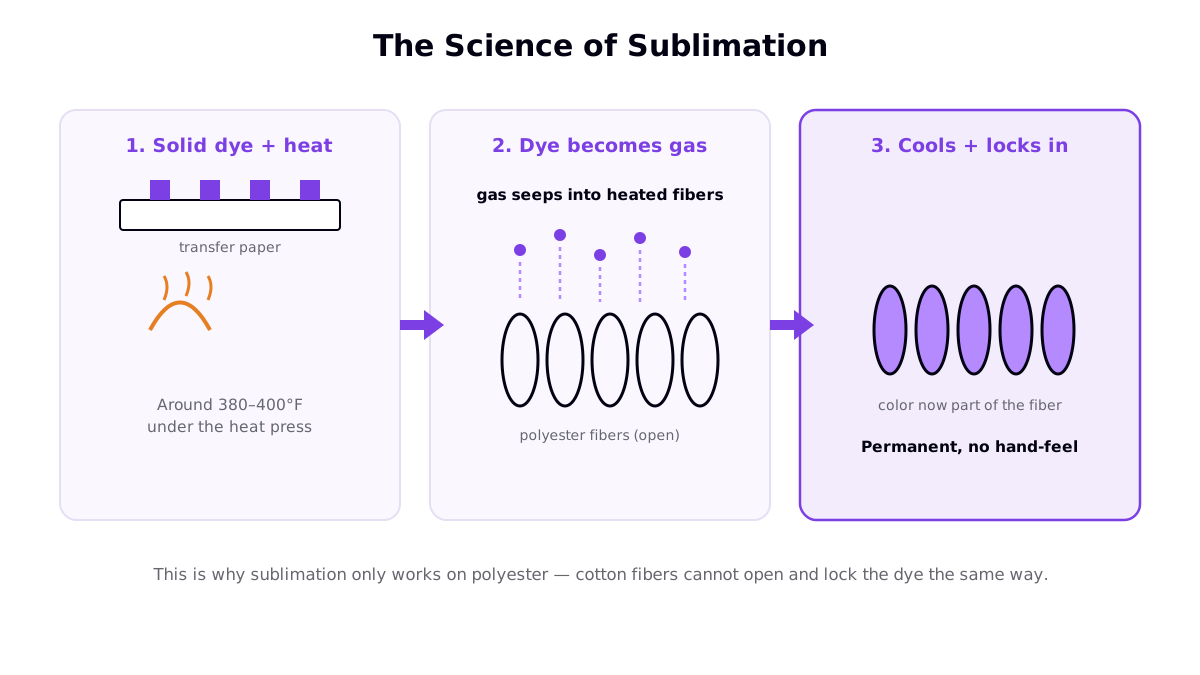
Unlike methods that lay ink onto the surface, sublimation is a chemical bond. The steps are straightforward but the physics is what makes it permanent:
- Print the design in reverse. The artwork is printed as a mirror image onto special sublimation transfer paper using disperse dye inks.
- Apply heat and pressure. The paper is placed on the polyester garment and pressed at around 385–400°F. The solid dye skips the liquid stage and turns straight into a gas.
- The fibers open and absorb. Heat causes the polyester fibers to expand and open. The gaseous dye seeps inside.
- Cooling locks it in. As the fabric cools, the fibers close around the dye. The color is now embedded — no layer, no texture, no hand-feel.
Because the color is inside the fiber rather than on top of it, sublimation is effectively as durable as the shirt itself. There is nothing to crack, peel, or fade off.
Why sublimation needs polyester
This is the rule that trips up every beginner. Sublimation dye is engineered to bond with polyester, a plastic-like polymer whose fibers open under heat. Cotton is cellulose — a completely different chemistry — and it cannot lock the dye in, so a sublimated cotton shirt looks bright for one wash and then fades away.
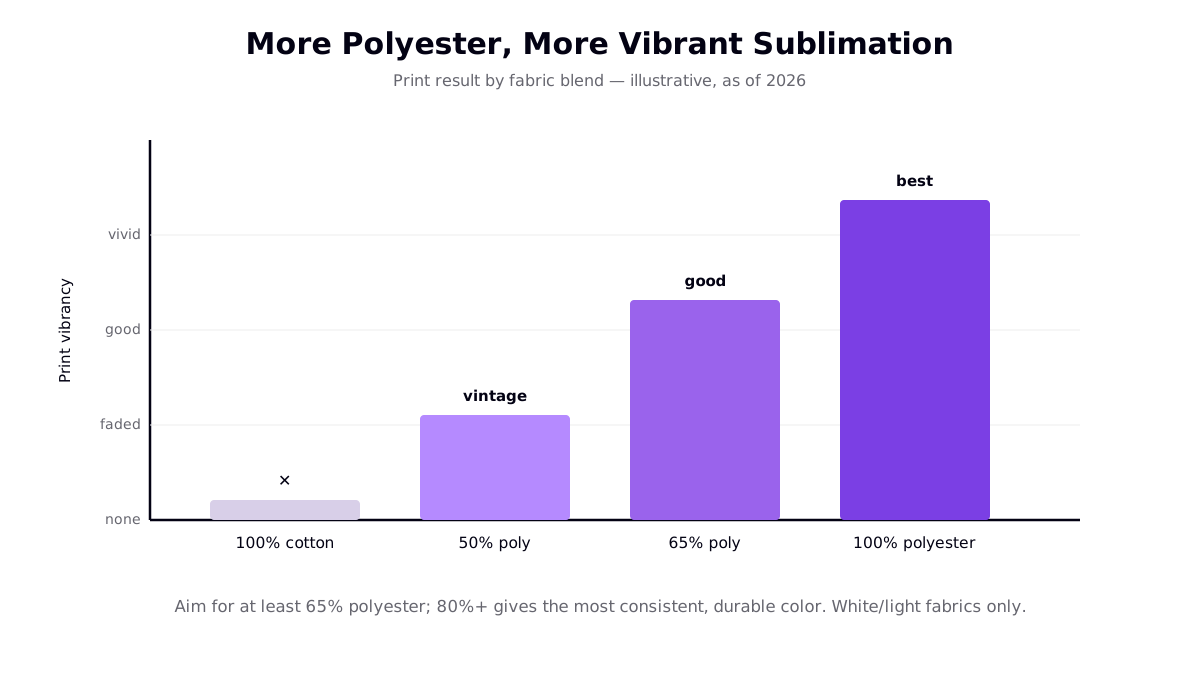
- 100% cotton: essentially no lasting result. Use DTF or DTG instead.
- 50% poly blend: a faded, "vintage" look some sellers use deliberately, but colors are muted.
- 65% poly: good, usable color and the practical minimum for reliable prints.
- 100% polyester: the most vibrant, durable result — the gold standard for sublimation.
Two more hard limits: the fabric must be white or light (sublimation ink is translucent and has no white, so the garment color shows through), and creases or moisture cause "ghosting" if you skip the pre-press. If you need dark shirts or cotton, our DTF t shirt printing guide covers the versatile alternative.
Sublimation heat-press settings
Settings vary by press and blank, but these ranges are reliable starting points. Always test a sample and follow your supplier's recommendations before running a batch.
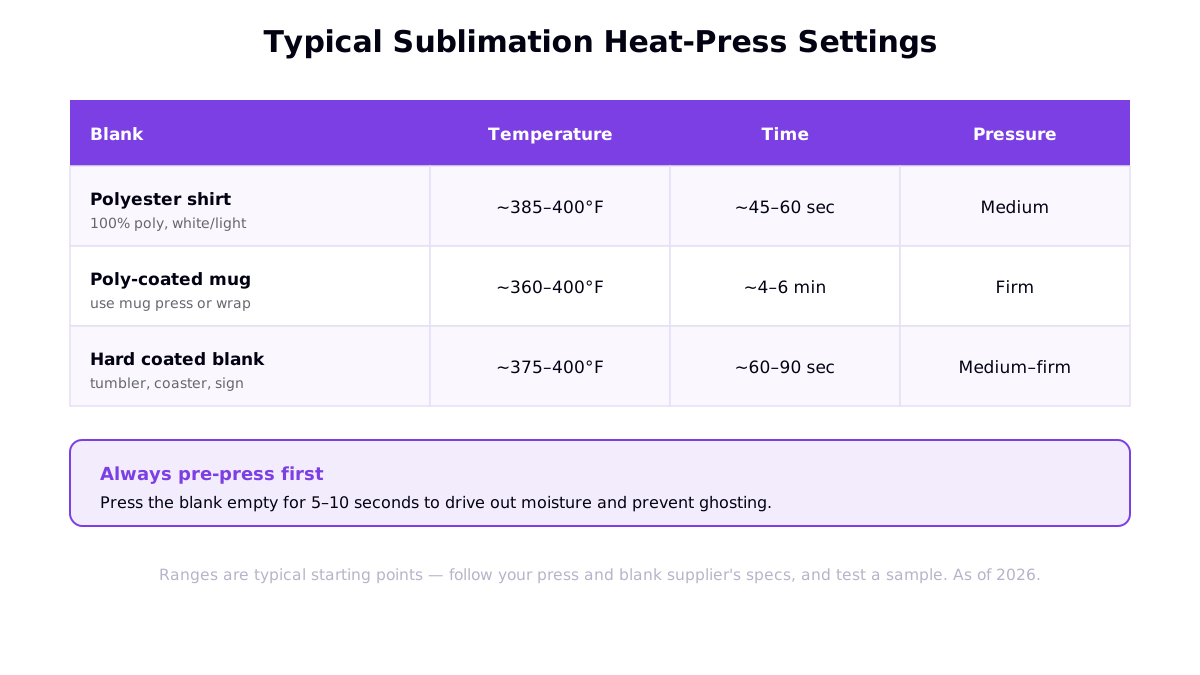
| Blank | Temperature | Time | Pressure |
|---|---|---|---|
| Polyester shirt (white/light) | ~385–400°F | ~45–60 sec | Medium |
| Poly-coated mug | ~360–400°F | ~4–6 min (mug press) | Firm |
| Hard-coated blank (tumbler, coaster) | ~375–400°F | ~60–90 sec | Medium–firm |
Pre-press is non-negotiable. Press the empty blank for 5–10 seconds first to drive out moisture; skipping this is the number-one cause of blurry, ghosted prints.
Common sublimation mistakes to avoid
Most failed sublimation prints come down to a handful of repeatable errors. Rule these out and your success rate jumps dramatically:
- Ghosting. A faint double image caused by the transfer paper shifting during or after the press. Tape the paper down, and lift the press cleanly without dragging.
- Faded color. Usually too little polyester in the fabric, or not enough time and temperature. Confirm the blank is 65%+ poly and dial in your press.
- Scorching or yellowing. Too much heat or time can slightly yellow polyester and coatings. Back off the temperature and use a protective sheet.
- Moisture spots. Skipping the pre-press traps humidity, which shows up as blotches. Always pre-press to dry the blank first.
- Wrong side or un-mirrored art. Print in mirror image and place the printed side against the fabric, or your design comes out backwards.
Preparing artwork for sublimation
Sublimation rewards high-resolution, color-rich files, and because there is no white ink, your design strategy has to account for the fabric showing through. A few essentials:
- Resolution: roughly 300 DPI at the final print size so fine detail stays sharp once it is embedded in the fabric.
- Design for white: any part of your artwork that is white or transparent will simply be the shirt color. Use that deliberately rather than fighting it.
- Full, bold color: sublimation's whole advantage is saturated, edge-to-edge color, so lean into vivid designs and gradients that other methods handle less gracefully.
- Mind the seams: on all-over prints, color can lighten slightly where fabric folds around seams and under the arms — a normal characteristic, not a defect.
Getting these files right starts at the design stage, the same discipline covered in our complete t shirt design guide.
What sublimation is best for
Sublimation shines where its constraints do not matter and its strengths do. It is the go-to method for:
- All-over prints. Since the dye becomes the fabric, sublimation can cover an entire garment edge to edge with no heavy print zone — see our all-over print shirts guide.
- Sportswear and jerseys. Breathable polyester with no-feel graphics is exactly what teams want; this is why cricket and sports jersey designs lean on sublimation.
- Polyester blanks beyond shirts. Mugs, tumblers, mouse pads, and coasters with poly coatings all sublimate beautifully.
If you are choosing a method for a print-on-demand store, remember that most POD apparel is cotton-heavy, so sublimation is a specialist tool rather than a default — the broader picture is in our what is print on demand primer.
Frequently asked questions
How does sublimation t shirt printing work?
Sublimation prints a design onto special transfer paper, then a heat press converts the solid dye directly into a gas. Under heat, the polyester fibers open and absorb the gas; as the fabric cools, the fibers close and lock the color in permanently. The design becomes part of the fabric with no hand-feel, which is why sublimation prints never crack or peel.
Can you sublimate on cotton shirts?
Not effectively. Sublimation dye is designed to bond with polyester, a plastic-like polymer whose fibers open under heat. Cotton is cellulose and cannot lock the dye in, so the color washes out. For lasting results you need at least 65% polyester, and 100% polyester gives the most vibrant, durable print. If you must print on cotton, use DTF or DTG instead.
What temperature and time do you use for sublimation shirts?
Polyester shirts typically press at around 385 to 400°F for roughly 45 to 60 seconds at medium pressure. Always pre-press the blank for 5 to 10 seconds first to remove moisture and prevent ghosting. Exact settings vary by heat press and fabric blend, so test on a sample and follow your blank supplier's recommendations.
Why does sublimation only work on white or light shirts?
Sublimation ink is translucent and has no white. The dye adds color to the fabric rather than covering it, so the shirt color shows through. On a dark shirt the print would be invisible or muddy. That is why sublimation is limited to white and light-colored polyester; for dark garments, choose DTF, DTG, or vinyl.