Cricket Shirt Design: Team Jersey Ideas (2026)
A good cricket shirt design does three jobs at once: it makes the team look unified, it puts sponsors and player names exactly where they belong, and it survives a full season without cracking or fading. Whether you are designing a club's traditional whites or a bold colored T20 kit, the same fundamentals apply — get the placement zones, colors, and printing method right, and the rest is styling. This guide walks through all three, plus the workflow from brief to delivered jersey.
Cricket jersey layout: the placement zones
Every cricket jersey has standard zones. Nail these first and your design will read as professional even before you add flair.
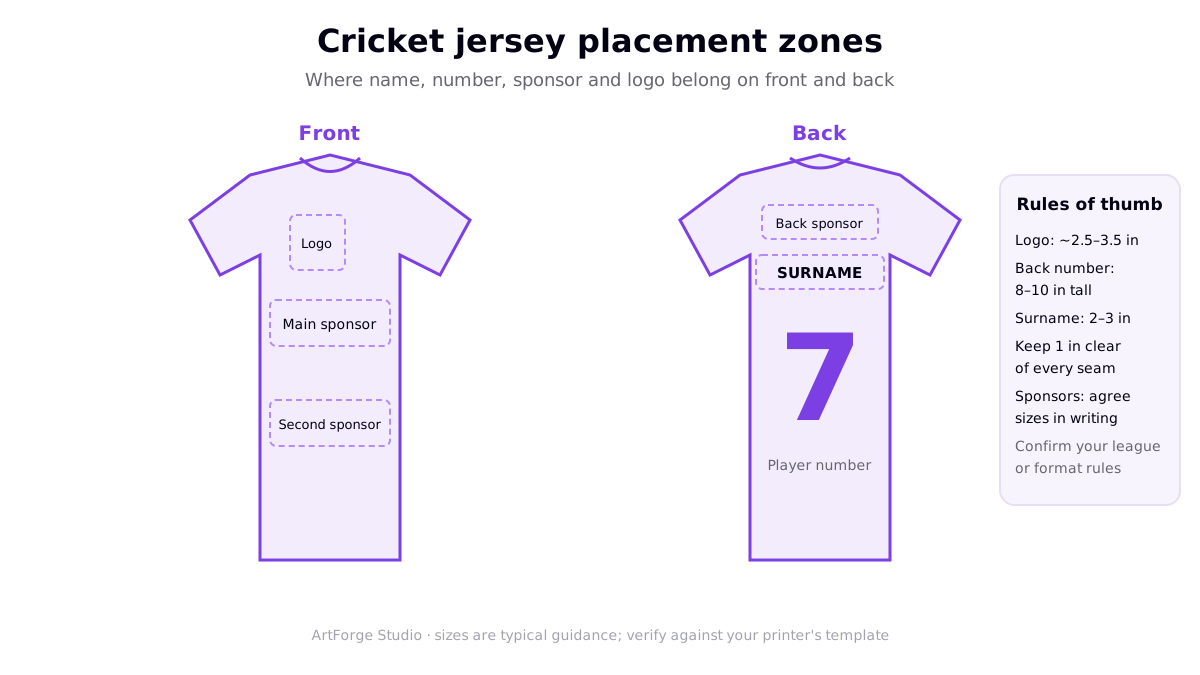
- Club logo — left chest, roughly 2.5–3.5 inches.
- Main sponsor — centered on the chest; a second sponsor can go lower front or on the back.
- Player surname — across the upper back, about 2–3 inches tall.
- Player number — large on the back, typically 8–10 inches so it reads from the boundary.
- Sleeve badges — league, national flag, or secondary sponsor.
Keep about an inch of clearance from every seam so nothing gets cut off or distorted, and always check placement against your printer's template and your league's rules before finalizing.
Choosing your cricket kit colors
Color is what makes a kit instantly recognizable. Pick a primary, a secondary, and one accent — then use them consistently across the shirt, trims, and numbers. Below are eight combinations that have stood the test of time in cricket.
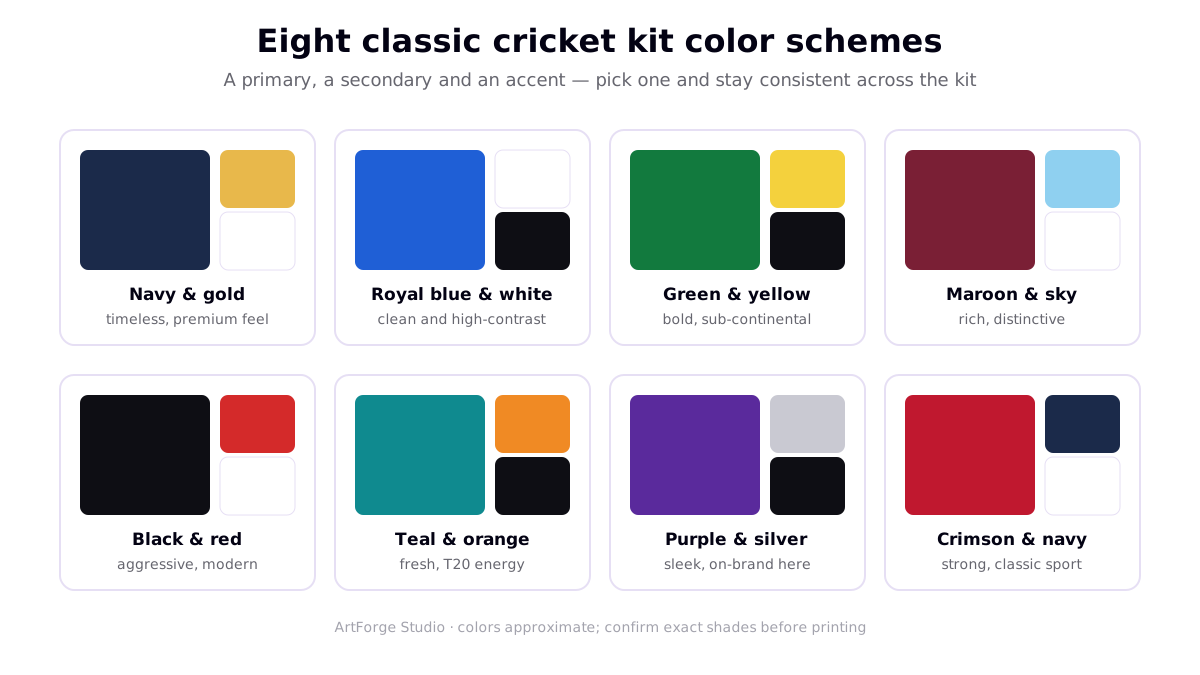
Two rules keep a kit from looking amateur: limit yourself to three colors, and make sure the number contrasts sharply with the shirt so it is legible at distance. If your club already has brand colors, build the palette around those rather than inventing new ones.
Whites vs colored kit
Cricket is unusual in having two very different aesthetics. Understanding which you are designing shapes every other decision.
| Format | Look | Design approach |
|---|---|---|
| Test / traditional whites | Predominantly white or cream | Restrained — club badge, small trims, subtle collar/cuff color. Elegance over flash. |
| One-day / T20 colored kit | Bold team colors, edge-to-edge graphics | Full sublimation, dynamic patterns, prominent sponsors, big numbers. Energy and visibility. |
Printing method: why sublimation wins
For colored cricket kit, sublimation is the standard. The ink turns to gas and bonds into the polyester fabric rather than sitting on top, so it will not crack, peel, or fade, and the entire shirt can be printed edge to edge with patterns and gradients. It also handles per-player names and numbers with no extra setup cost, which is exactly what a squad needs. Vinyl or screen printing still shows up for simple logos on plain shirts, but for a full-color team jersey, sublimation is the right call. Learn how the process works in our guide to sublimation t-shirt printing.
From brief to delivered kit
Custom teamwear follows a predictable path. Knowing the steps helps you brief a supplier well and avoid the classic mistakes — misspelled names and rushed shipping.
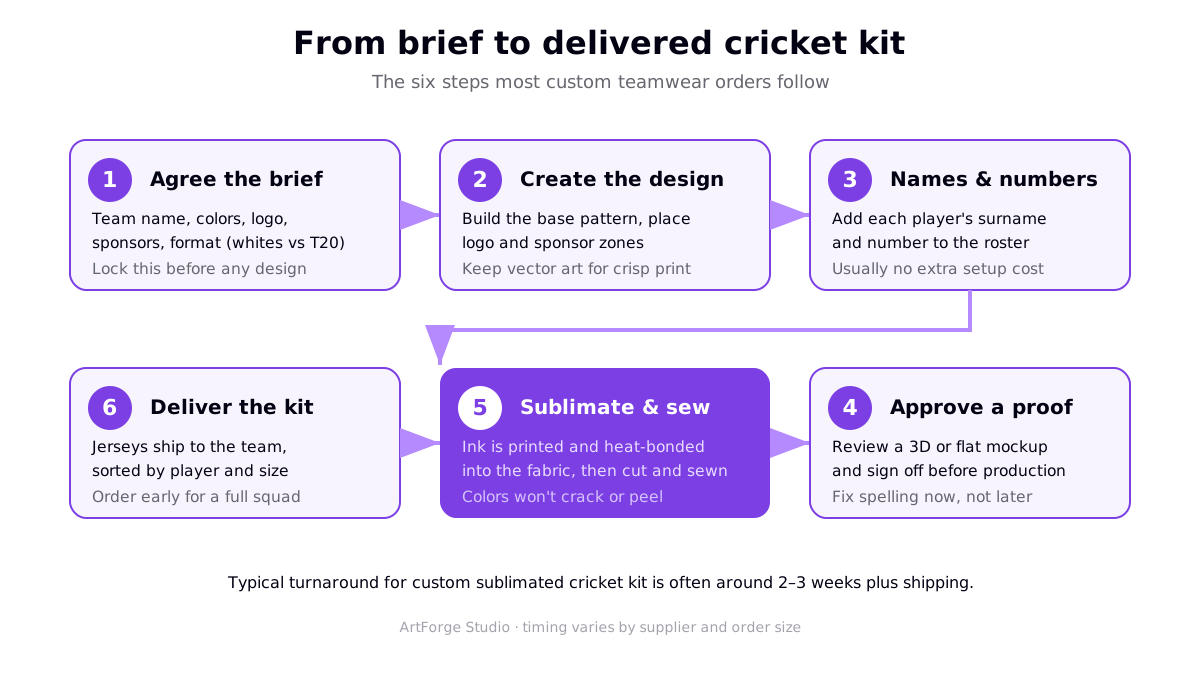
- Agree the brief. Team name, colors, logo, sponsors, and format. Lock this before designing.
- Create the design. Build the base pattern in vector artwork and place logo and sponsor zones.
- Add names and numbers. Enter each player's surname and number — usually free with sublimation.
- Approve a proof. Review a 3D or flat mockup and sign off. Fix spelling and numbers here.
- Sublimate and sew. Ink is printed and heat-bonded into the fabric, then the panels are cut and stitched.
- Deliver the kit. Jerseys arrive sorted by player and size. Order early for a full squad.
Fabric and fit matter as much as the graphic
A cricket shirt is worn for hours in the sun, so the material is part of the design decision. Modern sublimated kit is made from lightweight polyester or poly-knit fabrics chosen for moisture-wicking and breathability — sweat is pulled away from the skin and dries fast, which keeps players comfortable through a long innings. Heavier weights feel more premium and last longer; lighter weights keep players cooler in hot conditions. When you brief a supplier, ask about the fabric weight (often quoted in GSM) and whether the cut is a standard fit or a more tailored athletic fit, because the same design looks quite different on each.
Two fit details are worth specifying up front: the collar style (traditional polo-style collar versus a modern crew or v-neck) and the sleeve length, since junior, senior, and women's kit often need different proportions. Getting these agreed at the brief stage avoids awkward re-orders later.
What a custom cricket kit costs
Custom sublimated cricket jerseys are priced per unit and usually get cheaper per shirt as the order grows, because the design and setup work is spread across more pieces. Most suppliers set a modest minimum order for a full custom design, and adding player names and numbers is typically included at no extra cost with sublimation — a real advantage over methods that charge per name. Because prices vary widely by supplier, fabric, and region, always get a written quote for your exact squad size rather than relying on a headline figure, and factor in shipping and any sample charges. If you also want cheaper supporter or training tees alongside the playing kit, compare the numbers in our t-shirt printing cost guide.
Design tips that separate good kits from great ones
- Design in vector. Logos and lettering stay crisp at any size and print cleanly.
- Leave room to grow the roster. A layout that only works for exactly 11 names breaks when a new player joins.
- Put sponsor sizes in writing. Sponsors care about logo size; agree it up front to avoid re-prints.
- Test the number legibility. View the back at photo size — if you cannot read the number, neither can a scorer.
- Order a sample first. Confirm color accuracy and fabric feel before committing the whole squad.
If your club needs matching training or supporter tees alongside the playing kit, our broader sports t-shirt design guide covers numbering, mascots, and typography across every sport.
Frequently asked questions
How do you design a cricket jersey?
Start by locking the brief — team name, colors, logo, sponsors and format (traditional whites or colored T20 kit). Then build the base pattern in vector artwork, place the club logo on the left chest and sponsors across the chest and back, add each player's surname and number on the back, approve a proof, and send it to a sublimation printer. Keeping everything vector ensures crisp, scalable print.
What is the best printing method for cricket shirts?
Sublimation is the standard for colored cricket kit because the ink is bonded into the polyester fabric rather than sitting on top, so it will not crack, peel or fade and the whole shirt can be printed edge to edge. It also handles per-player names and numbers with no extra setup cost. Vinyl or screen printing is sometimes used for simple logos on plain shirts, but sublimation wins for full-color team jerseys.
Where do the name and number go on a cricket shirt?
The player's surname sits across the upper back, usually 2–3 inches tall, with a large number below it, typically 8–10 inches tall so it reads from a distance. The club logo goes on the left chest at roughly 2.5–3.5 inches, and sponsors occupy the chest and back. Always keep about an inch of clearance from every seam, and confirm exact placement against your printer's template and your league's rules.
How long does it take to get custom cricket jerseys?
For custom sublimated cricket kit, typical turnaround is often around two to three weeks in production plus shipping, though it varies by supplier and order size. Order early for a full squad, and build in time to collect every player's size and to approve the proof before production starts — spelling and number errors are far cheaper to fix at the proof stage.
Resources
- IRA Sportswear — Custom Cricket Jerseys & Team Uniforms (3D jersey designer reference)
- BLK Sport — Custom Cricket Uniforms & Teamwear
- Wooter Apparel — Custom Cricket Jerseys & Uniforms
- International Cricket Council (governing body; check playing-condition rules on kit)