Polo Shirt Design: Custom Polos With Logo
A good polo shirt design does one job well: it puts a clean, legible logo on a comfortable, professional garment that people are happy to wear all day. Unlike a graphic tee, a polo is usually about restraint — a small chest mark, the right fabric, and a decoration method that suits the artwork. This guide covers the decisions that actually matter: embroidery versus printing, where to place a logo and how big to make it, which fabric to pick, and how to turn one design into a repeatable custom polo program.
Embroidery vs printing on a polo shirt
The single biggest polo decision is how the design is applied. Embroidery stitches thread directly into the fabric; printing lays ink or transfer onto the surface. Neither is "better" — they suit different artwork.
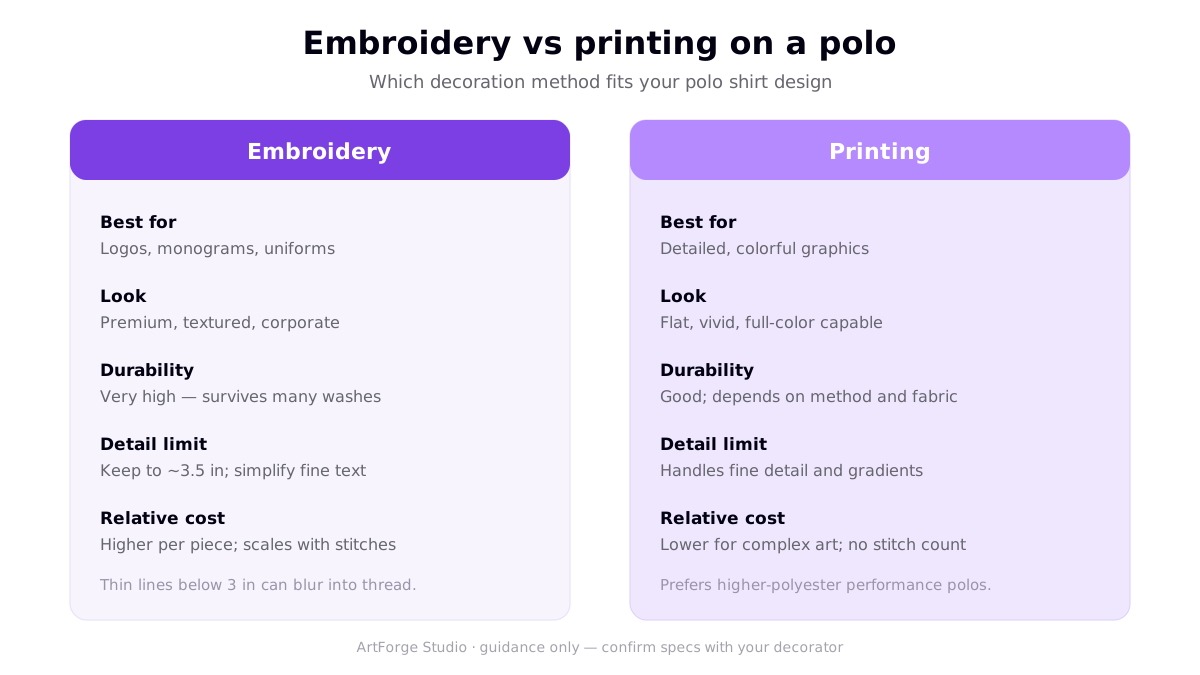
Choose embroidery when you want a premium, corporate, uniform look and the design is a logo, monogram or simple mark. It is textured, feels expensive, and survives many washes. Its weakness is detail: keep embroidered logos to about 3.5 inches wide, and simplify fine text or thin lines, which blur into thread below roughly 3 inches.
Choose printing — screen print, heat transfer or direct-to-garment — when your polo design is detailed, colorful, or uses gradients. Printing handles fine detail easily and is usually cheaper for complex art because there is no stitch count to pay for. The trade-off is a flatter finish that reads less like a classic uniform, and printing generally prefers higher-polyester performance polos.
Plenty of programs do both: an embroidered chest logo for the uniform feel, and a larger printed graphic on the back for a team name or campaign. If you want to weigh printing methods in depth, our screen printing guide covers costs and quantities.
Polo logo placement and recommended sizes
Placement is where amateur polos look off. The left chest is the traditional, most professional home for a logo; other zones exist but have specific jobs. Get the size right and even a plain polo looks intentional.
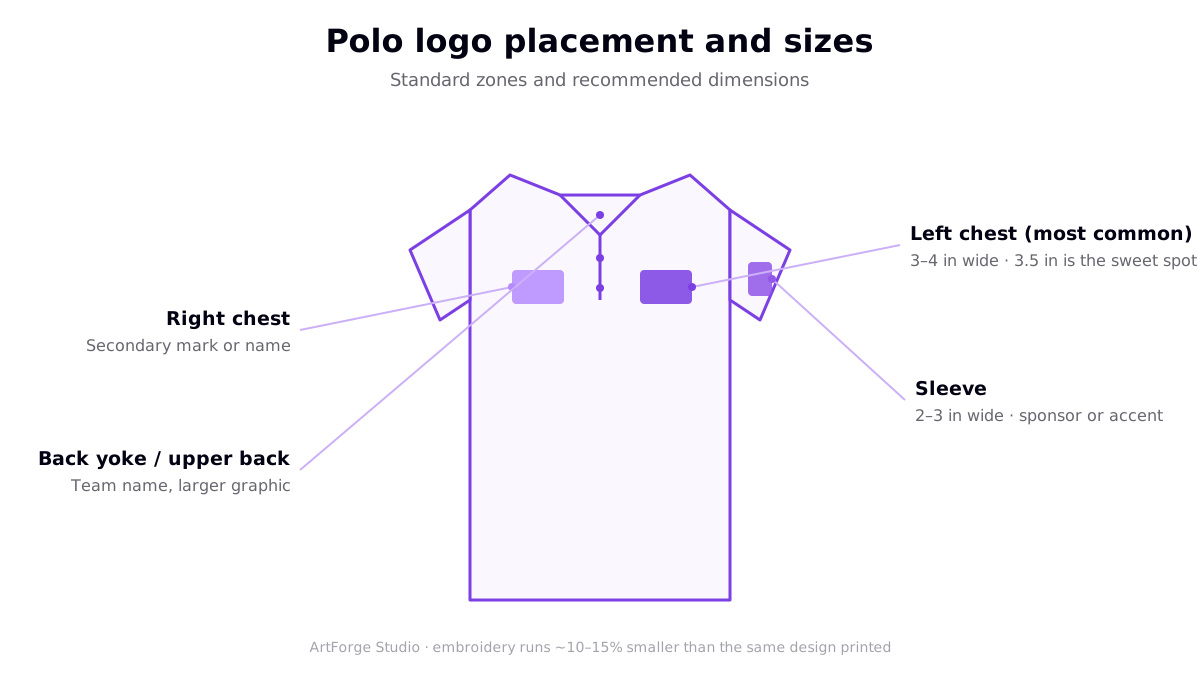
| Placement | Typical size (adult) | Best used for |
|---|---|---|
| Left chest | 3–4 in wide (≈3.5 in ideal) | Primary logo — the standard, most professional spot |
| Right chest | 3–3.5 in wide | Secondary mark, wearer name, or a paired icon |
| Sleeve | 2–3 in wide | Sponsor, accent logo, or a small flag |
| Back yoke / upper back | Larger, up to garment width | Team or company name, campaign graphic |
Two rules save most designs. First, keep a left-chest logo small — new designers almost always oversize it. Second, remember that embroidery runs about 10 to 15 percent smaller than the same design printed, so a 4-inch print becomes roughly a 3.4 to 3.6-inch embroidery. If your mark has fine detail, either size up or simplify it for stitching.
Choosing the right polo fabric
Fabric shapes both comfort and how well your design applies. Match it to where the polos will actually be worn.
- Cotton — soft, breathable, classic. Great for hospitality, retail and everyday wear. A stable pique knit holds embroidery cleanly.
- Polyester / performance — lightweight, durable and moisture-wicking. The right pick for athletic, outdoor or active jobs, and it generally takes vivid prints well.
- Blends — aim for a middle ground of comfort and durability, a safe default when the polo will be worn in mixed conditions.
Whatever you choose, order a sample in the exact fabric and color before a full run. Colors and hand-feel vary between suppliers, and a design that looks crisp on a mockup can behave differently on a real knit.
Design tips for custom polos with a logo
Polo design rewards simplicity. A tee can be busy; a polo should not be.
- Keep it clean and high-contrast. Simple logos and strong color contrast stand out most on fabric. Fussy detail disappears at chest size.
- Use a vector file. A clean vector scales to any size and separates cleanly for embroidery digitizing or print. Fuzzy raster logos cause the worst results.
- Limit colors for embroidery. Every thread color adds cost and complexity. Two or three colors usually looks sharpest.
- Respect the collar and placket. Center a chest logo in the open panel to one side of the buttons, not crowding the placket.
- Plan a color story. Coordinate garment color, logo colors and any secondary marks so the whole polo reads as one considered piece.
If you are building the logo itself from scratch, our t-shirt logo design guide covers file formats and placement that apply just as well to polos.
Running a custom polo uniform program
Most custom polos are ordered for a team, company or event — which means the real goal is not one shirt but a repeatable look you can reorder as people join. Treat it as a small program, not a one-off.
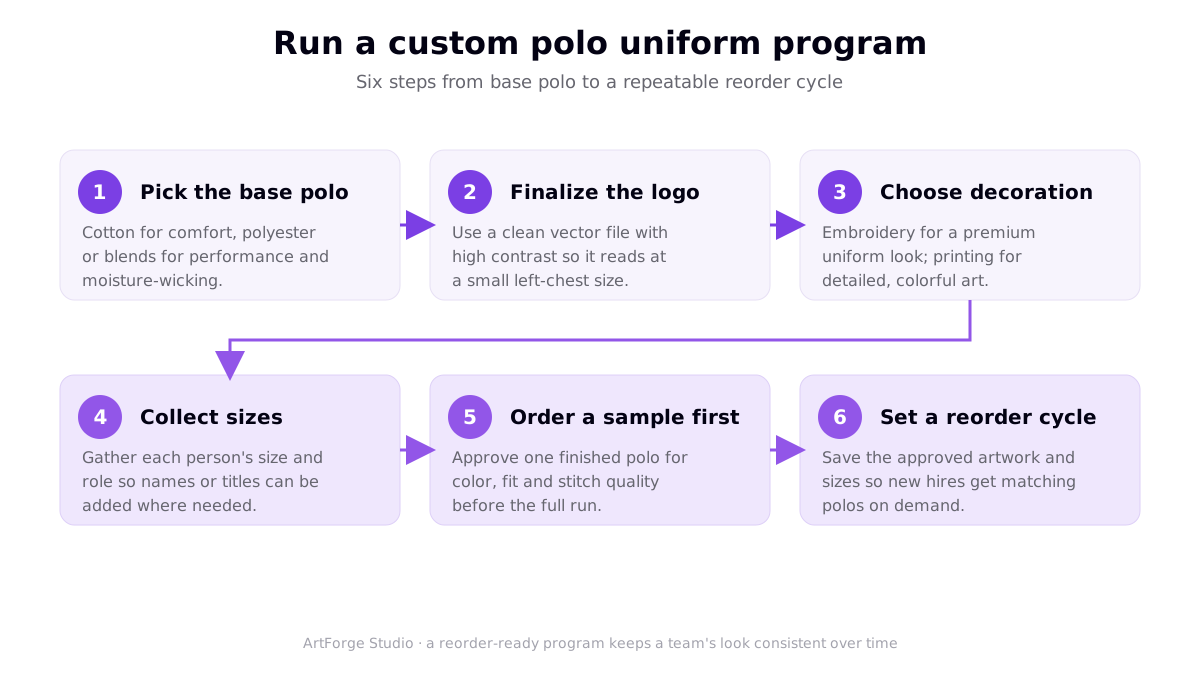
The steps are straightforward: pick the base polo, finalize a clean logo file, choose your decoration method, collect everyone's sizes and roles, order a single sample to approve color and stitch quality, then lock the artwork so reorders are effortless. That last step is what separates a tidy uniform from a slowly drifting mismatch of shirts — always order one sample before the full run, and keep the approved file on hand.
What custom polos cost and where to order
Polos cost more than plain tees to decorate because embroidery adds digitizing and stitch-count charges. As of 2026, expect blank performance and cotton polos to start meaningfully higher than a basic t-shirt base cost, with embroidery adding a per-piece fee on top. Two routes cover most needs:
| Route | Best for | Cost pattern |
|---|---|---|
| Print on demand / no-minimum decorator | 1–24 polos, new hires, samples | Higher per piece, nothing to pre-buy, no leftover stock |
| Bulk custom-apparel printer | ~25+ matching polos | Cheaper per piece as setup and digitizing fees spread out |
For small teams, no-minimum services like Printful and Printify let you order exactly what you need and reorder singles later; larger uniform orders usually favor a bulk embroiderer. Compare providers in our roundup of the best print-on-demand companies, and if you want to mock up the design first, our walkthrough on how to design your own shirt online covers free tools and export settings that work for polos too.
Frequently asked questions
How big should a logo be on a polo shirt?
For an adult left-chest logo, the industry standard is roughly 3 to 4 inches wide, with about 3.5 inches treated as the sweet spot by most decorators. Sleeve marks are smaller, usually 2 to 3 inches. Remember that embroidery runs about 10 to 15 percent smaller than the same design printed, and fine text or thin lines below roughly 3 inches can blur into the thread — so simplify small logos before you stitch them.
Is embroidery or printing better for a polo shirt design?
It depends on the design. Embroidery gives a premium, textured, corporate look and is extremely durable, which makes it the default for logos, monograms and uniforms — but it struggles with fine detail and full-color art, and costs more as stitch count rises. Printing handles detailed, colorful, gradient artwork easily and is usually cheaper for complex designs, but the flat finish reads less like a classic uniform. Many polo programs embroider the chest logo and print a larger back graphic.
What fabric is best for custom polo shirts?
Cotton polos feel soft and breathable and suit everyday and hospitality wear, while polyester and performance blends are lightweight, moisture-wicking and hold up better in active, outdoor or athletic settings. Blends aim for a middle ground. For printing, higher-polyester performance polos generally take vivid prints well; for embroidery, a stable knit like a classic pique holds stitches cleanly. Order a sample in your chosen fabric before committing to a full run.
Can I get custom polo shirts with no minimum order?
Yes. Print-on-demand and several custom-apparel printers make embroidered or printed polos with no minimum, so you can order a single shirt or a handful for a small team. Per-piece cost is higher than a bulk run, but there is nothing to pre-buy and no leftover stock. For larger orders — roughly 25 pieces and up — a bulk decorator often becomes cheaper per shirt because setup and digitizing fees get spread across more units.
Resources
- Custom Ink — Custom Polo Shirt Maker (customization options and design tool)
- VistaPrint — Custom Polo Shirts with Logo (fabric and decoration overview)
- Underground Shirts — Custom & Personalized Polos (ordering options)
- Printful — Custom Polo Shirts (No Minimums) (official no-minimum reference)
- Left Chest Logo Size and Placement Guide (dimension standards)