Sports T-Shirt Design: Ideas for Every Team
Great sports t-shirt design starts with a simple idea: the shirt should look like it belongs to the sport. A basketball tee, a baseball jersey, and a gym shirt all follow different visual languages, and matching that language is what makes a design feel professional rather than generic. This guide gives you a style direction for six sports, the numbering and lettering sizes that keep names readable from the stands, and the rules behind a mascot that works everywhere.
Design directions by sport
Each sport carries its own culture, and the best team shirts lean into it. Use the grid below as a starting point, then adapt it to your team's identity.
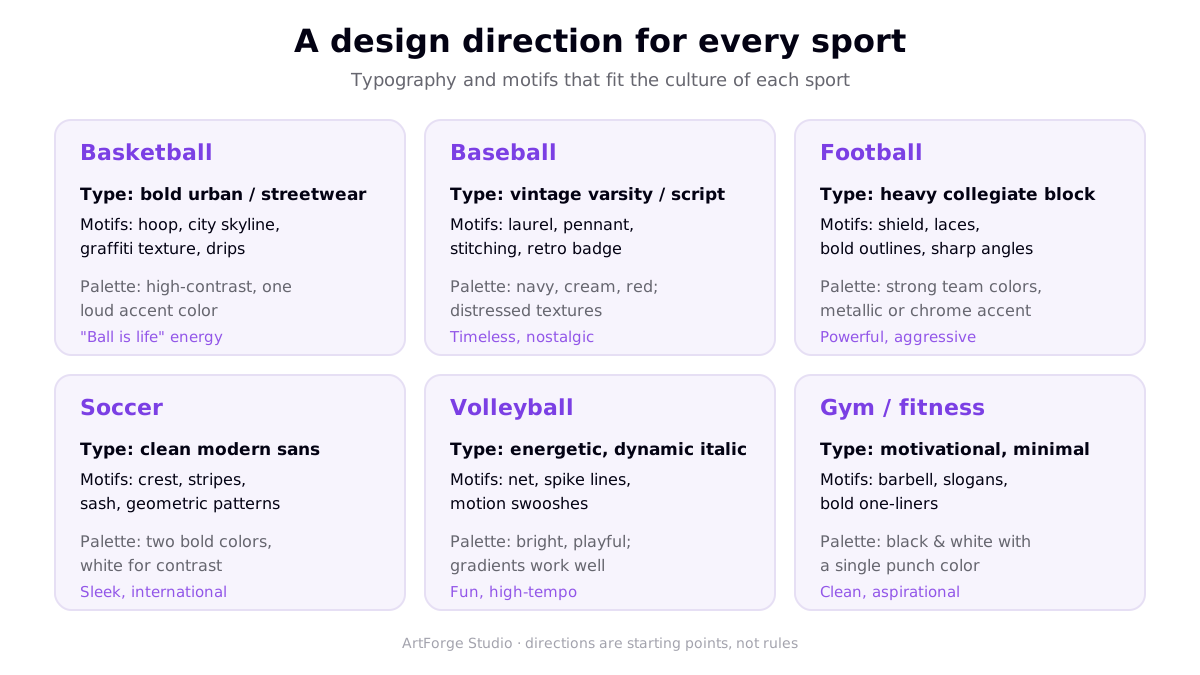
- Basketball — bold, urban, streetwear energy. Hoops, city skylines, graffiti textures, one loud accent color.
- Baseball — vintage varsity and script. Laurels, pennants, stitching, retro badges in navy, cream, and red.
- Football — heavy collegiate block type. Shields, sharp angles, thick outlines, strong team colors.
- Soccer — clean, modern, international. Crests, stripes, sashes, and geometric patterns in two bold colors.
- Volleyball — energetic and dynamic. Net motifs, motion swooshes, bright playful palettes and gradients.
- Gym / fitness — minimal and motivational. Bold one-liners, barbell icons, black and white with a single punch color.
Numbering and lettering: sizes that read
The most common team-shirt mistake is numbers that are too small to read during a game. There is no single legal standard across all leagues, but these guidelines keep names and numbers legible from a distance.
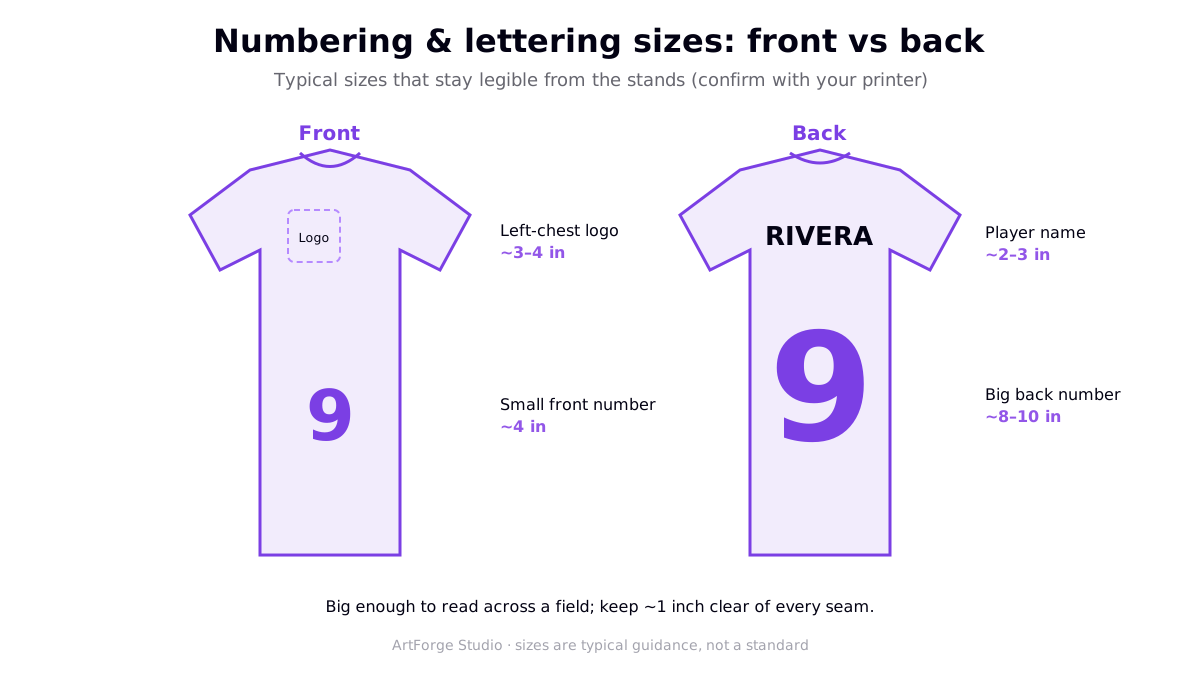
| Element | Placement | Typical size |
|---|---|---|
| Team / club logo | Left chest | ~3–4 inches |
| Front number (optional) | Center or lower chest | ~4 inches |
| Player name | Upper back | ~2–3 inches tall |
| Back number | Center back | ~8–10 inches tall |
Whatever sizes you choose, leave about an inch of clearance from every seam so nothing is cut off, and view the design at photo size to confirm the number is readable. If names and numbers vary per player, sublimation and print on demand handle that far more easily than screen printing.
Mascot design that works everywhere
A mascot is the strongest team asset because it lives on shirts, banners, social avatars, and scoreboards. That range demands a design that scales. The anatomy below shows the five principles a durable mascot follows.
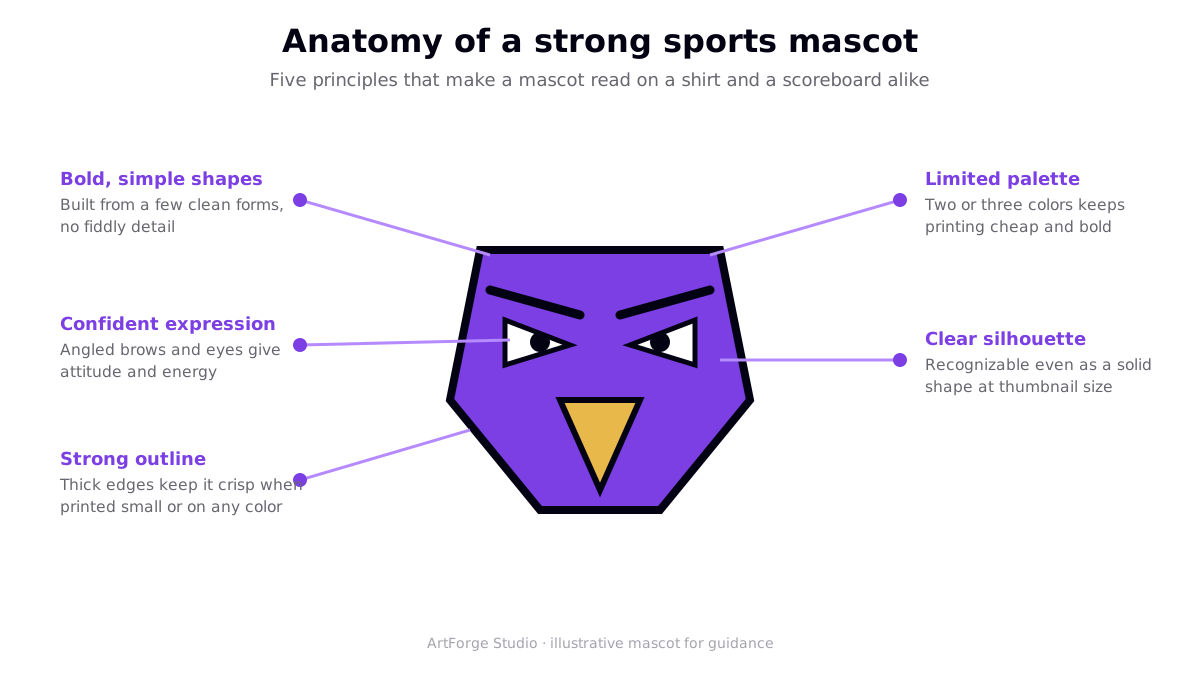
- Bold, simple shapes. Build the character from a few clean forms, not fiddly detail.
- Confident expression. Angled brows and eyes give attitude and energy.
- Limited palette. Two or three colors keep printing cheap and the design punchy.
- Strong outline. Thick edges keep the mascot crisp when printed small or on any shirt color.
- Clear silhouette. If it is recognizable as a solid shape at thumbnail size, it works everywhere.
For typography-led designs — slogans, team names, and stacked lettering — our typography t-shirt design guide covers font pairing and layout in depth.
Choosing team colors that work
Color is the fastest way to make a team feel unified — and the fastest way to make a shirt look amateur if you overdo it. Three rules keep a team palette sharp:
- Pick a primary, a secondary, and one accent. Two dominant colors plus a single accent is enough for almost any sports design. More than three and the shirt starts to feel busy.
- Contrast is non-negotiable for numbers. The number must jump off the shirt, so pair a dark garment with a light number or vice versa. A mid-tone number on a mid-tone shirt is invisible from the stands.
- Build around existing brand colors. If the school, club, or gym already has colors, use them rather than inventing new ones. Consistency across seasons builds a recognizable identity.
If you are unsure, look at how professional teams in the same sport use color — the conventions exist because they photograph and read well on the field.
Design differently for players, fans, and fundraisers
Not every sports shirt is a playing jersey, and the audience should change the design. A quick guide:
| Shirt type | Priority | Design approach |
|---|---|---|
| Player jersey | Function and legibility | Names, numbers, sponsors, durable print; performance fabric |
| Fan / supporter tee | Pride and comfort | Bold logo or slogan, comfortable cotton, sold in many sizes |
| Fundraiser / event | Broad appeal and margin | Simple one-or-two-color design, cheap blank, priced for volume |
A common winning move is to design one strong team mark and then adapt it across all three — a detailed version for jerseys and a simplified, single-color version for fan and fundraiser shirts that print cheaply in bulk.
Making the file print-ready
Team shirts are usually printed by screen printing, DTF, or sublimation, and each wants slightly different files. A few universal rules keep you out of trouble:
- Work in vector where you can. Logos, mascots, and lettering stay razor-sharp at any print size.
- Limit your colors. Fewer colors means cheaper screen printing and cleaner prints.
- High resolution for raster art. Photographic or painted elements need roughly 300 DPI at print size — see our 300 DPI print-ready guide.
- Design for the garment color. A design that pops on white can vanish on navy; test both.
How to print a full team's shirts
The right method depends on quantity and whether every shirt is identical. For a full squad in the same colors, screen printing is cheapest once you clear the per-color setup fees — usually past roughly 25–50 shirts. For smaller runs, mixed designs, or per-player names and numbers, print on demand and sublimation win because there is no minimum and no setup. Our t-shirt printing cost breakdown shows exactly where each method becomes the cheaper option. If you are outfitting a specific sport with players' names and numbers, our cricket shirt design guide walks through the full jersey workflow that applies to most team kits.
Frequently asked questions
How do you design a team sports t-shirt?
Begin with the team's colors and identity, then pick a style direction that fits the sport — bold streetwear for basketball, vintage varsity for baseball, heavy collegiate block for football, and so on. Add a logo or mascot, place names and numbers where they read clearly, and keep the palette to two or three colors. Design in vector so everything stays crisp at any size, and confirm placement against your printer's template before ordering.
How big should the number be on a sports shirt?
A back number is typically 8–10 inches tall so it reads from across a field or court, while an optional front number is smaller, around 4 inches. The player name usually sits about 2–3 inches tall above the back number. These are common guidelines rather than a fixed standard, so check your league's rules and your printer's template, and always leave about an inch of clearance from every seam.
What makes a good sports team mascot design?
A strong mascot uses bold, simple shapes, a confident or aggressive expression, a limited two-to-three-color palette, and thick outlines so it stays crisp when printed small or on any shirt color. The real test is the silhouette: if the mascot is still recognizable as a solid shape at thumbnail size, it will work everywhere from a shirt to a scoreboard to a social avatar.
What is the best way to print custom team shirts?
For a full squad in identical colors, screen printing is cheapest once you clear the setup fees, usually past roughly 25–50 shirts. For smaller runs, mixed designs, or per-player names and numbers, sublimation and print on demand are more flexible and have no minimum order. Sublimation is especially good for full-color, edge-to-edge team jerseys because the print bonds into the fabric and will not crack or peel.
Resources
- Canva — Sports T-Shirt Templates (free customizable design references)
- CreateMyTee — Team Sports T-Shirt Designs
- RushOrderTees — Sports & Team Shirt Design Ideas
- ClassB — Sports Team T-Shirt Design Ideas