All Over Print Shirts: AOP Printing Guide
All over print shirts — usually shortened to AOP — carry a design that covers the entire garment, from front and back to shoulders, sleeves, and even the collar, with no blank areas and no white creases at the seams. That seamless, edge-to-edge look is only possible because AOP shirts are made differently: the artwork is printed onto flat fabric first, then cut and sewn into a shirt.
This guide explains how all-over print works, how to design files that survive the cut-and-sew process, what AOP costs, and which print-on-demand providers to use.
What are all over print shirts?
An all-over-print shirt is a garment where the print wraps the whole surface rather than sitting as a single graphic on the chest. Standard printing methods — DTG, screen printing, vinyl — decorate a finished blank shirt, so they can only reach a flat panel and always leave the seams and edges undecorated. AOP flips the order of operations to eliminate those blank zones.
The result is bold, immersive apparel: repeating patterns, photographic scenes, galaxy prints, and full-coverage graphics that would be impossible with a single-placement method.
How all over print shirts are made: cut and sew
AOP relies on cut-and-sew manufacturing. Instead of printing on a pre-made shirt, the process prints on raw fabric and builds the shirt afterward:
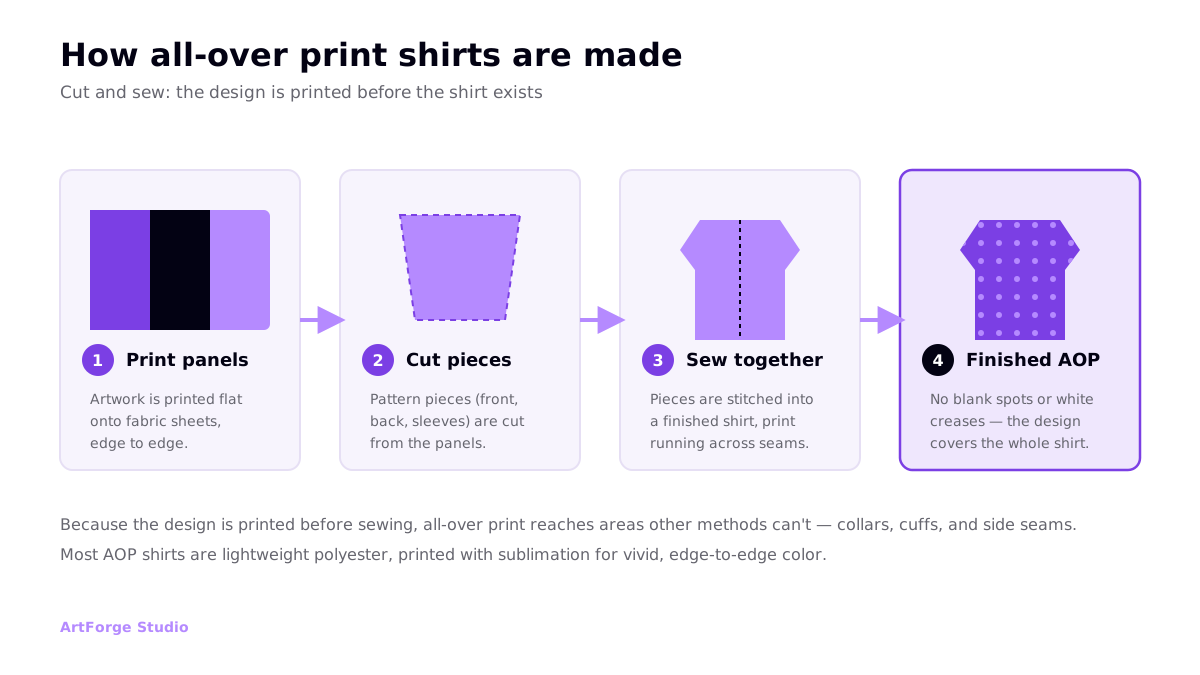
- Print the panels. Your artwork is printed edge to edge onto flat fabric sheets.
- Cut the pieces. Pattern pieces — front, back, sleeves — are cut from the printed fabric.
- Sew together. The pieces are stitched into a finished shirt, with the design running continuously across the seams.
- Finish. The result has no blank spots or white creases — the print truly covers the whole garment.
Because the shirt is manufactured per order, AOP fits print-on-demand well: there are no minimums and no inventory, just as with other POD products (see what print on demand is and how it works).
What fabric and print method AOP uses
The overwhelming majority of all-over-print shirts are lightweight, breathable 100% polyester, printed with sublimation. Sublimation turns solid dye into a gas that bonds directly with polyester fibers, producing vivid, permanent color that will not crack or peel because there is no ink layer sitting on top of the fabric. That is why AOP color looks so saturated and holds up so well — and why it needs polyester rather than cotton. For the science behind it, see our guide to sublimation t-shirt printing.
A handful of providers now offer all-over cotton options using different processes, but polyester sublimation remains the standard for edge-to-edge AOP.
Designing files for all over print
AOP design is different from placing a chest graphic. You are filling an entire garment template, and because cut-and-sew is partly manual, the print can shift a little during production. Design with that in mind.
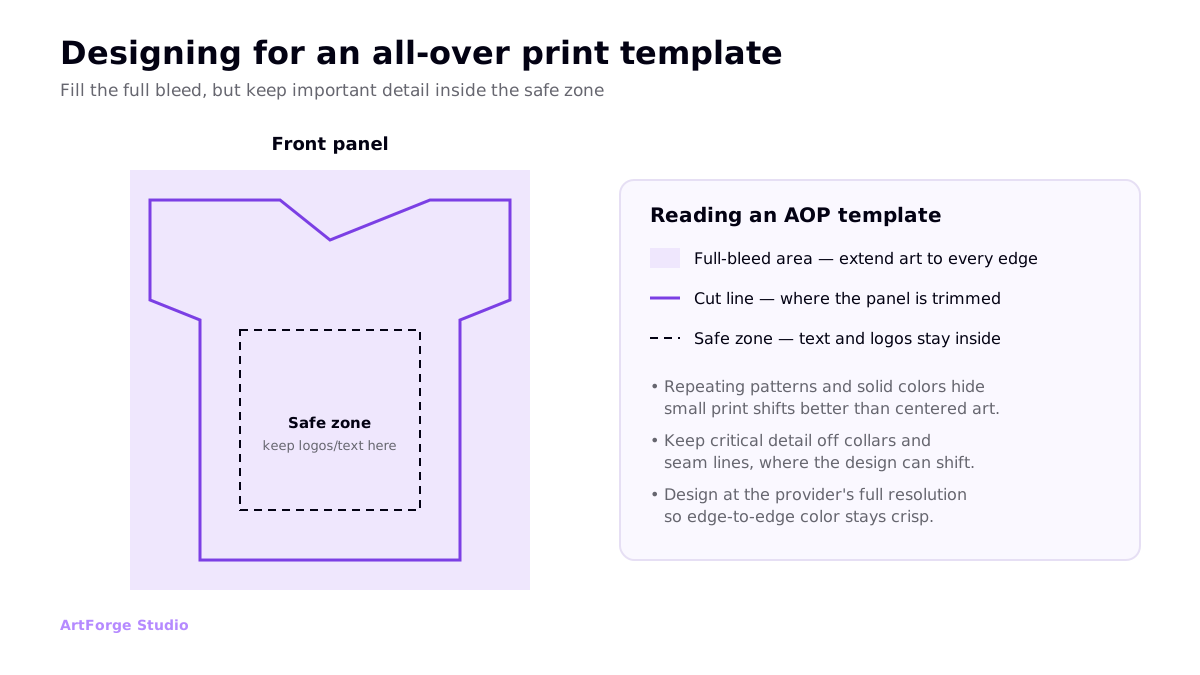
- Fill to full bleed. Extend your artwork to every edge of the provider's template so there are no blank margins after cutting.
- Respect the safe zone. Keep critical detail — logos, text, faces — inside the safe area, away from seams and the collar, where alignment can drift.
- Favor patterns and solid fields. Repeating patterns and solid colors disguise small print shifts far better than a single centered image.
- Design at full resolution. AOP templates are large; work at the provider's specified size so edge-to-edge color stays crisp.
- Download the exact template. Each provider and product has its own file dimensions — always start from their downloadable template.
Best print-on-demand providers for AOP
Several major POD platforms offer all-over-print apparel, and a few specialists focus on it. Exact base costs change constantly and vary by product, so treat the comparison below as relative guidance and always check the live catalog and order a sample.
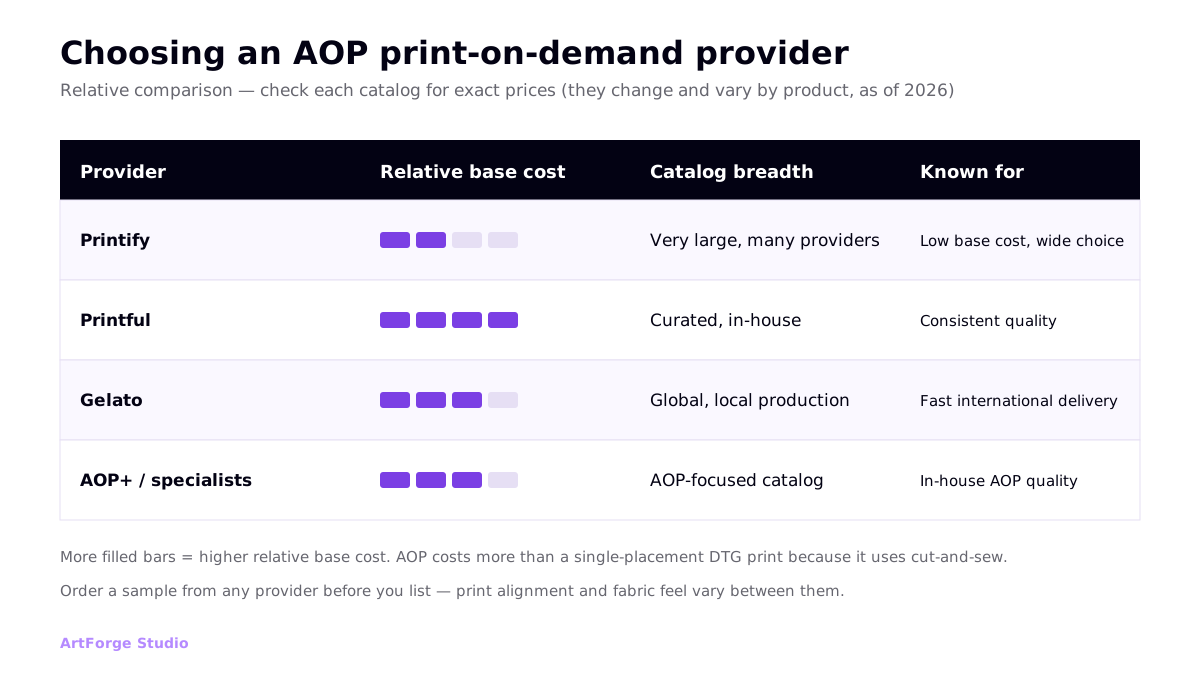
| Provider | Strength for AOP | Consider |
|---|---|---|
| Printify | Large catalog across many print providers; competitive base costs | Quality varies by chosen provider — sample first |
| Printful | In-house production and consistent quality; also offers all-over cotton | Higher base cost than budget options |
| Gelato | Global local production for faster international delivery | AOP catalog narrower in some regions |
| AOP specialists | Dedicated all-over-print catalogs printed in-house | Smaller product range overall |
Because AOP uses cut-and-sew rather than a single press, its base cost is higher than a standard DTG print. Factor that into your pricing. For a broader roundup of fulfillment partners, see our review of Gooten and alternatives and the wider best print on demand products guide.
Pros and cons of all over print
AOP is a striking format, but the cut-and-sew process brings trade-offs worth understanding before you commit a design to it.
| Pros | Cons |
|---|---|
| Seamless, edge-to-edge coverage no other method matches | Higher base cost from cut-and-sew labor |
| Vivid, permanent sublimation color that won't crack or peel | Mostly limited to polyester fabrics |
| Premium, high-perceived-value product for your store | Print can shift slightly at seams during manual assembly |
| Great for patterns, streetwear, and bold statement pieces | Longer production times than a standard printed blank |
Because production is more involved, turnaround is typically a little longer than for a pressed blank, and returns for minor alignment differences are more likely if buyers expect pixel-perfect placement. Setting clear product-photo expectations in your listing helps.
Selling all over print shirts
AOP can carry a higher price tag because it looks and feels premium, which helps offset the higher base cost. To sell it well: use realistic mockups that show the full wrap of the design, lean into niches where bold full-coverage aesthetics are expected (festival wear, gym and athleisure, fandom, streetwear), and price with the elevated base cost in mind so your margin still works. If you are new to listing products, the fundamentals in how to start print on demand apply directly to AOP too.
When to choose all over print
AOP is not the default for every design — it is a deliberate choice for full-coverage aesthetics.
- Choose AOP for bold patterns, immersive graphics, streetwear, festival wear, and any concept that benefits from covering the whole garment.
- Skip AOP for simple chest logos or single graphics — a DTG or vinyl print on a standard blank is cheaper and just as effective.
- Watch margins. Higher base costs mean you need a higher retail price; make sure the premium look justifies it for your niche.
Frequently asked questions
What are all over print shirts?
All over print (AOP) shirts have a design that covers the entire garment — front, back, shoulders, and often the sleeves and collar — with no blank areas or white creases at the seams. They are made with a cut-and-sew process: the artwork is printed onto flat fabric panels first, then the panels are cut and stitched into a finished shirt.
How are all over print shirts made?
Through cut-and-sew manufacturing. The design is printed edge to edge onto flat fabric (usually lightweight polyester, using sublimation), then the individual pattern pieces are cut and sewn together into a shirt. Because printing happens before sewing, the design can extend seamlessly across seams and into areas other methods cannot reach.
What fabric is used for all over print shirts?
Most AOP shirts are made from lightweight, breathable 100% polyester because the standard AOP method is sublimation, which bonds dye to polyester fibers for vivid, permanent color. Some providers now offer all-over cotton options, but polyester remains the norm for edge-to-edge sublimated prints.
Why do all over print shirts cost more?
AOP is more expensive than a single-placement print because it uses cut-and-sew manufacturing: printing the whole garment, cutting pattern pieces, and sewing each shirt individually is far more labor-intensive than pressing one design onto a pre-made blank. That extra production work raises the base cost per shirt.
How do you design a good all over print?
Fill the provider's template to full bleed so there are no blank edges, and keep important detail like logos and text inside the safe zone away from seams and collars, where the print can shift slightly during manual cut-and-sew production. Repeating patterns and solid colors hide small alignment differences better than a single centered image.