Printful Print on Demand: Honest 2026 Review
Printful is a print on demand and fulfillment company that prints your designs on products at its own in-house facilities and ships them directly to customers after each sale. In 2026 it remains one of the most reliable, highest-quality, best-branded providers in the category — and also one of the most expensive. This honest review covers Printful's real base costs, print quality, fulfillment speed, integrations, and the one question that decides whether it is right for you.
The short verdict: Printful is a premium choice. If your retail prices can absorb a few extra dollars per unit in exchange for consistent quality and strong branding, it is excellent. If you are optimizing purely for the cheapest possible base cost, a network provider may fit better.
How Printful works
Printful follows the standard print on demand flow, but with one important difference — it owns the printing:
- You create products with your designs in Printful's product creator.
- You connect Printful to a storefront or marketplace and publish listings.
- A customer orders and pays your retail price.
- Printful prints in its own facilities (US, Europe, Mexico and others) and ships to the customer.
- You keep the difference between retail price and Printful's base cost plus shipping.
Because Printful controls its own facilities rather than routing to third-party shops, quality and packaging are consistent — which is the core of its value proposition.
Printful pricing and base costs
Printful is free to join; you only pay when a customer buys. The catch is that its base costs sit at the top of the market. Reviewers put Printful roughly 15–35% above network providers like Printify and Gelato on matching products. As of 2026, indicative base prices include:
- T-shirts: roughly $9.25–$13.50 before add-ons
- Mugs: starting around $7.95
- US shipping: starting near $4.20 for the first item, less per additional item
Here is how those numbers shape a single sale:
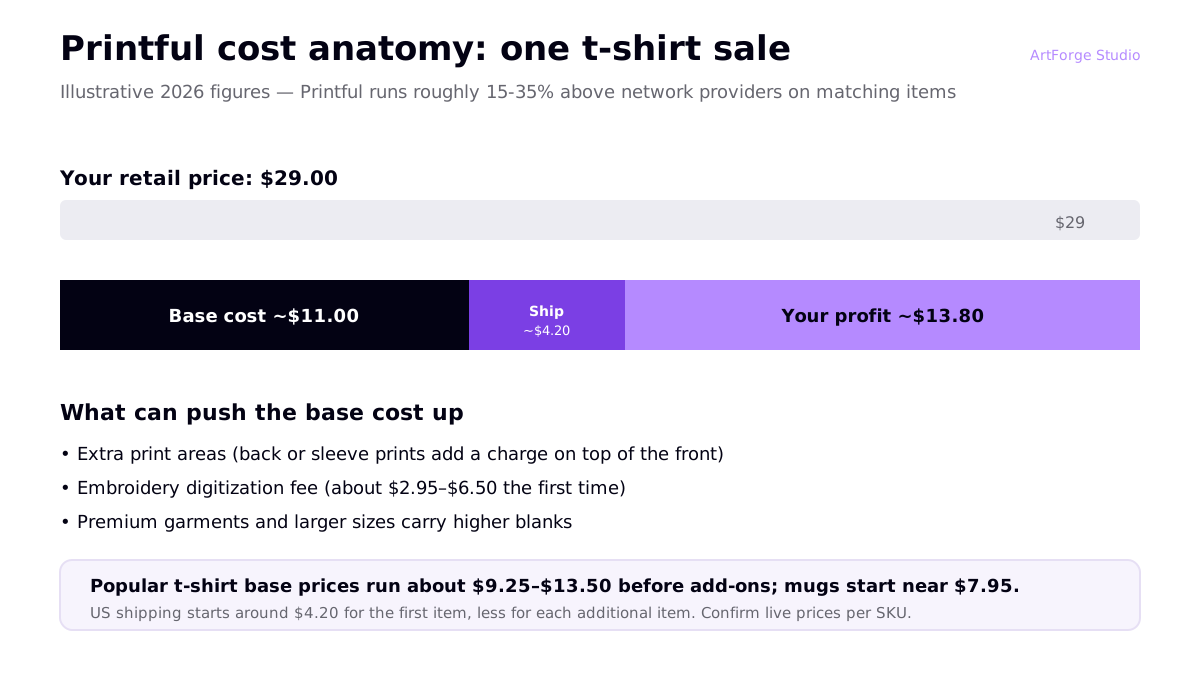
Watch the add-ons. Extra print areas (back or sleeve prints) add a charge on top of the front print, and embroidery carries a one-time digitization fee of roughly $2.95–$6.50. Model these into your retail price so a "back print" upgrade does not quietly erase your margin. Our full t-shirt printing cost breakdown shows how these components stack across methods.
Print quality and consistency
Quality is where Printful earns its premium. Because every order is produced in a facility Printful owns, you are not gambling on which third-party shop your customer's order lands in. That consistency shows up in fewer quality complaints and more uniform results across repeat orders — which matters enormously if you are building a brand where returning customers expect the same product each time.
Printful's DTG (direct-to-garment) printing handles detailed, full-color artwork well, and its branding options — inside labels, packaging inserts, custom packing slips — let you make the unboxing feel like your own brand rather than a drop-shipped parcel.
Fulfillment and shipping speed
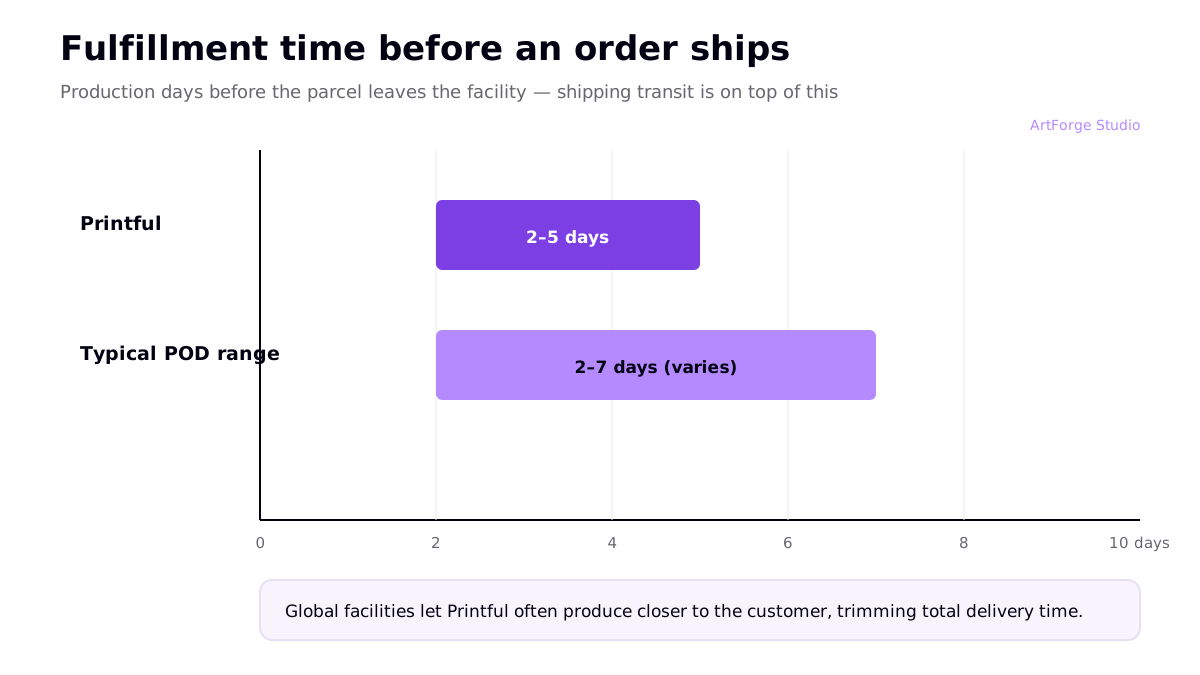
Standard fulfillment is typically 2–5 business days before the order ships, with shipping transit time added on top. Because Printful operates facilities in multiple regions, orders can often be produced closer to the customer, which trims total delivery time compared with a single-location provider.
Integrations: sell almost anywhere
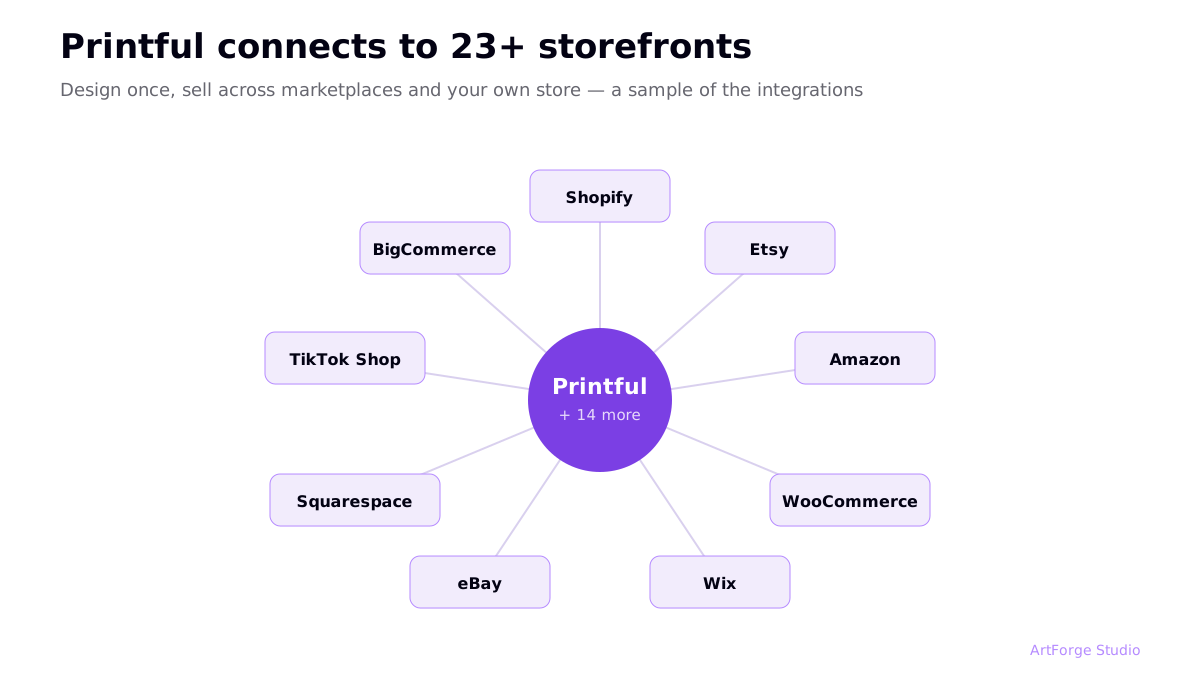
Printful connects to a large set of storefronts and marketplaces — its help documentation lists 23+ platforms, including Shopify, Etsy, Amazon, WooCommerce, Wix, eBay, Squarespace, TikTok Shop and BigCommerce. That breadth means you can design once and sell across multiple channels without changing providers.
Two of the most common setups are Printful with Shopify (for an owned store) and Printful with Etsy (for built-in marketplace traffic). If you plan to sell on Etsy, our step-by-step connect Printful to Etsy guide walks through the whole setup, and the Etsy print on demand overview covers listing and fees. For your own store, see the Shopify print on demand guide.
Printing methods Printful uses
Understanding how Printful actually prints helps you brief designs correctly. Its main apparel method is DTG (direct-to-garment), which sprays ink directly into the fabric and excels at detailed, full-color artwork — ideal for AI-generated designs and photographic imagery. For all-over patterns Printful uses sublimation on polyester, and for logos and text on garments it offers embroidery. Each method has its own file requirements: DTG wants high-resolution, transparent-background art; embroidery wants simplified, limited-color designs because thread cannot reproduce fine gradients. Matching your artwork to the method is the difference between a crisp product and a muddy one.
Reputation and reviews
Printful has one of the longer track records in the category, and its reputation reflects that: reviewers and seller communities consistently rank it at or near the top for reliability and quality, while noting the price premium as its main drawback. On review platforms it holds solid ratings, and the recurring theme in feedback is consistency — the product a customer receives tends to match the mockup, order after order. For a brand where reputation compounds through repeat buyers and reviews, that predictability is worth paying for. Just go in clear-eyed that you are buying dependability, not the lowest price.
Tips to protect your margin on Printful
- Price for the premium. Set retail prices high enough that Printful's higher base cost still leaves a healthy margin — do not copy a competitor's price if they use a cheaper provider.
- Limit costly add-ons. Reserve back and sleeve prints or embroidery for products where customers will pay more for them.
- Use paid-plan discounts at volume. Printful's membership discounts only make sense once your order count is high enough to beat the fee.
- Sample before scaling. Even with in-house consistency, order one sample per product to confirm color and fit before you build a range around it.
Pros and cons
| Strengths | Trade-offs |
|---|---|
| Consistent in-house print quality | Highest base costs in the category |
| Strong branding and packaging options | Add-ons (extra prints, embroidery) raise costs |
| 23+ storefront and marketplace integrations | Thinner margins unless your AOV is higher |
| Facilities in several regions for faster delivery | Catalog is apparel-led vs some specialists |
Who is Printful worth it for?
The deciding question is simple: can your retail price absorb a few extra dollars per unit?
- Yes — brand-first sellers building on higher average order values, with organic, email or disciplined paid traffic, get real value from Printful's quality and branding.
- No — price-sensitive testers chasing the lowest base cost or the widest catalog are usually better served by a network provider like Gooten or Printify, or by Gelato for international and wall-art focus.
Many established sellers run more than one provider — Printful for the flagship branded products and a cheaper network option for high-volume basics. For the wider landscape, see our best print on demand companies comparison.
Frequently asked questions
What is Printful print on demand?
Printful is a print on demand and fulfillment company that prints your designs on products at its own in-house facilities and ships them directly to your customers after each sale. It connects to storefronts and marketplaces like Shopify, Etsy and Amazon, and is known for consistent print quality and strong branding options rather than the lowest prices.
How much does Printful cost?
Printful is free to join; you pay the base cost after a sale. As of 2026, popular t-shirts have base prices roughly $9.25 to $13.50 before add-ons, and mugs start around $7.95. US shipping starts near $4.20 for the first item. Printful typically runs about 15 to 35 percent above network providers on matching products.
Is Printful good quality?
Yes. Because Printful prints at facilities it owns and operates, its print quality and packaging are more consistent than platforms that route orders to random third-party shops. That consistency is Printful's main selling point and a big reason brand-focused sellers choose it despite higher base costs.
How long does Printful take to fulfill orders?
Printful's standard fulfillment is typically 2 to 5 business days before the order ships, with shipping transit time on top of that. Because it has facilities in several regions, orders can often be produced closer to the customer, which reduces total delivery time.
Is Printful worth it compared to Printify?
It depends on your model. Printful is worth the premium for brand-first sellers with higher average order values who value consistent quality and branding. If you are optimizing purely for the lowest base cost or widest catalog, Printify's network usually wins. Many sellers use both and choose per product.