Funny T Shirt Designs: What Actually Sells
Funny t-shirt designs sell for one reason: they let a person signal their sense of humor and find others who share it. The best funny tees are not the ones that make everyone chuckle a little — they are the ones that make a specific group feel seen. This guide breaks down the four humor styles that convert, the sub-niches that reliably sell, the trademark trap that quietly bans shops, and how to take a joke from idea to a live listing.
Why funny t-shirts sell (and what "funny" really means)
A funny shirt is a piece of self-expression the wearer pays to advertise. That means the emotion you are selling is recognition, not just laughter — "this is so me" or "my people will get this." A joke aimed at everyone is diluted; a joke aimed at dog owners, nurses or software developers hits hard for that group and turns into a purchase and a share. Specificity is the whole game.
Practically, that leads to a simple rule: start from an audience, then apply a humor style — not the other way around. Pick a group you understand, list their shared frustrations and inside references, and turn those into jokes.
Four humor styles that convert
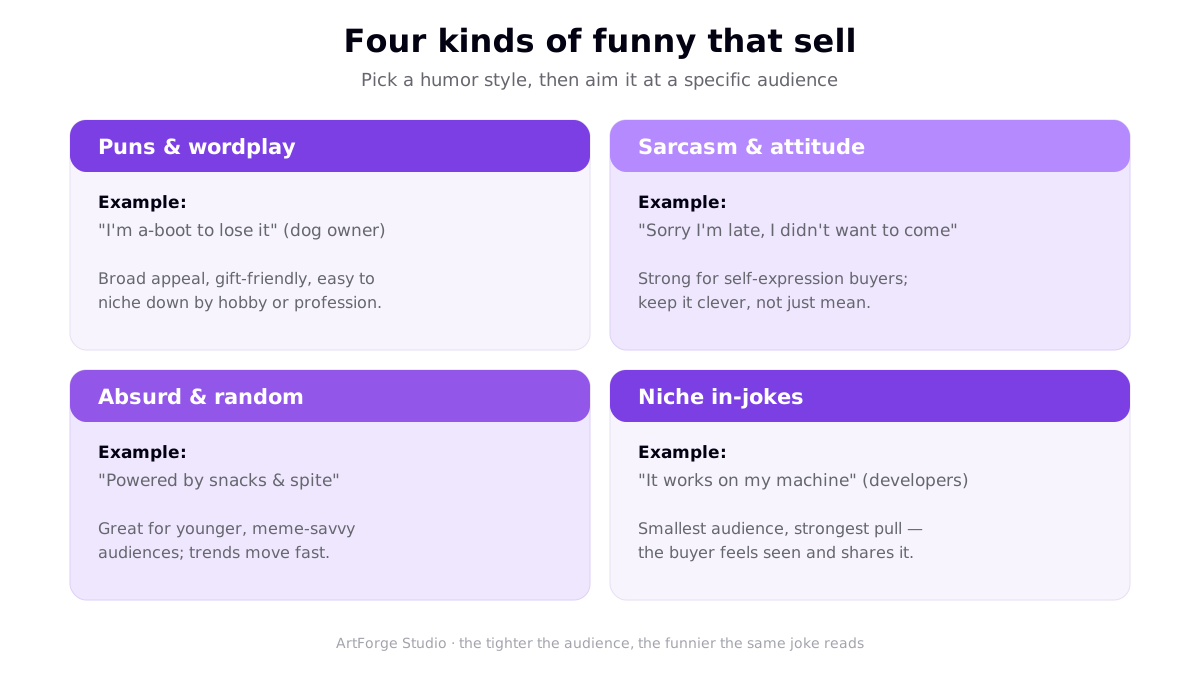
Most funny shirts fall into one of four humor styles. Knowing them lets you take the same audience insight and spin it four different ways.
Puns and wordplay
Broad, gift-friendly, and easy to niche down. A pun about walkies for dog owners or about spreadsheets for accountants reads instantly and makes an easy present. Puns are the safest starting style for a new shop because they translate across dozens of niches.
Sarcasm and attitude
Strong for buyers who dress to express a mood — "Sorry I'm late, I didn't want to come." Keep sarcasm clever rather than simply mean; the wit is what makes it wearable and shareable.
Absurd and random
Meme-adjacent, best for younger audiences. Absurd lines ("Powered by snacks and spite") can spike fast but also date quickly, so treat them as fast-moving tests rather than evergreen catalog.
Niche in-jokes
The smallest audience but the strongest pull. A line like "It works on my machine" means little to outsiders and everything to developers. In-jokes convert and get shared precisely because the buyer feels part of an in-group.
The funny sub-niches that actually sell
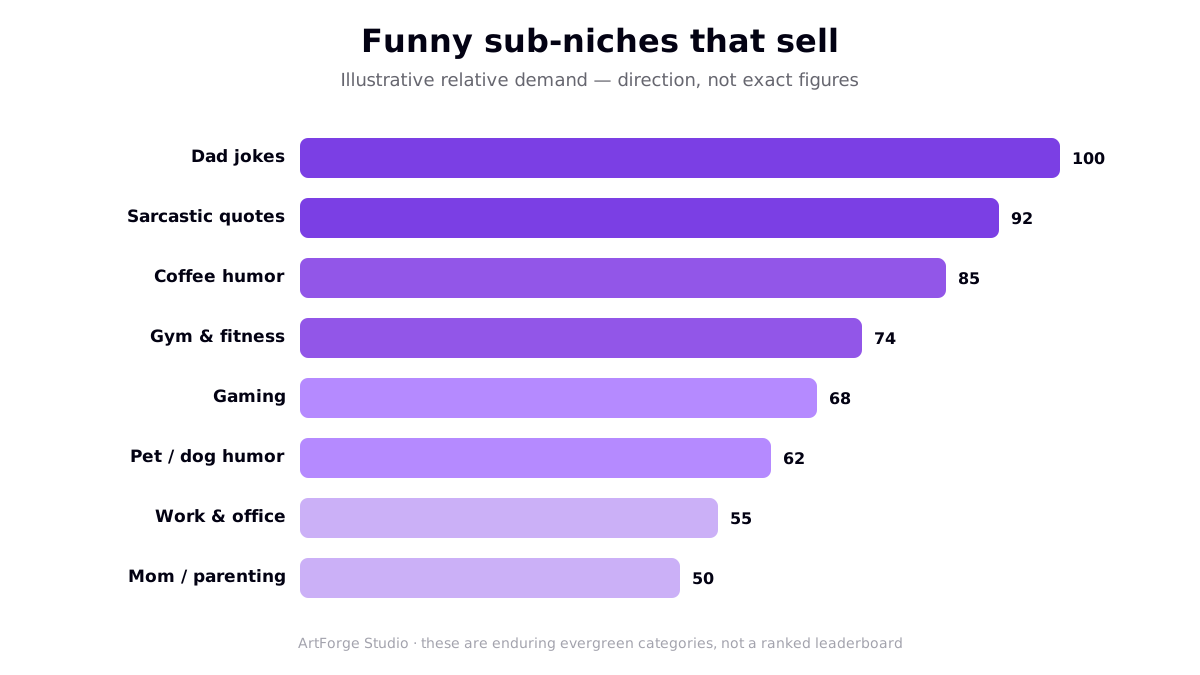
Some humor categories sell steadily year after year. These are evergreen directions rather than a strict ranking, but they are where demand consistently lives.
| Sub-niche | Why it works | Angle to try |
|---|---|---|
| Dad jokes & puns | Universally giftable, low offense risk | Cross a pun with a specific hobby |
| Sarcastic quotes | Pure self-expression buyers | Write for one profession, not "people" |
| Coffee humor | Daily ritual with strong loyalty | Pair coffee with a job or mood |
| Gym & fitness | Identity-driven community | Inside jokes about leg day, macros |
| Gaming | Tight, passionate audience | Genre-specific references |
| Pet / dog humor | Owners love badge-of-honor merch | Breed-specific lines convert well |
| Work & office | Shared misery is funny | Meetings, Mondays, "reply all" |
| Mom / parenting | Big gifting spikes on holidays | Mother's Day and Father's Day angles |
Notice the recurring move: each row gets stronger when you cross the general category with a tight audience. "Coffee humor" is fine; "coffee humor for night-shift nurses" is a product.
The trademark trap (the fastest way to lose a shop)
Here is the part most funny-shirt guides skip. Many great-sounding slogans, catchphrases, brand names and characters are registered trademarks — and putting them on merch can get your listings pulled and your shop suspended, even when the phrase feels generic. Comedy is a common trademark-infringement minefield because punchy phrases are exactly what gets registered.
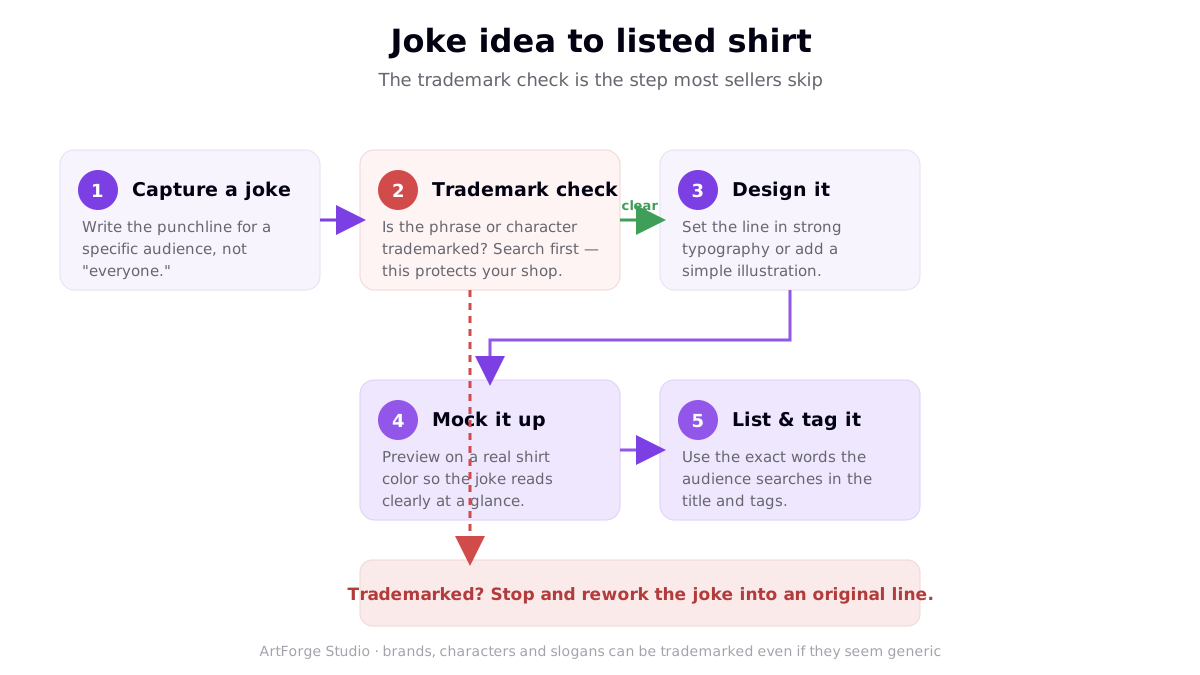
Build the check into your workflow: capture the joke, search it as a trademark, and only proceed if it is clear. If it is protected, rework the idea into an original line rather than gambling your shop on it. Parody has narrow legal limits and is not a safe blanket defense for commercial merchandise. We cover this in depth in the print-on-demand trademark guide — read it before you scale.
Designing the shirt so the joke lands
- Keep it short and legible. A funny shirt has to read in the two seconds someone glances at it. Cut words until only the punchline remains.
- Let typography do the work. Most funny shirts are text-driven; strong type and layout carry the joke. Our typography t-shirt design guide covers fonts and layouts.
- Mock it up on real colors. A joke that pops on white can vanish on black. Preview on the shirt color you will actually sell.
- Match the tone to the type. A dad joke wants a friendly, rounded font; a sarcastic line wants something bolder and flatter.
- Don't over-illustrate. If the words are the joke, a big graphic competes with the punchline. A small icon is usually plenty.
Listing and selling funny tees
Once the design is ready, the listing decides whether anyone finds it. Use the exact words your audience would type — the niche name, the profession, the occasion — in your title and tags. Begin small and test a batch rather than betting everything on one idea, and organize your shop by theme (Coffee Humor, Gym Jokes) so browsers can go deep. For the full workflow, see how to sell t-shirt designs online, and for more concept inspiration browse our 75 cool t-shirt design ideas. Funny tees print like any other apparel, so any of the best print-on-demand companies can fulfill them with no minimum order.
Frequently asked questions
What makes a funny t-shirt design actually sell?
Funny shirts sell when they let a buyer signal their sense of humor and their identity to people who share it. The winners are aimed at a specific audience rather than everyone: a joke that lands hard for dog owners, nurses or gamers beats a joke that is mildly amusing to the general public. Keep the line short and instantly readable, set it in strong typography, and make sure the humor is clever rather than merely rude.
What are the best-selling funny t-shirt niches?
Enduring funny categories include dad jokes and puns, sarcastic and attitude quotes, coffee humor, gym and fitness humor, gaming, pet and dog humor, work and office jokes, and mom or parenting humor. Holidays like Mother's Day and Father's Day add seasonal spikes. The reliable pattern is a humor style crossed with a tight niche — for example a sarcastic quote written specifically for teachers rather than a generic sarcastic line.
Can I get in trouble for a funny t-shirt design?
Yes. Using a trademarked phrase, brand, character or slogan on a shirt can get your listings removed and your shop suspended, even when the phrase feels generic. Many common-sounding slogans are registered trademarks. Before you list a joke, search for it as a trademark, and if it is protected, rework the idea into an original line. Parody has narrow legal limits and is not a safe blanket defense for commercial merch.
How do I come up with funny t-shirt ideas?
Start from an audience, not a joke. Pick a group you understand — a hobby, profession or life stage — and list the shared frustrations, inside references and rituals only that group gets. Then run each idea through a humor style: turn it into a pun, a sarcastic quip, an absurd line or a niche in-joke. Crossing audiences with styles generates far more usable ideas than staring at a blank canvas hoping to be funny.