Anime T Shirt Design: Ideas & Copyright Rules
Anime t-shirt design is one of the most in-demand apparel niches — and one of the most legally risky if you get it wrong. The core rule is simple: you can freely use the anime art style, but you cannot sell shirts with copyrighted characters, logos or official art unless you have a license. This guide shows you how to design original anime-style shirts that fans want, breaks the style into learnable parts, and lays out the copyright rules in plain language so you avoid the mistakes that get shops suspended.
The copyright rule that comes first
Before any design ideas, understand the boundary, because it decides everything else. Selling merchandise with copyrighted or trademarked anime content — a character like Naruto, a creature like Pikachu, a series logo — without permission is copyright and trademark infringement. Print on demand does not change that; the platform ships the shirt, but you are responsible for the design. The traffic light below is the quickest way to gauge where a design sits.
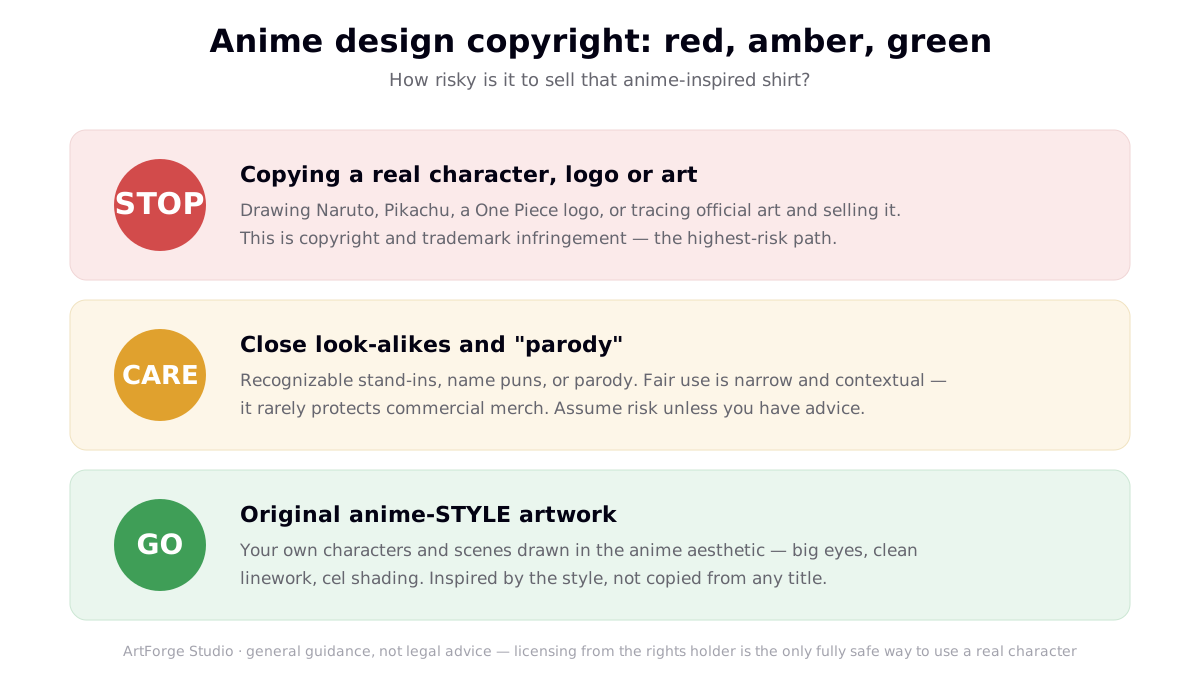
Two points people get wrong. First, fair use rarely helps here — it is a narrow, contextual defense aimed at non-commercial uses like criticism and education, and it seldom protects selling merch. Second, "parody" is not a magic word; it has tight legal limits and is not a blanket license. The only fully safe way to sell a real character is a license from the rights holder, which means fees and strict terms. For most sellers, the practical answer is to design original work. (This is general guidance, not legal advice — when a lot is at stake, talk to an attorney, and read our fuller print-on-demand trademark guide.)
The anime art style, broken down
Here is the good news: the anime aesthetic is not owned by anyone. The conventions that make art "read" as anime are a visual language you can use to build entirely original characters. Learn the parts and you can capture the vibe fans want without copying any title.
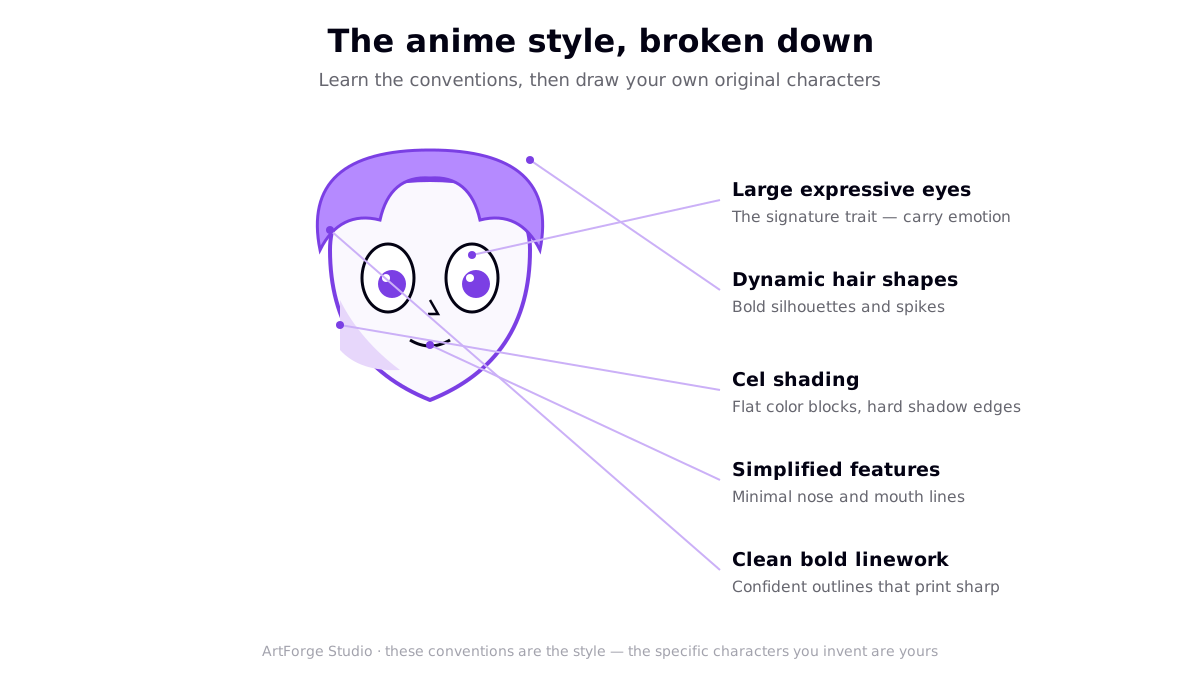
- Large expressive eyes — the signature trait; they carry most of a character's emotion.
- Clean, bold linework — confident outlines that also print sharply on fabric.
- Cel shading — flat blocks of color with hard-edged shadows rather than soft gradients.
- Dynamic hair shapes — bold silhouettes and spikes that give a character personality.
- Simplified features — minimal nose and mouth lines keep the face clean and readable.
Combine these on an original character and you have anime-style art that is legally yours. If you want to sharpen the underlying drawing skills, our guide to t-shirt drawing step by step covers sketching and vectorizing.
Original anime t-shirt design ideas that sell
You do not need existing IP to tap anime demand. These original directions consistently draw fan interest, and every one can be executed as fully original work.
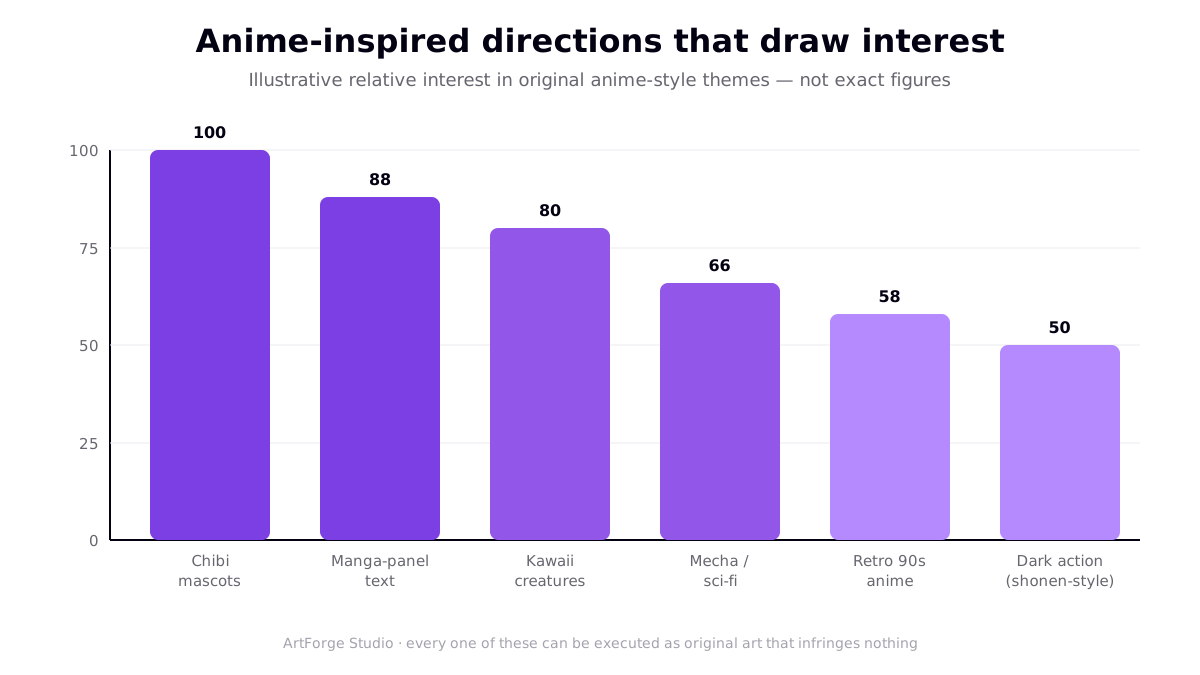
| Direction | What it is | Keep it original by… |
|---|---|---|
| Chibi mascots | Cute, big-headed original characters | Inventing your own mascot, not shrinking a known one |
| Manga-panel text | Halftone panels with dramatic captions | Writing your own lines and drawing your own figures |
| Kawaii creatures | Adorable original monsters and animals | Designing new creatures rather than known ones |
| Mecha & sci-fi | Robots, pilots and futuristic scenes | Original mech designs and worlds |
| Retro 90s anime | Grainy, nostalgic cel-era aesthetic | Using the look and era, not specific shows |
| Dark action (shonen-style) | High-energy battle art and poses | Original heroes, powers and symbols |
The pattern is the same as any niche: pick an aesthetic and aim it at a specific fan interest. If you want more general concept fuel, our cool t-shirt designs roundup and typography t-shirt design guide both apply — a lot of anime shirts lean heavily on stylized Japanese-inspired lettering and captions.
The biggest advantage of going original is that a character you create becomes an asset you own. A single memorable mascot can anchor a whole collection — the same character in different poses, seasons, moods and taglines gives you a dozen listings from one idea, and none of them can ever trigger a takedown. That is the opposite of fan art, where every design is borrowed and every listing is a risk. Building your own recognizable style also means repeat buyers can recognize your shop, not just the series it copies.
Practical design tips for anime tees
- Design in vector or high resolution. Clean linework and cel shading print best from crisp files. Follow our 300 DPI print-ready guide so detail survives printing.
- Limit the palette. Cel shading already uses flat colors; a tight palette keeps prints clean and costs predictable on some methods.
- Mind dark garments. Anime art often pops on black tees, which means planning for how the printer handles white underbase and vivid color.
- Keep captions original. If you add Japanese-style or dramatic text, write your own — do not lift lines or logos from a series.
- Build a character, not a copy. A memorable original mascot can become a whole product line; a copied one is a liability.
Where to print anime t-shirts
Anime tees print like any other apparel, so once your original design is print-ready, any of the best print-on-demand companies will fulfill it with no minimum order — meaning you can list a whole collection of original characters without holding stock. Base costs for a plain tee typically start around $6 to $12 before shipping as of 2026; see the full breakdown in our t-shirt printing cost guide. To turn a set of original designs into a shop, follow our walkthrough on how to sell t-shirt designs online.
Frequently asked questions
Can I sell anime fan art on t-shirts?
Selling merchandise with copyrighted or trademarked anime characters, logos or art without a license is copyright and trademark infringement, even through print on demand. That includes recognizable characters like Naruto or Pikachu and official logos. To sell legally you would need a license from the rights holder, such as the animation studio or publisher, which involves fees and strict terms. The safer path for most sellers is original anime-style artwork you create yourself.
Does fair use let me put anime characters on shirts?
Rarely. Fair use is a narrow, highly contextual legal defense that usually applies to non-commercial uses like criticism, commentary or education. Selling shirts is a direct commercial reproduction, which fair use seldom protects, and parody has tight limits too. Do not treat fair use or the word parody as a blanket license to sell fan art. When in doubt, either get a license or design something original.
How do I make anime t-shirt designs that don't infringe copyright?
Create original characters and scenes in the anime aesthetic rather than copying any existing title. The anime style itself — large expressive eyes, clean bold linework, cel shading, dynamic hair — is not owned by anyone, so you can use those conventions freely. Design your own mascots, kawaii creatures, mecha or manga-panel text, and avoid real character names, likenesses, symbols and logos. That gives you the anime vibe fans want without reproducing protected work.
What anime t-shirt design ideas sell well?
Original directions that consistently draw interest include chibi mascots, manga-panel text designs, kawaii creatures, mecha and sci-fi, retro 90s-anime aesthetics, and dark shonen-style action art. Each can be executed as fully original work that infringes nothing. Pair the aesthetic with a specific fan interest — a hobby, a mood, an aesthetic era — the same way any niche t-shirt is targeted, and set any text in strong typography so it reads on the shirt.