Simple Shirt Designs That Actually Sell
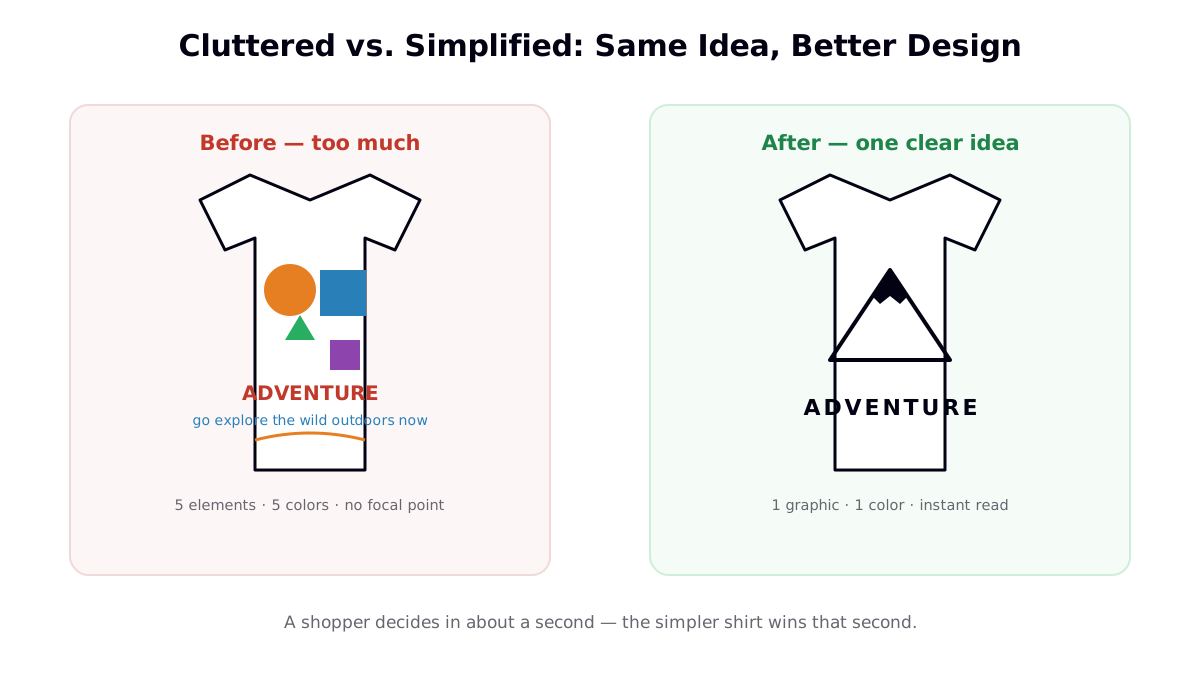
Simple shirt designs sell for one blunt reason: shoppers decide in about a second, and a clean graphic wins that second every time. A single clear idea — one word, one shape, one strong mark — reads instantly in a crowded marketplace grid, while a busy design makes the eye work and quietly loses the sale.
Minimalist shirt designs are also cheaper to print, easier to wear, and photograph beautifully in mockups. This guide shows why they work, how many colors to use, and gives you twelve simple concepts you can create today.
Why simple shirt designs outsell busy ones
The instinct when you start designing is to add: another element, another color, a supporting line of text. It feels like more effort equals more value. On apparel, the opposite is true.
- Speed of read. On Etsy or a marketplace, your thumbnail competes with dozens of others. One idea lands; five ideas blur into noise.
- Wearability. People buy shirts they will actually wear. A subtle, clean graphic pairs with more outfits than a loud, crowded one, which widens your buyer pool.
- Print quality. Fine detail and many colors introduce more that can go wrong on press. Simple, bold shapes reproduce reliably across garment colors and print methods.
- Mockups look premium. Clean designs sit well on a plain garment photo. Cluttered art fights the mockup and looks amateur.
This is why minimalist, typography-forward, and single-graphic styles consistently perform on print-on-demand platforms. If you want a broader survey of what is working, see our roundup of cool t shirt designs that sell.
There is a psychological angle too. A busy shirt asks the viewer to decode it before they can decide whether they like it, and most people will not spend that effort on a stranger's tee in a marketplace thumbnail. A simple shirt makes the decision effortless: they get the joke, recognize the aesthetic, or feel the vibe in an instant. Effortless comprehension is what turns a scroll into a click, and a click into a sale.
Where simple shirt designs sell best
Minimalism is not equally powerful everywhere. Knowing where clean designs have the edge helps you point your effort in the right direction:
- Gift and occasion niches. A subtle, tasteful design is easier to give than a loud one — the giver is not sure of the recipient's taste, so understated feels safe.
- Everyday-wear brands. People reach for the shirt they can wear with anything. A small chest mark or a single clean word fits far more outfits than a full-front graphic.
- Aesthetic and lifestyle niches. Minimalist, "quiet luxury," and clean-girl aesthetics are built on restraint; a busy design breaks the look they are buying into.
- Premium price points. Simplicity reads as confidence. Buyers associate clean, spacious design with higher-quality brands, which supports a higher price.
If your niche is humor or fandom, you may need more on the shirt — but even there, the cleanest execution of the idea usually wins.
How color count affects print cost
Simplicity is not only an aesthetic choice — it is an economic one. On screen printing, every ink color needs its own screen and setup, so cost climbs with each color you add. Digital methods like DTG and DTF do not charge per color the same way, but even there, fewer colors usually look sharper and hold up better in the wash.
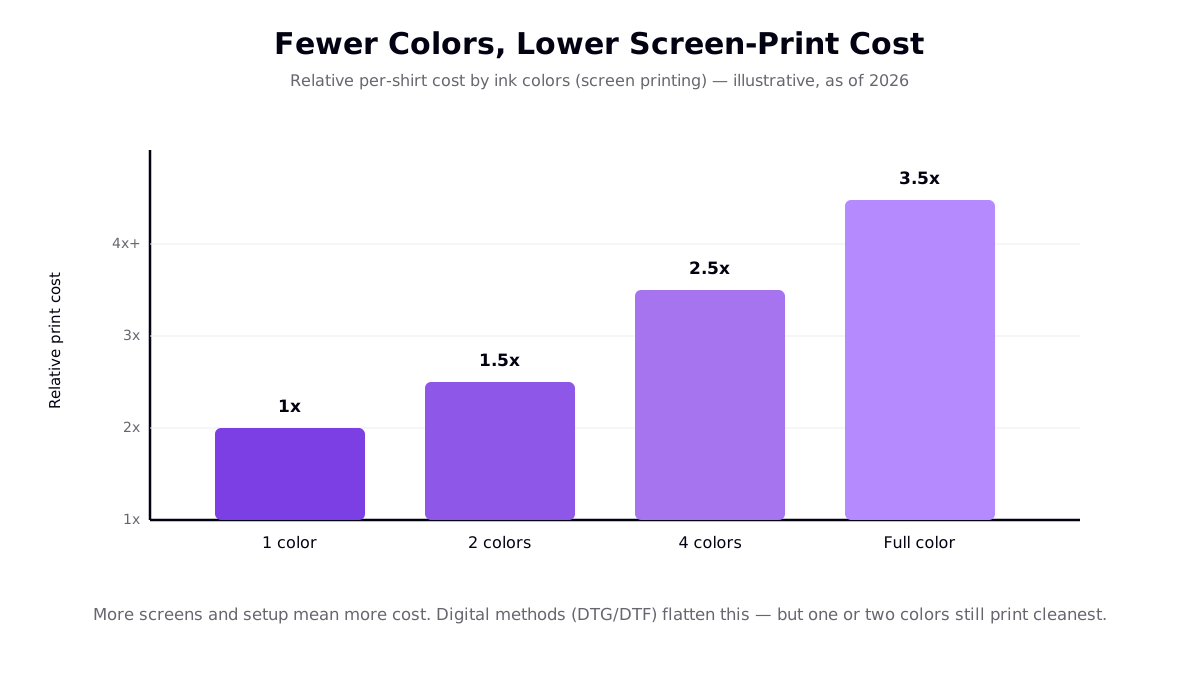
| Colors | Look | Screen-print cost impact | Best for |
|---|---|---|---|
| 1 color | Bold, timeless, prints on almost any garment | Lowest | Typography, single-line art, logos |
| 2 colors | Adds contrast or an accent without clutter | Slightly higher | Word + underline, mark + shadow |
| 3–4 colors | Room for a small illustration or palette | Higher setup on screen print | Simple mascots, retro palettes |
| Full color | Photographic or gradient-heavy | Highest on screen print; needs DTG/DTF | Detailed art, all-over prints |
If your design leans full-color or gradient-heavy, choose a method built for it — our guide to DTF t shirt printing explains when digital transfer beats screen printing.
12 simple shirt design concepts
Every concept below is one clear idea, most in a single color. They are quick to make and easy to adapt to a niche by swapping the word or motif.
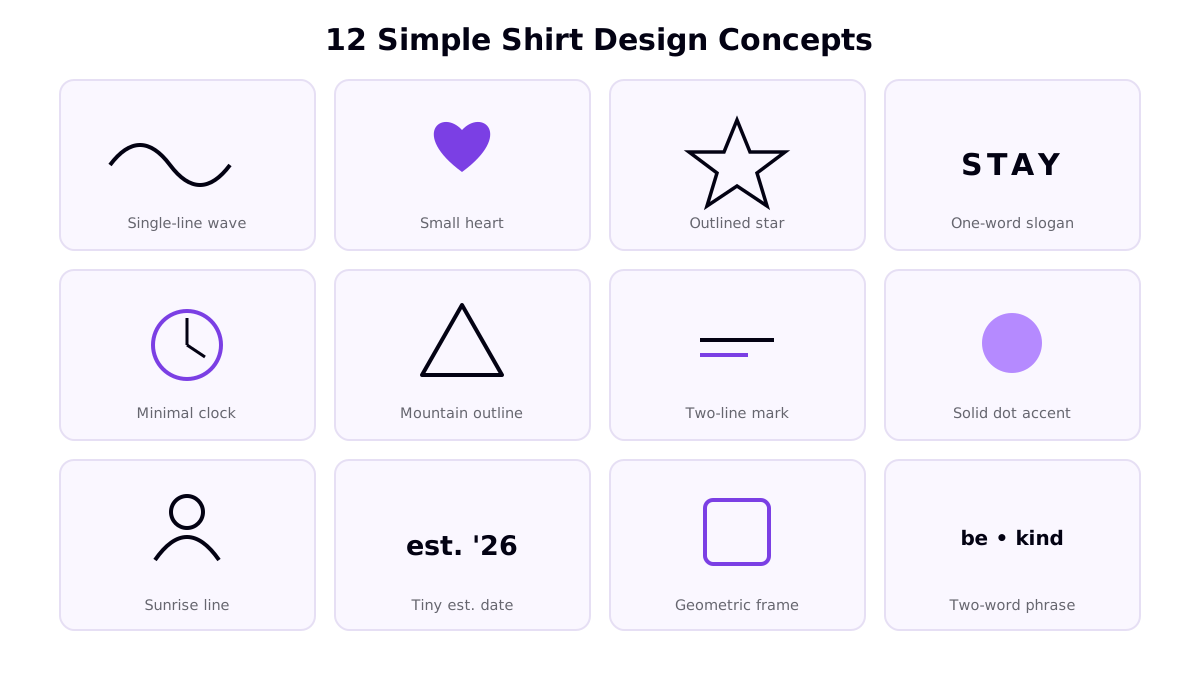
- Single-line wave — one continuous stroke, endless niche variations (surf, travel, calm).
- Small chest heart — a tiny left-chest graphic reads as tasteful, not loud.
- Outlined star — clean line-art shapes feel modern and print sharp.
- One-word slogan — a single bold word in a strong typeface is the ultimate minimalist tee.
- Minimal clock — a simple icon that maps to time, hustle, or patience themes.
- Mountain outline — the outdoor niche's most reliable simple mark.
- Two-line mark — two offset lines in two colors, abstract and versatile.
- Solid dot accent — a single filled circle paired with small text.
- Sunrise line — a half-circle over a curve, warm and universal.
- Tiny "est." date — small, understated, great for brands and events.
- Geometric frame — a clean square or circle framing a short word.
- Two-word phrase — a spaced, lowercase pair like "be kind" reads calm and premium.
How to make a simple design look premium, not cheap
The risk with minimalism is that a lazy version looks unfinished rather than intentional. The details do all the work:
- Choose the typeface deliberately. A default system font on a plain word reads cheap; a considered display or clean sans-serif reads designed. Our typography t shirt design guide covers font choice in depth.
- Respect spacing and alignment. Center it properly, give it margins, and let it breathe. Off-center placement is the fastest way to look amateur.
- Design for the garment color. A one-color design should be tested on every shirt color you plan to sell so it never disappears.
- Sketch before you commit. Even simple ideas benefit from a rough pass first — see our t shirt drawing walkthrough.
A quick self-test: shrink your design to thumbnail size and glance at it for one second. If you still get the idea instantly, it is simple enough. If you have to lean in, keep cutting.
How to simplify a design you already have
Sometimes the problem is not starting simple — it is rescuing a design that grew cluttered. Work through it in order:
- Find the one idea. Every design has a single thing it is really about. Identify it and be willing to delete everything that is not serving it.
- Cut the color count. Reduce to one or two colors. This alone makes most designs look more intentional and cheaper to print.
- Remove supporting text. That extra tagline under the main phrase almost never earns its place. Try the design without it.
- Increase the spacing. Give the remaining elements room. White space is a design element, not wasted space.
- Recheck at thumbnail size. Confirm the simplified version still reads instantly in a marketplace grid.
The discipline of removing rather than adding is what separates designs that look professional from designs that look like a beginner tried to include everything at once.
Frequently asked questions
Why do simple shirt designs sell better?
A shopper scanning a marketplace grid decides in about a second whether a shirt is interesting. A simple design communicates one clear idea instantly, while a busy design forces the eye to work and often loses the sale. Minimalist shirts also flatter the fit and fabric, feel more versatile to wear, and photograph cleanly in mockups — all of which help conversion.
How many colors should a simple shirt design have?
One or two colors is the sweet spot for simple designs. Fewer colors read from a distance, look intentional, and print cleaner across different garment colors. On screen printing, each added color adds a screen and setup cost, so limiting the palette also protects your margin. Even on digital methods where color count does not change price, restraint usually looks better.
Are minimalist shirt designs harder or easier to make?
Easier to execute, harder to nail. There is less to draw, but every element has to earn its place because there is nowhere to hide a weak choice. The skill is in spacing, alignment, and picking one strong idea. Most people fail by adding more when they should be removing until only the essential remains.
What makes a simple shirt design look cheap versus premium?
Intentional spacing and a considered typeface are the difference. A single word in a well-chosen font, centered with deliberate margins, reads premium. The same word in a default system font, slightly off-center, reads cheap. Simple designs live and die on the details that busy designs can distract from.