Best Print on Demand Software & Tools 2026
Print on demand software isn't a single app — it's a stack of tools that turn a design idea into a shipped product without you touching inventory. The best print on demand software for 2026 is whatever combination handles four jobs well: creating artwork, generating mockups, hosting your store, and fulfilling orders automatically. This guide breaks the stack into its four layers, groups the tools by the job they do, and shows how automation compounds into a real competitive edge.
Rather than chasing a mythical do-everything platform, the sellers who scale assemble a lean stack where each layer connects to the next. Here's how the pieces fit.
The print on demand software stack
Every print-on-demand operation, from a side hustle to a full brand, runs on the same four layers. Understanding them tells you exactly what software you actually need.
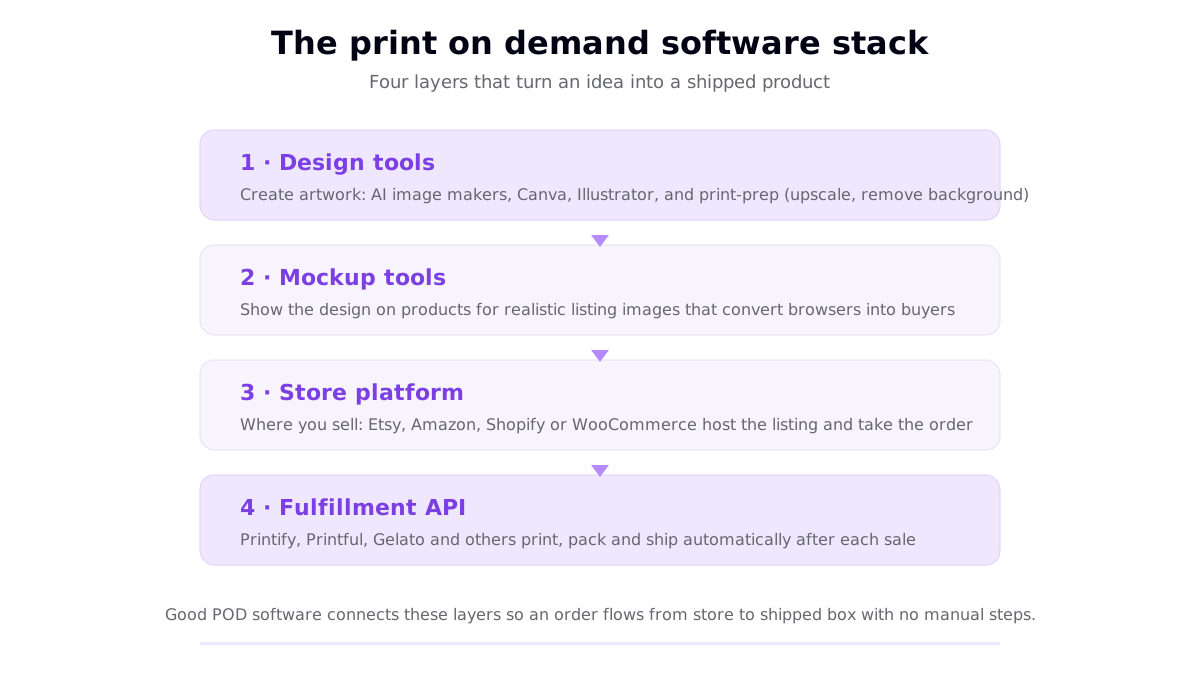
- Design tools create the artwork — AI image makers, Canva, Illustrator, plus print-prep for upscaling and background removal.
- Mockup tools place your design on products to produce realistic listing images that convert browsers into buyers.
- Store platform is where you sell — Etsy, Amazon, Shopify or WooCommerce hosts the listing and takes the order.
- Fulfillment API — Printify, Printful, Gelato and others — prints, packs and ships each order after a sale.
The magic is in the connections: good software links these layers so an order flows from store to shipped box with no manual copying. The fulfillment layer is the anchor, so it's worth reading our roundup of print on demand companies before committing to one.
Print on demand software by the job it does
Instead of comparing brands, it's more useful to group tools by the task you're trying to speed up. You typically want one strong tool per column.
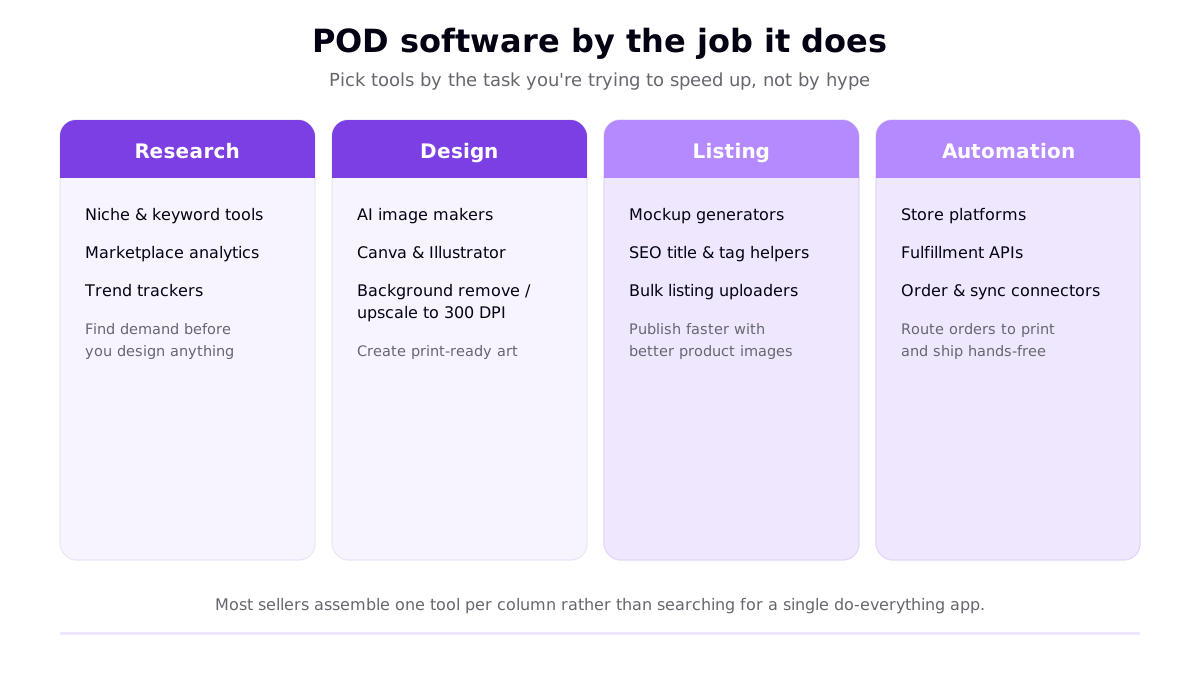
| Job | What the software does | Examples |
|---|---|---|
| Research | Find demand and keywords before you design | Niche and keyword tools, marketplace analytics, trend trackers |
| Design | Create print-ready artwork | AI image makers, Canva, Illustrator, upscale and background-removal tools |
| Listing | Publish faster with better images and copy | Mockup generators, SEO title and tag helpers, bulk uploaders |
| Automation | Route orders to print and ship hands-free | Store platforms, fulfillment APIs, order-sync connectors |
This framing keeps you from over-buying. If your bottleneck is producing designs, invest in the design column; if it's getting listings live, invest in listing tools. Our guide to the best AI image generators for POD covers the design layer specifically.
Integrations: connecting software to your store
The layer that trips people up is automation — making a sale on your store trigger a print order without manual work. The major fulfillment platforms solve this with direct integrations. Printify, Printful and Gelato all connect to Shopify as apps and to Etsy through official integrations, syncing products, variants and pricing, and routing completed orders straight to the printer.
Which store platform you build on shapes your software choices. Our dedicated guides to Shopify print on demand and WooCommerce print on demand walk through the app and plugin options for each. Whichever you choose, confirm the current list of supported integrations on the provider's site — platforms add channels over time.
How automation software saves time
The real payoff of a good software stack is speed. Every step of publishing a listing can be sped up dramatically, and the savings compound across a whole catalogue.
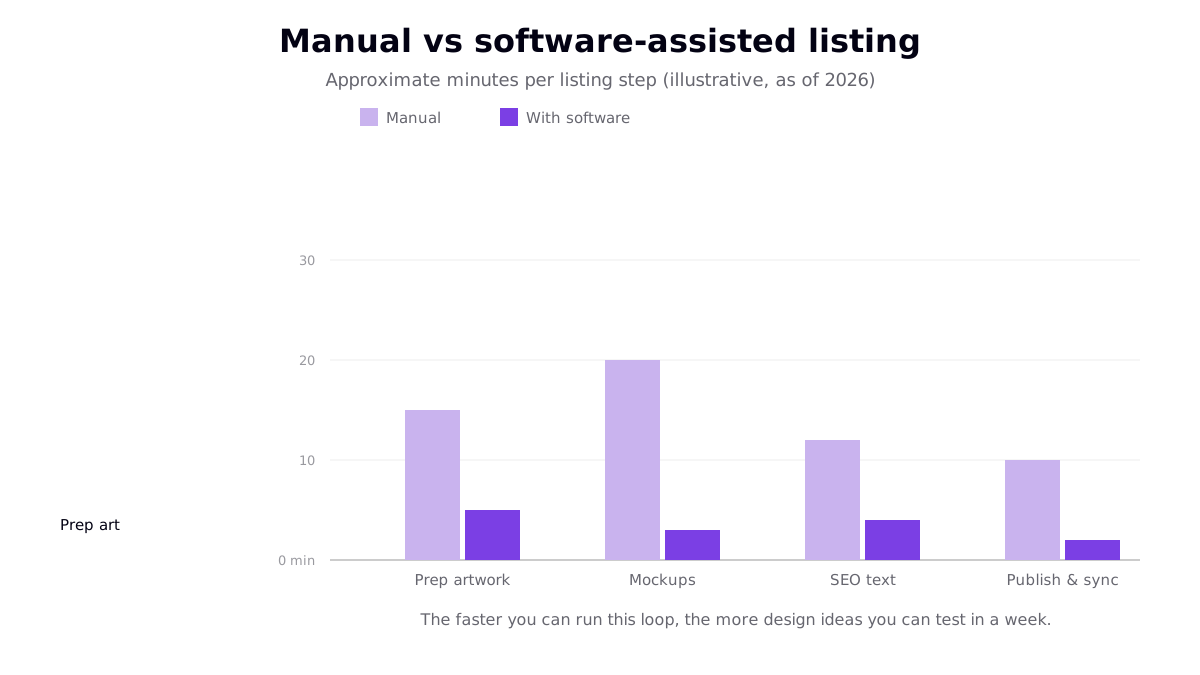
Mockup generators turn one design into many product images in seconds. SEO helpers speed up titles and tags. Bulk uploaders publish many listings at once. Order-sync connectors route every sale to the printer automatically. The compounding effect matters more than any single tool: if producing one listing drops from an hour to a few minutes, you can test far more design ideas in a week — and testing volume is one of the biggest drivers of success. Our deep dive on print-on-demand automation shows how to wire this together.
How to choose your print on demand software
- Start with fulfillment. Pick your printing partner first, because it constrains which store integrations and product catalogue you get.
- Match the store to your traffic. Etsy and Amazon bring built-in buyers; Shopify and WooCommerce give control but you supply the traffic.
- Don't over-buy on day one. The core fulfillment services are free to join and most design tools have free tiers. Add paid plans once sales justify the discounts.
- Prioritise the layer that's your bottleneck. Spend where you're slowest — usually design production or listing volume for new sellers.
- Check the integrations before committing. A tool is only useful if it connects to the store and printer you actually use.
Assemble a lean stack, keep the order flowing automatically, and pour your saved time into more experiments. That's the whole strategy — the software just removes the friction between an idea and a shipped product. For the bigger picture of running the operation, see our print on demand business playbook.
Frequently asked questions
What is print on demand software?
Print on demand software is any digital tool that helps you create, list and fulfil custom products that are only printed after a customer orders them. In practice it is not one app but a stack of tools that work together: a design tool to make the artwork, a mockup tool to create listing images, a store platform such as Shopify or Etsy to sell on, and a fulfillment service like Printify, Printful or Gelato that prints and ships each order. Good software connects these layers so an order flows from the store to a shipped box automatically.
Is there free print on demand software?
Yes. The core fulfillment services — Printify, Printful and Gelato — are free to join, and you only pay the product base cost and shipping when a customer buys. Many design tools have free tiers too, and marketplaces like Etsy charge a small per-listing fee rather than a subscription. You can assemble a working print-on-demand software stack for very little, then add paid tiers later for discounts and advanced features once you are making sales.
What software integrates print on demand with Shopify or Etsy?
The major fulfillment platforms offer direct integrations. Printify, Printful and Gelato all connect to Shopify as apps and to Etsy through official integrations, so a sale on your store automatically creates a print order. When you connect them, product listings, variants and pricing sync between the fulfillment service and your storefront, and completed orders route to the printer without you copying anything by hand. Always confirm the current list of supported integrations on each provider's site, as they add channels over time.
How does print on demand software save time?
It removes the slow, repetitive parts of listing and fulfilment. Mockup generators turn one design into many product images in seconds instead of photographing samples, SEO helpers speed up titles and tags, bulk uploaders publish many listings at once, and order-sync connectors route every sale to the printer automatically. The compounding effect is significant: if producing one listing drops from an hour to a few minutes, you can test many more design ideas in the same week, and testing volume is one of the biggest drivers of print-on-demand success.
Resources
- Printify — Print on Demand & Dropshipping Platform (top ranking result for the primary keyword)
- G2 — Best Free Print on Demand Software (top ranking result)
- Findstack — Best Print on Demand Software Compared (top ranking result)
- Printful — Ecommerce Integrations (official integration reference)